
Why start a vegetable garden
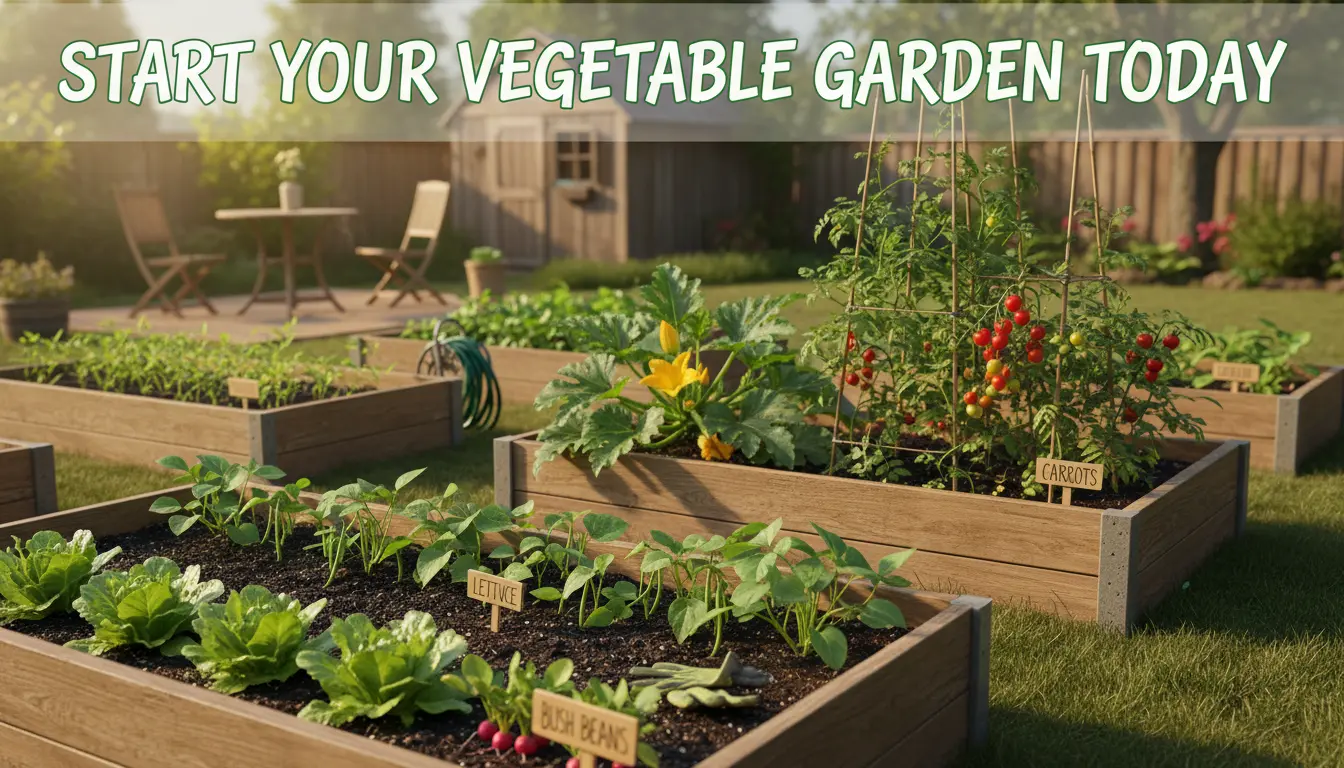
Starting a vegetable garden saves money, improves food quality, and gives hands-on control of what you eat. Small gardens can produce a surprising amount of fresh food for a family.
This guide shows practical steps to start a vegetable garden and keep it productive without wasting time or money.
Choose the right site to start a vegetable garden
Location matters. Pick a spot with at least 6 hours of direct sunlight. Vegetables need light to make sugars and grow well.
Good drainage is important. Avoid low spots that collect water after rain.
Sun, soil, and access
- Sun: 6–8 hours of direct sun for most vegetables.
- Soil: Prefer loamy soil. If you have heavy clay or sand, use raised beds.
- Access: Place beds near a water source and the kitchen for easy harvests.
Prepare soil before you start a vegetable garden
Healthy soil is the foundation. Test soil pH (6.0–7.0 is ideal for many vegetables) and add amendments based on the result.
Work in organic matter like compost to improve structure and nutrients. Aim for 2–4 inches of compost mixed into the top 6–8 inches of soil.
Simple soil preparation steps
- Clear weeds and grass from the area.
- Loosen the top 6–8 inches with a fork or tiller.
- Add compost and a balanced organic fertilizer if needed.
- Rake to level, then water lightly to settle the soil.
Decide what to plant in your vegetable garden
Start with easy, high-yield plants. Consider your climate and season length. Early wins build confidence.
Beginner-friendly vegetable list
- Leafy greens: lettuce, spinach, Swiss chard.
- Root crops: carrots, radishes, beets.
- Nightshades: tomatoes (indeterminate or determinate), peppers.
- Vines: bush beans, bush cucumbers for small spaces.
Planting: seeds vs transplants
Seeds are cheaper and work well for many crops. Transplants (seedlings) save time for long-season plants like tomatoes and peppers.
Follow seed packet directions for planting depth and spacing. Overcrowding reduces yield and increases disease risk.
Spacing and companion planting
- Respect spacing: thin seedlings early to give room for roots and airflow.
- Companion ideas: plant basil near tomatoes and marigolds to deter pests.
Watering and feeding your vegetable garden
Consistent moisture is key. Water deeply once or twice a week rather than frequent shallow watering.
Mulch helps retain moisture, suppress weeds, and moderate soil temperature.
Fertilizer basics
- Use compost tea or a balanced organic fertilizer every 4–6 weeks during the growing season.
- Leafy crops need more nitrogen; fruiting crops benefit from phosphorus and potassium.
Manage pests and diseases in your vegetable garden
Start with prevention: rotate crops, keep beds clean, and choose disease-resistant varieties.
Inspect plants weekly. Remove damaged leaves and use handpicking for large pests like slugs or caterpillars.
Organic pest control options
- Row covers to protect seedlings from insects.
- Neem oil or insecticidal soap for soft-bodied insects.
- Beneficial insects: ladybugs and lacewings eat common pests.
Harvest and succession planting
Harvest regularly to encourage more production. Pick leafy greens at the outer leaves and allow inner leaves to keep growing.
After one crop finishes, plant a quick crop (radishes, lettuce) to keep soil producing through the season.
Small real-world case study
Maria started a 10 x 10 raised bed on a suburban lot. She chose lettuce, cherry tomatoes, bush beans, and carrots. In her first season she used composted soil, watered twice a week, and mulched.
Results: six weeks after planting, Maria harvested continuous salad greens and later picked 20 pounds of tomatoes. She saved money and reduced store trips by half.
Tomatoes, cucumbers, and peppers need consistent warmth; transplant them outdoors only after the last frost date in your area.
Common mistakes when you start a vegetable garden and how to avoid them
- Overwatering: water deeply and less often to encourage strong roots.
- Planting too close: thin seedlings to recommended spacing.
- Ignoring soil health: add compost yearly to maintain fertility.
Quick planting schedule example
Here is a simple schedule for a temperate spring planting:
- Early spring: plant peas and spinach as soon as soil can be worked.
- After last frost: transplant tomatoes and peppers.
- Mid-summer: sow bush beans and quick radishes for late harvests.
Final tips for a successful vegetable garden
Start small and expand as you learn. Regular observation is one of the best gardening tools—spend a few minutes each day in the garden.
Keep notes: planting dates, varieties, and yields help you improve next season.
With good site choice, soil preparation, sensible plant selection, and basic maintenance, you can start a vegetable garden that feeds your household and connects you to your food.