
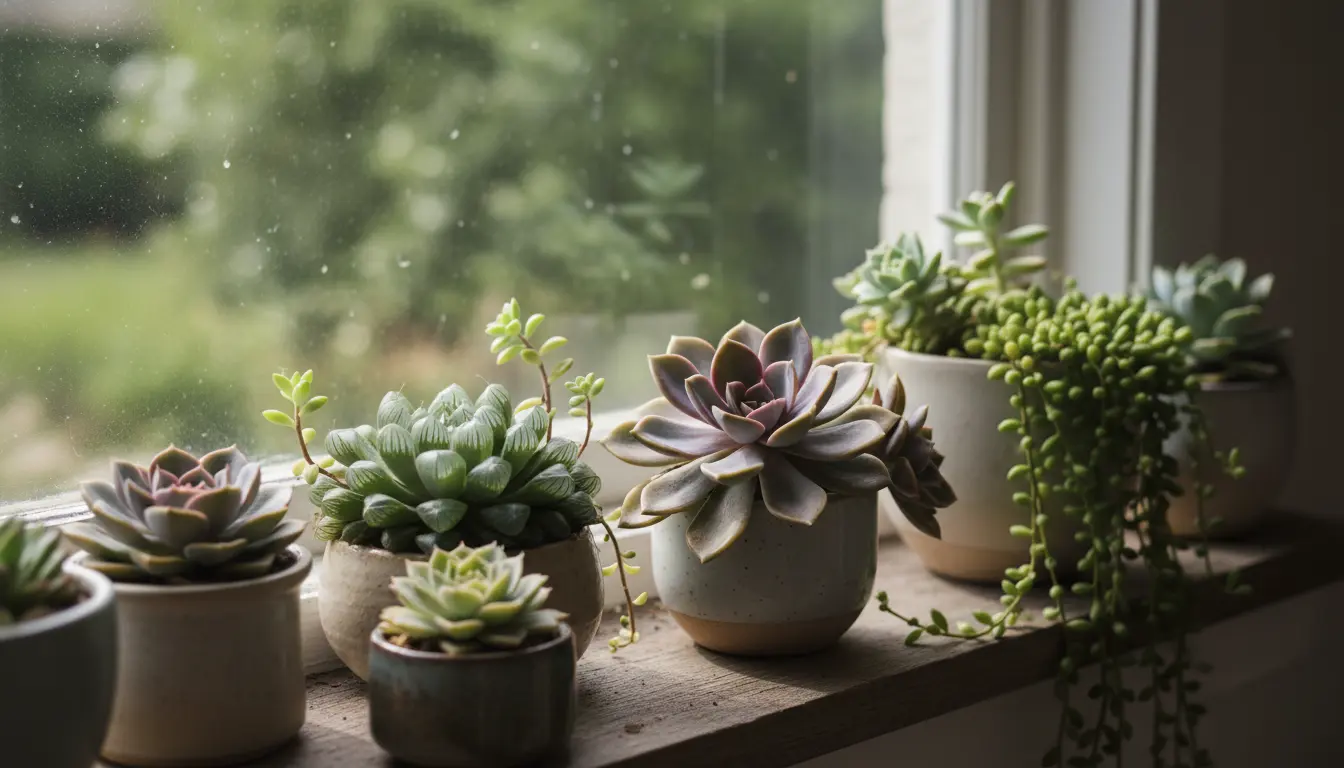
Why Succulent Care Matters
Succulents are popular because they look good and often survive neglect. Good succulent care helps them grow, maintain color, and resist pests.
Follow basic steps for watering, light, soil, and pot choice to avoid the most common failures.
Essential Succulent Care Steps
Succulent care centers on four things: light, water, soil, and temperature. Address each area simply and you will reduce stress on your plants.
Light Requirements for Succulent Care
Most succulents need bright light. Place them near a south- or east-facing window where they get indirect to direct sunlight for 4–6 hours daily.
Watch for signs of poor light: elongated stems, pale leaves, or leaning toward the window. Rotate pots weekly for even growth.
Watering Guidelines for Succulent Care
Succulents store water in their leaves. Overwatering is the top cause of death. Use the soak-and-dry method: water thoroughly, then allow soil to dry before watering again.
- Check the top 1–2 inches of soil; if dry, water.
- In summer, many succulents need water every 1–2 weeks.
- In winter, reduce watering to once every 3–6 weeks depending on species and indoor humidity.
Soil and Pot Selection for Succulent Care
Use a fast-draining mix made for cacti and succulents. You can mix regular potting soil with coarse sand or perlite to improve drainage.
Choose pots with drainage holes. Avoid deep pots; succulents like shallow containers that let roots spread horizontally.
Repotting and Fertilizing for Succulent Care
Repot every 1–2 years or when the plant outgrows its pot. Early spring is the best time to repot before active growth begins.
Fertilize lightly during the growing season with a balanced, diluted fertilizer. A quarter-strength monthly feed is usually enough.
Temperature and Humidity in Succulent Care
Most succulents prefer daytime temperatures between 65–80°F (18–27°C) and cooler nights. They tolerate low humidity well, which suits indoor environments.
Avoid exposure to freezing temperatures. Move plants indoors or to protected areas if nighttime temps drop below 40°F (4°C).
Common Problems and Solutions in Succulent Care
Identify problems early to save plants. Here are common issues and quick fixes.
- Overwatering: Leaves become soft and translucent. Reduce watering, remove rotten roots, and repot into dry, well-draining soil.
- Underwatering: Leaves shrivel and dry. Increase watering slightly and check soil moisture more frequently.
- Pests: Mealybugs and scale are common. Use a cotton swab with rubbing alcohol to remove small infestations, or apply insecticidal soap for larger problems.
- Etiolation: Stretching from low light. Move the plant to brighter light and trim leggy growth for better shape.
Propagation Tips for Succulent Care
Propagating succulents is simple and rewarding. Use leaf cuttings, offsets, or stem cuttings depending on the species.
- Allow cut ends to callus for 1–3 days before planting to prevent rot.
- Place cuttings on dry soil and mist lightly until roots form.
- Offsets can be removed and potted directly after a short drying period.
Practical Examples of Succulent Care
Example routine for a beginner: place succulents in a bright east window, water every 10–14 days in summer, and reduce to monthly in winter. Repot in spring using a succulent mix.
Some succulents like Haworthia prefer bright indirect light and tolerate lower light than most, making them suitable for offices and north-facing windows.
Real-World Case Study
Case: A small apartment gardener struggled with a dying jade plant. They were watering weekly and kept it in a north-facing window.
Solution: The gardener moved the jade near an east window, switched to a fast-draining mix, and changed to a soak-and-dry watering routine. Within two months the plant recovered, producing firm new leaves and a steadier upright shape.
Quick Checklist for Good Succulent Care
- Light: 4–6 hours bright light daily
- Water: Soak and let soil dry between waterings
- Soil: Fast-draining cactus or succulent mix
- Pot: Shallow with drainage holes
- Fertilizer: Light feeding in growing season
- Repot: Every 1–2 years in spring
Final Tips for Ongoing Succulent Care
Observe your plants regularly. Small changes in leaf color, texture, or growth rate tell you what they need.
Learn the specific needs of each species you own. While general succulent care covers many plants, some—like lithops or haworthia—have distinct preferences.
Follow these practical steps and adjust based on what you observe. Consistent, simple care will keep your succulents healthy and attractive for years.