
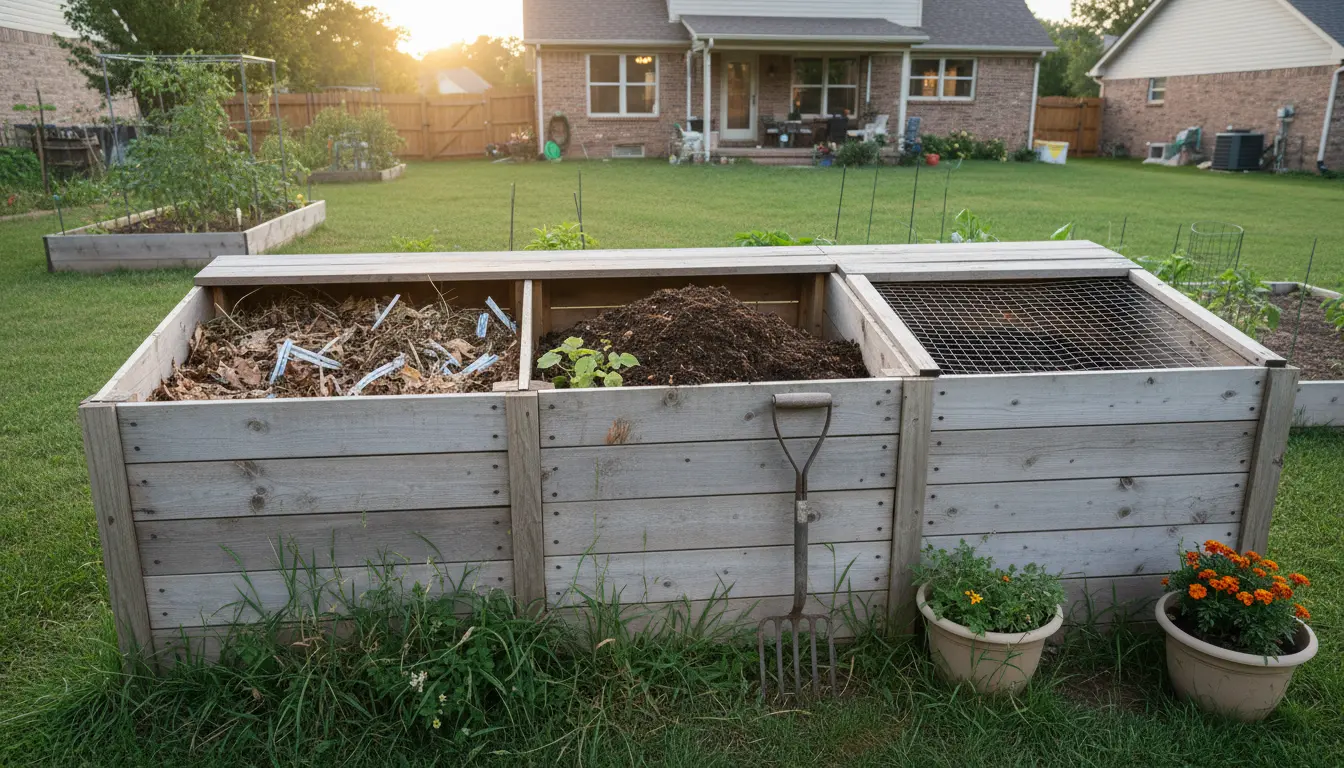
Why Choose Home Composting?
Home composting turns kitchen and garden waste into nutrient-rich soil that improves plant health. It reduces trash volume, lowers greenhouse gas emissions from landfills, and saves money on fertilizers.
For beginners, home composting is an accessible sustainability step that works in apartments or houses with yards. This guide covers practical steps, common problems, and a short case study to get you started quickly.
Basic Principles of Home Composting
Composting is a controlled biological process where microbes break down organic materials into humus. Success depends on balancing carbon and nitrogen, moisture, aeration, and particle size.
Use the rule of thumb: brown materials provide carbon, green materials supply nitrogen. Proper balance accelerates decomposition and reduces odors.
Carbon and Nitrogen Balance
Common brown materials: dry leaves, straw, shredded paper, cardboard. Common green materials: vegetable scraps, coffee grounds, fresh grass clippings.
Aiming for a mix close to 30:1 carbon to nitrogen by weight is effective. For practical purposes, layer two parts browns to one part greens or mix until it looks evenly distributed.
Moisture and Aeration
Compost should feel like a wrung-out sponge—moist but not dripping. Too dry slows microbes, too wet creates anaerobic conditions and odors.
Turn the pile every 1–2 weeks to introduce air and speed up decomposition. Smaller piles (3x3x3 feet) heat more consistently, but small bins also work for apartment composting.
How to Compost at Home: Step-by-Step
Choose a container: a simple open pile, a bin, or a tumbling composter. Each option has trade-offs in space, maintenance, and speed.
Step 1: Select a Spot and Container
- Yard: place the pile on bare soil to allow worms and microbes to enter.
- Small spaces: use a compact bin or bokashi system if you need odor control.
- Sun vs shade: partial shade helps maintain moisture without overheating.
Step 2: Build Your Pile
- Start with coarse browns for drainage (twigs, straw).
- Add alternating layers of greens and browns, moisten lightly.
- Chop large pieces to speed decomposition.
Step 3: Maintenance
- Turn the pile every 1–2 weeks with a pitchfork or tumbler.
- Maintain moisture and add browns if it smells sour.
- Monitor temperature: a hot pile (around 85–140°F) breaks down quickly; safe gardening compost eventually cools.
What to Compost and What to Avoid
Knowing what to include prevents problems and attracts useful organisms rather than pests.
Safe to Compost
- Fruit and vegetable scraps, coffee grounds, egg shells.
- Yard debris: leaves, grass clippings, small prunings.
- Uncoated paper, cardboard, sawdust from untreated wood.
Avoid Composting
- Meat, dairy, fish, oily foods (attract pests and smell).
- Diseased plants or invasive weeds that might survive composting.
- Pet waste from carnivores and treated wood products.
Adding small amounts of garden soil or finished compost introduces beneficial microbes that jump-start decomposition.
Troubleshooting Common Issues in Home Composting
Most problems are fixable with simple adjustments to balance, moisture, or aeration. Recognizing signs early saves time.
Problem: Bad Odor
Likely causes: too wet or too much green material. Remedy: add more browns, mix the pile, and turn to reintroduce air.
Problem: Slow Decomposition
Causes include low moisture, large particle size, or insufficient nitrogen. Remedy: moisten the pile, chop materials, and add greens like kitchen scraps or grass clippings.
Problem: Fruit Flies or Pests
Cover food scraps with a layer of browns and bury them in the pile. Use a closed bin if pests persist and avoid adding meat or oily foods.
Small Real-World Case Study: A Family Reduces Waste and Grows Veggies
A two-person household in Portland started a 3x3x3-foot compost bin in their backyard. They collected vegetable scraps and coffee grounds in a countertop container and added leaves from their yard.
Within six months they had dark, crumbly compost they mixed into raised beds. Their tomato plants produced noticeably more fruit, and household trash dropped by 30 percent. The family credits consistent turning and maintaining moisture for their success.
Practical Tips and Quick Checklist
- Keep a small kitchen pail with a tight lid for scraps to reduce trips to the bin.
- Shred or chop large items to speed breakdown.
- Rotate between wet (greens) and dry (browns) additions for balance.
- Use finished compost as a soil amendment or top dressing for potted plants.
Final Thoughts on Home Composting
Home composting is a low-cost way to reduce waste and improve soil health. It requires a little routine—collecting scraps, maintaining balance, and occasional turning—but rewards you with rich compost and lower waste bills.
Start small, observe your pile, and adjust methods to suit your space and lifestyle. With these steps, beginners can turn kitchen and garden scraps into an asset for their garden in a few months.