
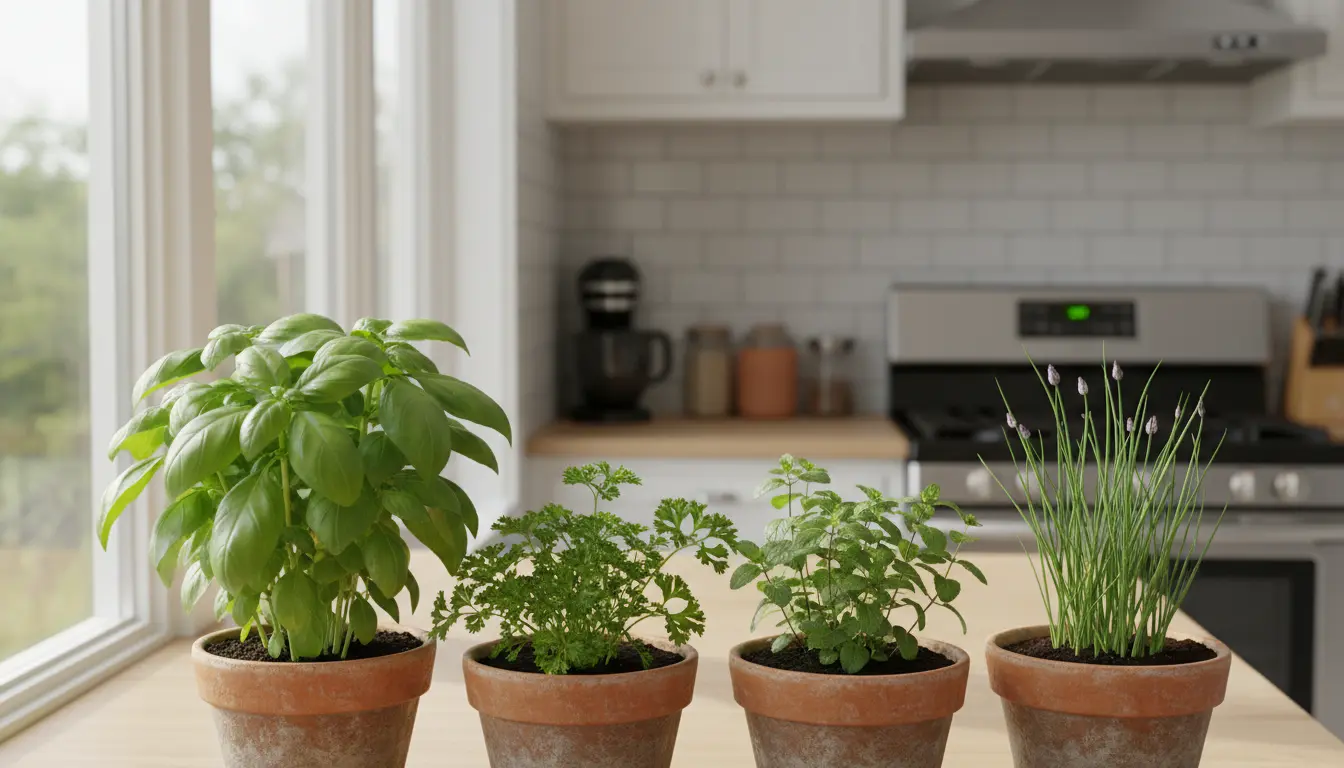
Indoor herb gardening is a low-cost way to grow fresh flavors year-round. This guide gives practical steps and tips to start an indoor herb garden successfully, even in small apartments.
Why Indoor Herb Gardening Works
An indoor herb garden lets you harvest fresh herbs for cooking and health without needing outdoor space. Herbs adapt well to containers and tend to grow quickly when given proper light and water.
With simple equipment and regular care, you can maintain productive plants on a windowsill, countertop, or shelf.
Choosing Herbs for an Indoor Herb Garden
Select herbs that tolerate container life and indoor conditions. Some are easier for beginners than others.
- Basil — fast-growing and easy with bright light.
- Parsley — tolerant of moderate light and regular cutting.
- Mint — forgiving and vigorous; use a separate pot to control spread.
- Chives — compact and hardy, good in small pots.
- Thyme and Oregano — drought-tolerant and suited to shallow containers.
Tips for Choosing Varieties
Pick compact or bush varieties for small spaces. Look for descriptions like “compact” or “patio” on seed packets and plant labels.
If you want continuous harvests, choose a mix of fast-growers (basil, cilantro) and longer-lived herbs (thyme, rosemary).
Setting Up Your Indoor Herb Garden
Follow a few key steps to create a stable environment for your herbs.
- Containers: Use pots with drainage holes to prevent waterlogging.
- Soil: Use a light, well-draining potting mix formulated for containers.
- Light: Most herbs need 4–6 hours of bright light daily; south or west-facing windows are best.
- Temperature: Keep herbs between 60–75°F (15–24°C) for steady growth.
Using Grow Lights
If natural light is limited, invest in an LED grow light. Position the light 6–12 inches above plants and run 12–14 hours daily to mimic sunlight.
Full-spectrum LEDs are energy-efficient and support healthy leaf growth.
Watering and Feeding Your Indoor Herb Garden
Proper water and nutrient management keeps herbs productive without disease.
- Watering: Water when the top inch of soil feels dry. Water until it drains out the bottom, then discard excess.
- Feeding: Apply a balanced liquid fertilizer every 3–4 weeks at half-strength during the growing season.
- Humidity: Many herbs prefer moderate humidity; group pots or use a tray with pebbles and water to raise humidity if air is dry.
Common Watering Mistakes
Overwatering causes root rot and yellowing leaves. Underwatering makes herbs wilt and drop leaves. Check soil moisture rather than following a strict schedule.
Pest and Disease Management in Indoor Herb Gardening
Indoor gardens have fewer pests, but problems still occur. Regular checks catch issues early.
- Inspect leaves weekly for aphids, whiteflies, or spider mites.
- Remove affected leaves and rinse plants under a gentle stream of water.
- Use insecticidal soap or neem oil for small infestations, following label directions.
Preventive Practices
Good airflow, clean pots, and avoiding overwatering reduce disease risk. Rotate plants occasionally to prevent localized pest buildup.
Harvesting and Pruning Your Indoor Herb Garden
Harvesting stimulates growth and keeps herbs healthy. Use clean scissors and harvest in the morning for best flavor.
- Pinch or cut stems just above a pair of leaves to encourage branching.
- Harvest no more than one-third of the plant at a time to avoid stress.
- Use fresh leaves within days, or dry/freeze excess for later use.
Small Real-World Case Study
Case: Sarah, a city renter, started an indoor herb garden on a 3-foot windowsill. She chose basil, chives, and mint in three 6-inch pots and used a small LED grow light for winter months.
After two months of consistent light and weekly feeding, she had enough basil for weekly pesto, chives for omelets, and controlled mint for teas. Regular pruning kept plants compact and productive.
Quick Starter Checklist for Indoor Herb Gardening
- Choose 3–5 beginner herbs (basil, parsley, mint, chives, thyme).
- Use well-draining pots and potting mix.
- Provide 4–6 hours of bright light or use an LED grow light.
- Water when the top inch of soil is dry; avoid standing water.
- Fertilize lightly every 3–4 weeks during growth.
- Inspect weekly for pests and prune regularly.
Final Tips for Indoor Herb Gardening Success
Start small, observe your plants, and adjust light and water as needed. Most beginners succeed with regular attention and simple routines.
Over time you can expand to more varieties, experiment with hydroponics, or create a vertical herb shelf. The key is steady care and small adjustments based on plant response.