
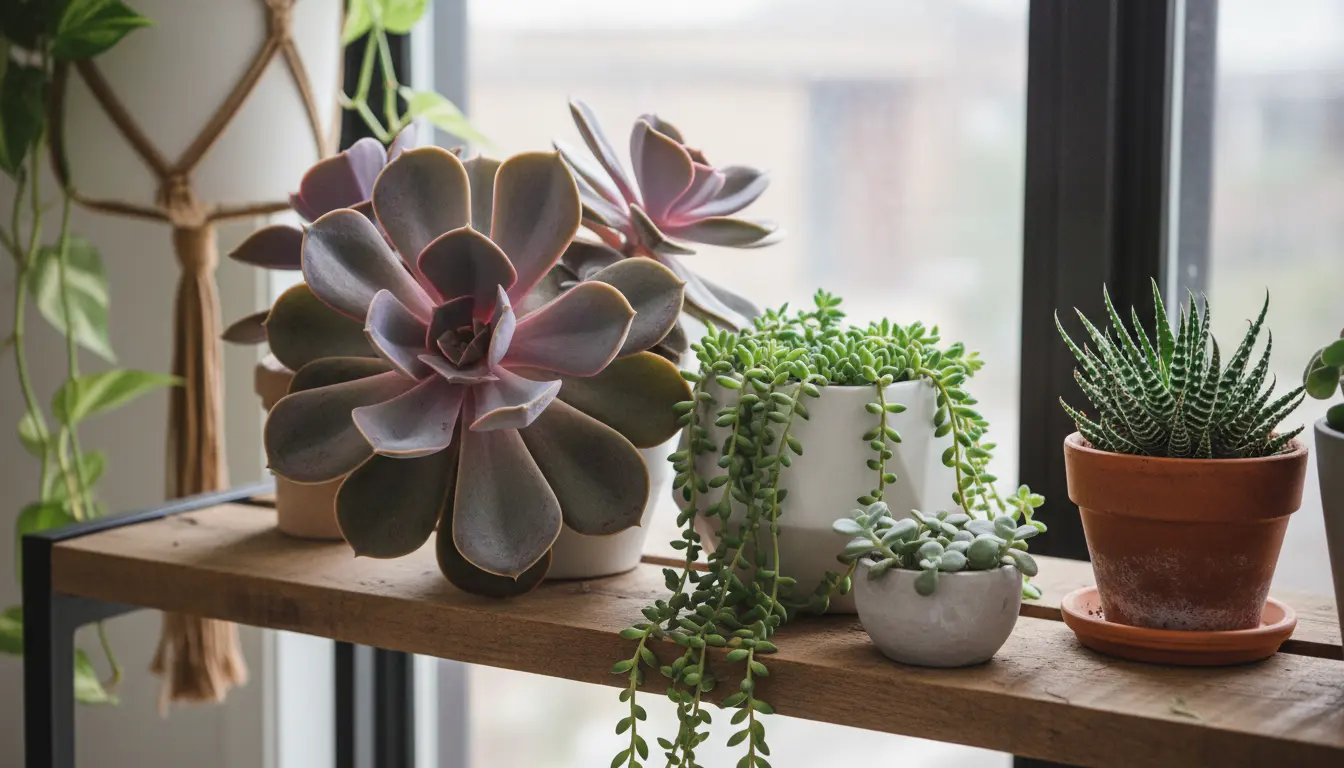
Succulents are popular because they look good and require less attention than many houseplants. But they still need the right light, soil, and routine to thrive indoors. This guide gives clear, actionable steps for everyday indoor succulent care.
Indoor Succulent Care: Light Requirements
Light is the single most important factor in indoor succulent care. Most succulents prefer bright, indirect light for at least 6 hours a day.
Place succulents near a south- or west-facing window when possible. Rotate pots weekly to keep growth even and prevent leaning toward the light.
Signs your succulent needs more light
- Stretched or elongated stems (etiolation)
- Pale or faded color
- Slow growth despite regular care
If light is limited, use a full-spectrum LED grow light for 8–10 hours daily. Keep the light 12–18 inches above the plants and adjust based on manufacturer guidance.
Indoor Succulent Care: Watering and Soil
Proper watering and well-draining soil prevent root rot. Succulents store water in leaves, so they need infrequent, thorough watering rather than light daily misting.
Watering method
- Water deeply until water drains from the pot’s bottom.
- Let soil dry completely between waterings.
- Reduce watering in winter when growth slows.
As a rule of thumb, most indoor succulents need water every 2–4 weeks, but frequency depends on light, temperature, and pot size.
Best soil mix for indoor succulents
Use a fast-draining mix to prevent standing moisture. You can buy a commercial cactus mix or make your own by mixing:
- 2 parts potting soil
- 1 part coarse sand or pumice
- 1 part perlite or grit
Choose clay or terracotta pots with drainage holes to help soil dry faster.
Indoor Succulent Care: Temperature and Humidity
Succulents prefer temperatures between 60–80°F (15–27°C). They tolerate cooler nights but should be kept above freezing.
Low to moderate humidity is ideal. High indoor humidity can encourage mold and rot, so ensure good air circulation and avoid overcrowding pots.
Indoor Succulent Care: Fertilizing and Routine Maintenance
Succulents need light feeding during their growing season (spring and summer). Use a balanced, diluted fertilizer to avoid burning roots.
- Feed monthly with a 10-10-10 or a cactus-specific fertilizer at half strength.
- Remove dead leaves from the pot surface to prevent pests and fungal growth.
- Wipe dust off leaves occasionally to improve photosynthesis.
Indoor Succulent Care: Repotting and Propagation
Repot succulents every 1–2 years or when roots outgrow the pot. Repotting refreshes soil and gives room for growth.
How to repot
- Water a few days before to reduce stress.
- Gently remove the plant, shake off old soil, and trim dead roots if needed.
- Place in fresh mix and wait 3–7 days before watering to let roots settle.
Propagation basics
Many succulents propagate easily from leaf or stem cuttings. Let cuttings dry to form a callus, then place on dry soil and mist lightly until roots form.
Some succulents like Haworthia and Gasteria tolerate lower light and higher humidity better than Echeveria and Sedum. Choose species to match your indoor conditions.
Indoor Succulent Care: Common Pests and Problems
Watch for mealybugs, scale, and fungal issues. Early detection makes treatment easier and prevents spread.
Quick pest control steps
- Isolate affected plants immediately.
- Remove visible pests with a cotton swab dipped in isopropyl alcohol.
- Use insecticidal soap or neem oil for larger infestations, following label instructions.
To prevent problems, avoid overwatering, ensure good light, and keep tools clean between uses.
Case Study: Reviving an Echeveria
Maria, an apartment renter, bought an Echeveria that arrived stretched and pale after long shipping. She placed it by a west window for six hours of bright light daily and repotted it into a fast-draining mix.
She watered deeply once the top 2 inches were dry, then waited three weeks before the next watering. Within two months, the rosette tightened, leaf color improved, and new offsets appeared.
Key actions: increased light, fresh soil, careful watering schedule.
Quick Checklist for Indoor Succulent Care
- Light: 6+ hours bright, indirect light
- Soil: fast-draining mix
- Water: deep, infrequent; let soil dry between waterings
- Pot: drainage holes are essential
- Fertilizer: light feeding in growing season
- Pest control: isolate and treat early
Following these practical steps for indoor succulent care will help your plants stay healthy and attractive. Adjust routines to your specific indoor environment and the species you grow, and keep a simple journal of watering and light to track what works best.