
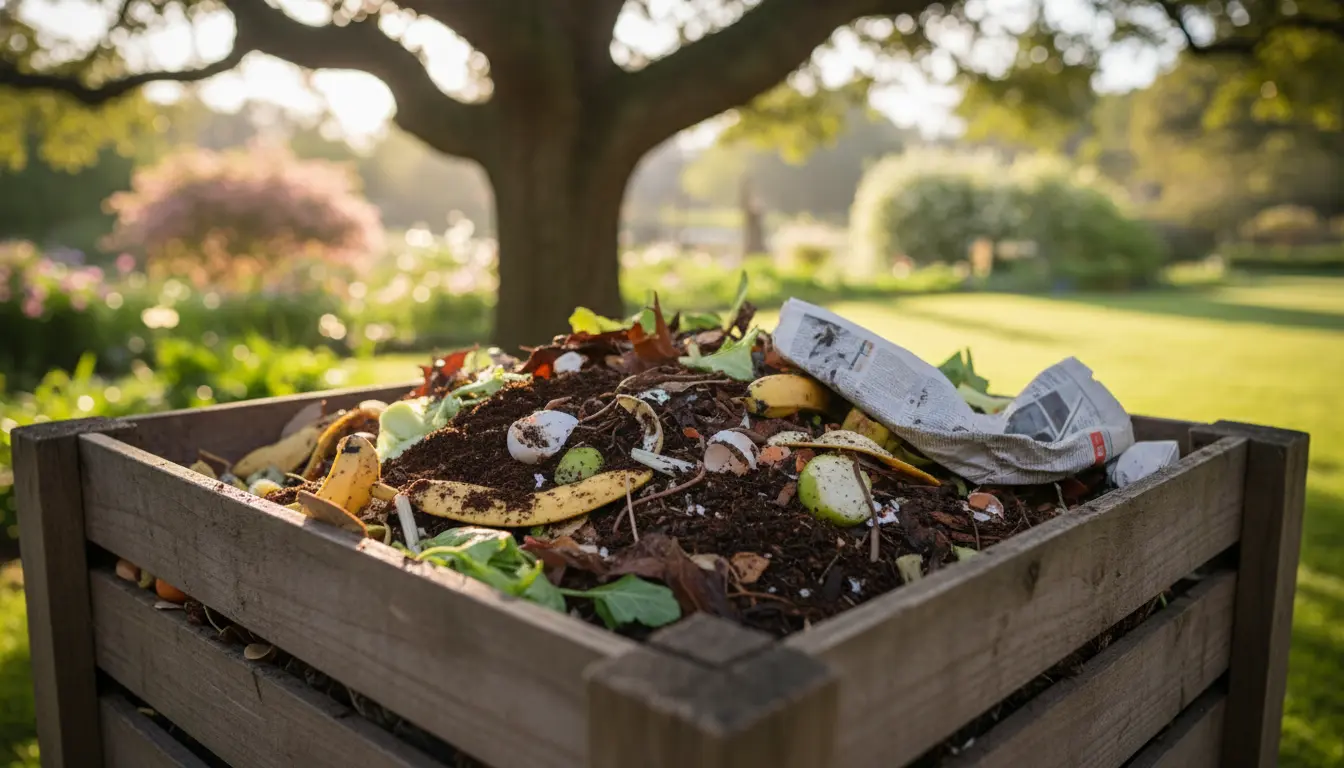
Why Home Composting Matters
Home composting turns kitchen scraps and yard waste into nutrient-rich soil. It reduces landfill waste and improves garden health in a few simple steps.
How Home Composting Works
Compost is the result of aerobic decomposition by bacteria, fungi, and invertebrates. The process needs the right balance of carbon, nitrogen, air, and moisture.
Key Components for Home Composting
Successful composting uses two main categories of ingredients. These are often called “greens” and “browns” to keep the carbon-to-nitrogen balance stable.
- Greens (nitrogen): kitchen scraps, coffee grounds, fresh grass clippings.
- Browns (carbon): dry leaves, shredded paper, straw, small twigs.
- Water and air: keep the pile moist like a wrung-out sponge and turn it regularly for oxygen.
How to Start Home Composting: Step-by-Step
Starting a compost pile or bin is straightforward and cost-effective. Use this simple plan to get reliable results in weeks to months.
- Choose a bin or location: a plastic bin, wire cage, or a simple pile in a shady corner works well.
- Lay a base: start with coarse brown materials like twigs to help airflow at the bottom.
- Layer greens and browns: alternate thin layers of nitrogen-rich and carbon-rich materials.
- Maintain moisture: sprinkle water occasionally to keep the pile damp but not soggy.
- Turn the pile: every 1–2 weeks to add oxygen and speed decomposition.
- Harvest: when material is dark, crumbly, and smells earthy, it is ready to use in the garden.
Practical Tips for Beginners
- Chop larger items to speed breakdown and increase surface area.
- Keep a small kitchen caddy to collect scraps and empty it into the bin daily.
- Avoid meat, dairy, and oily foods to reduce pests and odors.
- Balance roughly 2–3 parts browns to 1 part greens by volume for steady results.
Adding a thin layer of finished compost or garden soil to new layers introduces beneficial microbes and speeds up decomposition.
Common Problems and Fixes in Home Composting
Beginners often worry about smell, pests, or slow breakdown. These issues are usually easy to fix with small adjustments.
Smelly Pile
A rotten smell means too much moisture or too many greens. Add more browns, turn the pile, and allow it to aerate.
Pests and Fruit Flies
To prevent animals, avoid adding meat and cover fresh food scraps with brown material. Use a closed bin or fine mesh cover if needed.
Slow Decomposition
Slow breakdown can mean low nitrogen, low moisture, or large particle size. Add fresh greens, water lightly, and chop materials smaller.
Using Finished Compost
Finished compost enriches garden beds, improves soil structure, and increases water retention. Use it as a top dressing or mix it into planting holes.
- Mix 1–3 inches into vegetable beds each season.
- Blend with potting soil for container plants to boost nutrition and drainage.
- Top-dress lawns thinly to feed grass and improve soil micro-life.
Real-World Example: A Small Apartment Balcony Setup
Emma, a city renter, started home composting on her balcony using a 20-liter tumbling compost bin. She collected vegetable peels, coffee grounds, and shredded paper.
Within three months of regular turning and balancing greens and browns, Emma produced usable compost. She mixed the finished compost into potted tomatoes and reported better fruit set and healthier foliage the following season.
Quick Checklist to Start Home Composting Today
- Pick a bin or corner that gets partial shade.
- Gather brown materials: dry leaves, shredded paper, small twigs.
- Collect green materials: vegetable scraps, coffee grounds, fresh grass.
- Keep a small pitcher of water nearby to maintain moisture.
- Turn the pile every 1–2 weeks and monitor progress.
Home composting is a small habit with big environmental and gardening benefits. Start with simple materials and a consistent routine, and you will see improvement in weeks. Use the checklist and troubleshooting tips to keep the process efficient and odor-free.