
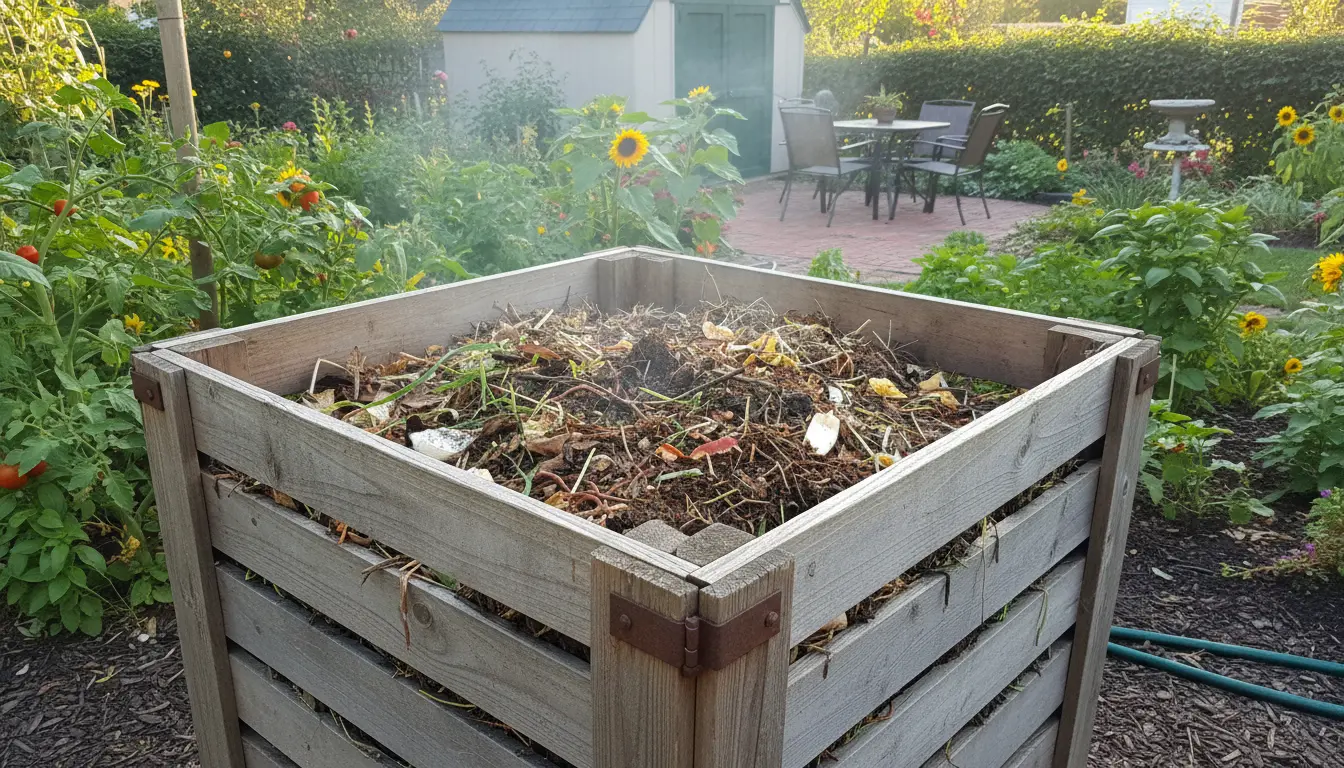
What Is Home Composting for Beginners
Home composting is the controlled breakdown of organic waste into nutrient-rich material you can use in gardens. For beginners, it is a low-cost way to reduce landfill waste and improve soil health.
This guide gives clear, step-by-step instructions to start composting at home using a simple bin or pile.
Why Start Home Composting for Beginners
Composting lowers household trash volume and returns nutrients to the soil. It can cut methane emissions from landfills and save money on store-bought fertilizers.
Beginners can start with basic tools and a little attention, then scale up as they learn what works in their climate.
Essential Materials for Home Composting for Beginners
Good compost needs three basic inputs: organic materials, air, and moisture. Keep your process simple at first.
- Greens: fruit and vegetable scraps, coffee grounds, fresh grass clippings.
- Browns: dry leaves, shredded paper, cardboard, straw.
- Tools: a bin or pile, garden fork, and a watering can or hose for moisture control.
How to Start Home Composting for Beginners
Follow these practical steps to set up a beginner-friendly compost system.
- Choose a spot: pick a well-drained area in your yard or a shaded balcony corner if using a small bin.
- Select a bin: use a commercial compost bin, a DIY wooden bin, or a simple plastic tumbler for faster results.
- Layer materials: start with a 4–6 inch layer of browns, then add a thinner layer of greens. Repeat layering as you add waste.
- Balance moisture: aim for the texture of a damp sponge. Add water to dry piles or more browns if it’s too wet.
- Turn the pile: aerate weekly or every two weeks by mixing to speed decomposition and avoid odors.
Quick Start Mix Example
Try a simple ratio: three parts browns to one part greens by volume. For example, three buckets of shredded leaves plus one bucket of kitchen scraps.
Managing Temperature and Time
Compost can be hot or cold. Hot composting (130–160°F) breaks materials down faster and kills seeds. Cold composting takes longer but needs less work.
Most beginner systems produce finished compost in 3–12 months. Turning and a good greens-to-browns balance shorten that time.
Troubleshooting Common Problems
Beginners often encounter a few predictable issues. Here are quick fixes.
- Bad smell: add more browns and turn the pile to introduce oxygen.
- Pests: avoid meat, dairy, and oily foods; use a closed bin or bury food scraps in the center.
- Slow decomposition: chop materials small, maintain moisture, and increase turning frequency.
- Too wet: mix in dry browns and improve drainage or add ventilation to the bin.
Composting one ton of organic waste can prevent roughly one ton of carbon dioxide equivalent from entering the atmosphere. Small household efforts add up when many people compost.
Using Finished Compost
Finished compost is dark, crumbly, and smells earthy. Use it as a soil amendment, top dressing, or in potting mixes.
Mix 10–30% finished compost into garden beds to improve structure and nutrient content. For container plants, blend one part compost with two parts potting soil.
Simple Applications
- Vegetable beds: spread a 1–2 inch layer and lightly mix into the topsoil before planting.
- Lawns: thinly top-dress in spring or fall to add nutrients and improve moisture retention.
- Houseplants: add a small amount to repotting mixes for better drainage and fertility.
Small Case Study: One Family’s First Year
A family of four in a small suburban home started a 55-gallon tumbler. They collected kitchen scraps in a countertop pail, layered with shredded leaves, and turned the tumbler twice weekly.
After six months they produced two 5-gallon buckets of finished compost. They used it in raised vegetable beds and reported healthier tomato plants and a noticeable drop in weekly trash volume.
Practical Tips for Success
Keep the process manageable and consistent. Small daily habits deliver steady results.
- Save kitchen waste in a lidded pail and empty it into the bin every few days.
- Shred or chop large items to speed decomposition.
- Maintain a mix of greens and browns; monitor moisture and aerate regularly.
Next Steps for Home Composting for Beginners
Start small and learn from each batch. Track what you add and how the pile responds to fine-tune your method.
Consider joining a local gardening group or online forum to ask questions and share tips. Composting is a practical skill that improves with experience.
By following these clear steps, beginners can set up an effective home composting system that reduces waste and enriches their soil.