
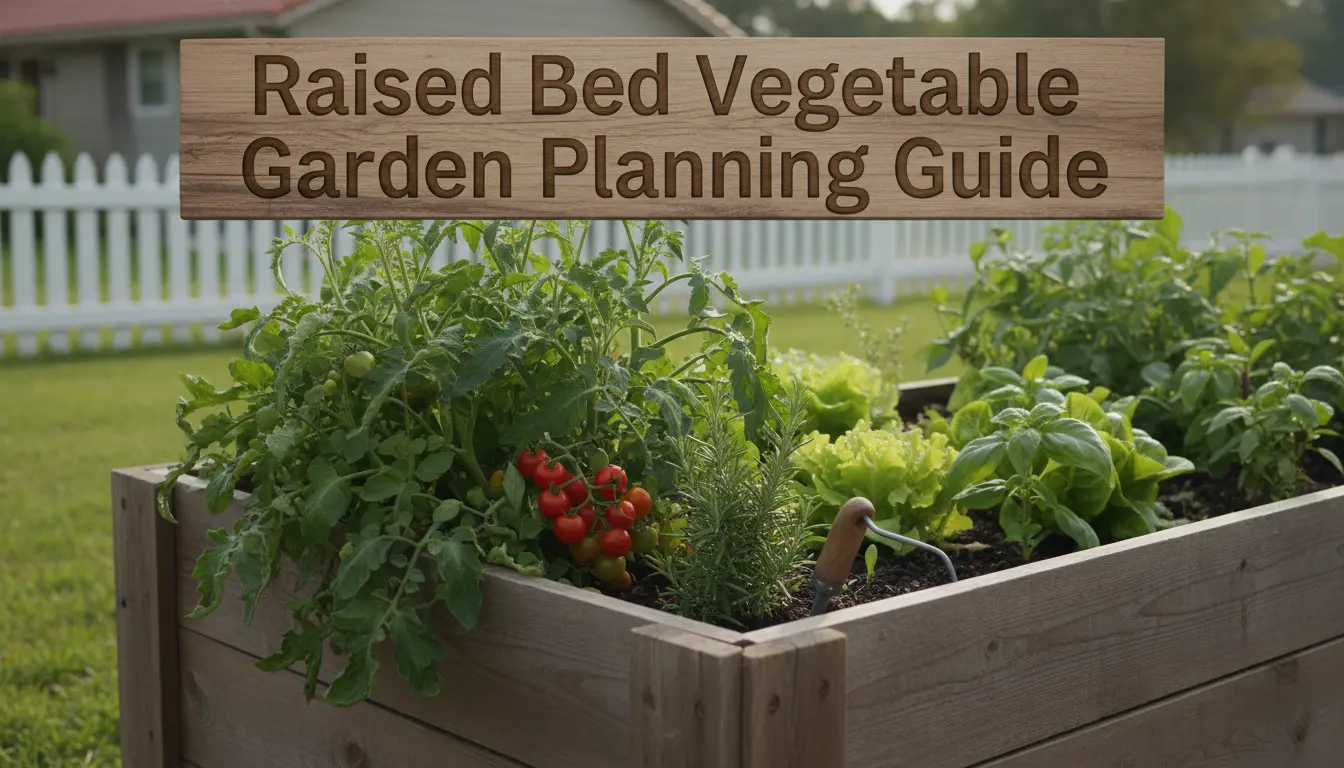
Why Choose a Raised Bed Vegetable Garden
Raised bed vegetable gardens improve soil drainage, warm faster in spring, and reduce soil compaction. They let you control soil quality and make gardening accessible for people with limited space or mobility.
This guide shows practical steps to start a raised bed vegetable garden, from planning and materials to planting and seasonal care.
Plan Your Raised Bed Garden
Choose a sunny location that gets at least 6 hours of direct sunlight per day. Consider proximity to a water source to make irrigation easy.
Decide bed size and layout. Common bed sizes are 4×4, 4×8, or 3×6 feet. Keep beds no wider than 4 feet so you can reach the center from either side.
Key planning checklist
- Sun exposure: 6+ hours daily
- Bed size: 3–4 feet wide for easy access
- Orientation: long side north-south for even sun
- Water access and drainage assessment
- Crop selection based on season and space
Choose Materials and Build the Bed
Raised beds can be built from wood, composite, stone, or metal. Untreated cedar is durable and rot-resistant, while untreated pine is cheaper but shorter-lived.
Use simple tools: saw, drill, screws, tape measure, and level. Assemble sides and secure corners; place the bed on level ground.
Materials at a glance
- Frame: cedar boards, composite planks, or recycled lumber
- Fasteners: exterior-grade screws
- Soil: high-quality garden mix (details below)
- Optional: landscape fabric to suppress weeds under the bed
Mix the Right Soil for a Raised Bed Vegetable Garden
Good soil mix is the foundation of a productive raised bed vegetable garden. Aim for a light, fertile, well-draining mix that holds moisture without becoming waterlogged.
A reliable ratio is two parts topsoil, two parts compost, and one part coarse sand or perlite for drainage. Adjust based on local soil quality.
Soil mix recipe
- 2 parts screened topsoil
- 2 parts well-aged compost
- 1 part coarse sand or perlite
- Optional: 1 cup of slow-release organic fertilizer per cubic foot
Planting Strategy for a Raised Bed Vegetable Garden
Plan crops by spacing, height, and maturity. Use square-foot gardening or traditional rows depending on your preference.
Interplant fast-growing crops (lettuce, radishes) with slower ones (tomatoes, peppers) to maximize yield and reduce bare soil.
Example planting layout
- Tomatoes at the north end to avoid shading
- Peppers and eggplants in mid-row
- Leafy greens and herbs in front rows for easy harvest
- Companions: basil near tomatoes, marigolds to deter pests
Watering and Maintenance
Water deeply and less frequently to encourage strong root growth. A drip irrigation line or soaker hose under mulch saves water and keeps foliage dry.
Mulch with straw, shredded leaves, or wood chips to suppress weeds and retain moisture. Top up compost yearly to replenish nutrients.
Routine maintenance tasks
- Weekly weeding and light cultivation
- Check soil moisture and water as needed
- Stake or cage tall plants like tomatoes
- Rotate crops annually to reduce disease and nutrient depletion
Raised beds warm faster in spring and can extend the growing season by up to two weeks. Warmer soil encourages earlier germination and faster growth for many vegetables.
Pest and Disease Basics for Raised Bed Vegetable Gardens
Healthy soil and good airflow reduce pests and diseases. Use floating row covers for seedlings and hand-pick common pests like caterpillars and slugs.
Practice crop rotation and remove diseased plants promptly. Introduce beneficial insects with flowering herbs and native plants nearby.
Small Real-World Case Study
Case: Maria, a suburban homeowner, built two 4×8 cedar raised beds in spring. She filled them with the soil mix above and planted tomatoes, lettuce, beans, and herbs.
By mid-summer she reported easier weeding, earlier tomato harvests, and abundant salad greens. Maria used a soaker hose on a timer and added compost in fall, maintaining soil health for the next season.
Seasonal Tasks and Crop Rotation
In spring: top up soil, start transplants, and set up supports. In summer: monitor water and harvest actively. In fall: remove spent plants, add compost, and plant cover crops if desired.
Rotate plant families (nightshades, brassicas, legumes) to different beds each year to reduce pests and balance nutrients.
Common Mistakes and How to Avoid Them
- Too deep beds without proper soil: fill with a good mix rather than poor native soil.
- Overcrowding plants: follow spacing guidelines to reduce disease and improve yields.
- Poor water management: use drip irrigation or consistent hand-watering to avoid stress.
- Neglecting compost: replenish organic matter annually for long-term productivity.
Ready to Start Your Raised Bed Vegetable Garden?
Start small with one or two beds and expand as you gain experience. Proper planning, quality soil, and simple maintenance will give you a productive garden with less effort than in-ground beds.
Use the checklists and steps above to set up your raised bed vegetable garden and enjoy fresh produce all season.