
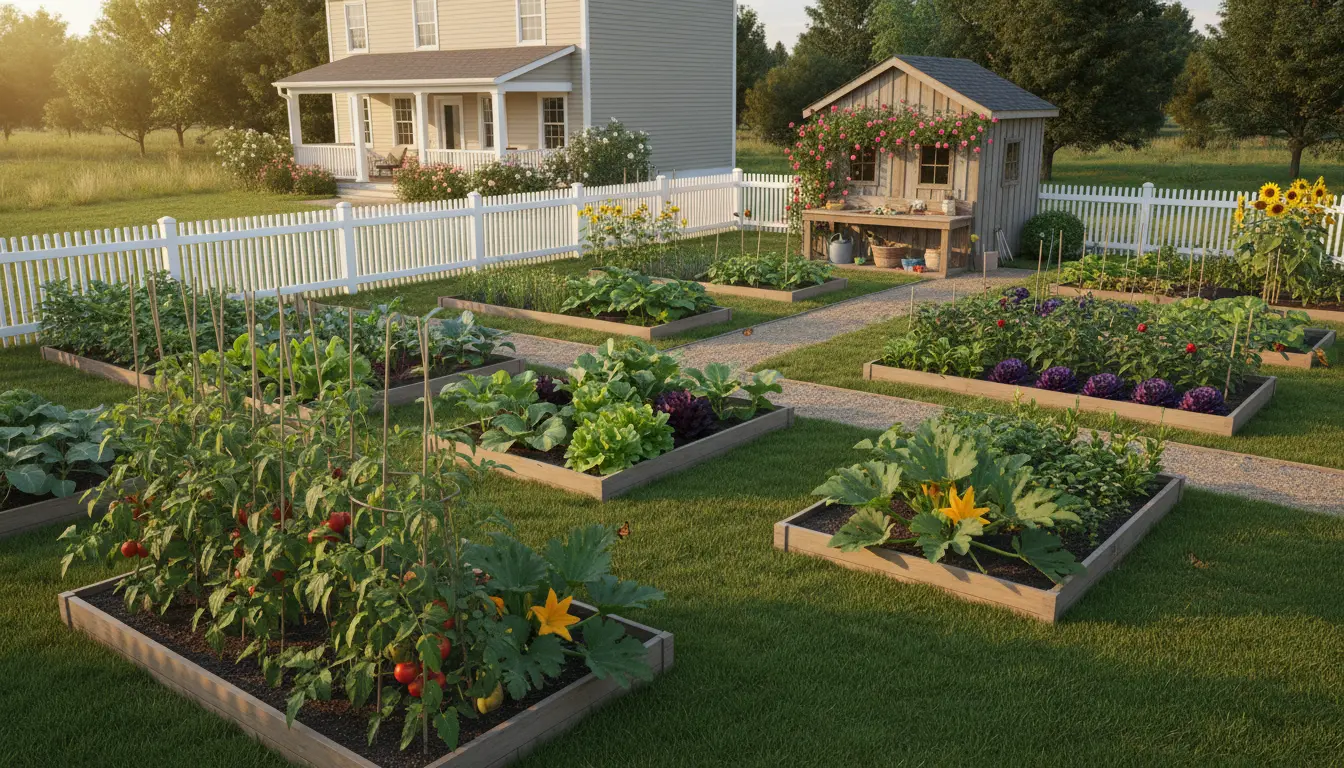
How to Start a Vegetable Garden: Overview
Starting a vegetable garden is a hands-on project you can complete in a weekend and maintain through the season. This guide covers practical steps that work for small backyards, balconies, and raised beds.
Choose the Right Location to Start a Vegetable Garden
Location matters more than the size of the plot. Most vegetables need 6 to 8 hours of direct sun daily.
Pick a spot with good drainage and easy access to water. Avoid low spots that hold cold water after rain.
Sunlight and Microclimates
Observe the site over a few days at different times. Note where shade falls during the morning and afternoon.
Use that observation to place heat-loving crops, like tomatoes, where they get full sun, and leafy greens where afternoon shade occurs.
Prepare Soil and Beds
Healthy soil is the foundation of a productive garden. Start by testing or assessing your soil texture and structure.
Work in organic matter such as compost or well-rotted manure to improve fertility and drainage.
Types of Beds
- In-ground beds: Good for ample space and existing good soil.
- Raised beds: Warm faster in spring, improve drainage, and reduce soil compaction.
- Containers: Best for balconies or small patios, choose large pots for root vegetables.
Plan What to Plant
Select vegetables that suit your climate, space, and cooking habits. Beginners see success with beans, lettuce, radishes, and tomatoes.
Consider planting fast-maturing crops between slower ones (succession planting) to maximize yield from a small area.
Companion Planting Basics
Some plants help each other by repelling pests or improving growth. For example, basil near tomatoes can boost flavor and may reduce pests.
Keep tall plants to the north side of beds so they don’t shade shorter plants.
Planting: Seeds vs Seedlings
Decide whether to start from seed or buy seedlings. Seeds are cheaper and offer more variety; seedlings give a head start.
Follow seed packet dates for planting depth and spacing. For seedlings, loosen roots before planting to help establish growth.
Timing and Spacing
Check your local last frost date and plant accordingly. Cool-season crops can go out before the last frost; warm-season crops must wait until after.
Maintain the recommended spacing to reduce disease and competition for nutrients.
Watering and Mulching
Consistent watering matters more than frequent shallow watering. Aim for deep, infrequent water to encourage strong roots.
Apply mulch to conserve moisture, reduce weeds, and moderate soil temperature.
Practical Watering Tips
- Water at the base of plants early in the morning.
- Use drip irrigation or soaker hoses for efficiency.
- Check soil moisture by digging a few inches; water when it feels dry at root depth.
Routine Care and Pest Management
Spend 10–20 minutes several times a week weeding, checking for pests, and harvesting. Early detection prevents small issues from becoming big problems.
Use physical controls first: handpick pests, use row covers, or remove diseased leaves.
Organic Pest Control Options
- Neem oil or insecticidal soap for soft-bodied insects.
- Crop rotation and sanitation to reduce soil-borne diseases.
- Encourage beneficial insects by planting flowers like calendula or alyssum.
Did You Know?
Some vegetables, like radishes and lettuce, can be harvested as early as 4 weeks after planting. Succession planting every 2–3 weeks keeps fresh greens available through the season.
Harvesting and Storage
Harvest at peak ripeness for best flavor and nutrition. Different vegetables have different signals: snap peas when pods are full, tomatoes when color is even.
Store produce correctly—root vegetables in cool, dark places and leafy greens wrapped in a damp towel in the refrigerator.
Small Real-World Example: Urban Raised Bed
Case Study: A family converted a 4×8 foot raised bed on a sunny balcony. They filled the bed with a 50/50 mix of compost and topsoil, then planted tomatoes at the back, bush beans in the middle, and lettuces at the front.
They used drip tubing and a 2-inch layer of straw mulch. In the first season they harvested regular salads, two tomato harvests, and a summer crop of beans. Their simple layout and weekly 15-minute checks kept pest problems minor.
Quick Checklist to Start a Vegetable Garden
- Choose a sunny, accessible location.
- Decide between in-ground, raised bed, or containers.
- Improve soil with compost and test drainage.
- Pick easy crops and follow planting dates.
- Set up watering and add mulch.
- Inspect regularly and harvest on schedule.
Final Tips
Start small and expand after you learn what thrives in your space. Keep notes on planting dates, varieties, and yields to improve next season’s plan.
Gardening is a series of small improvements; consistent care yields steady results.