
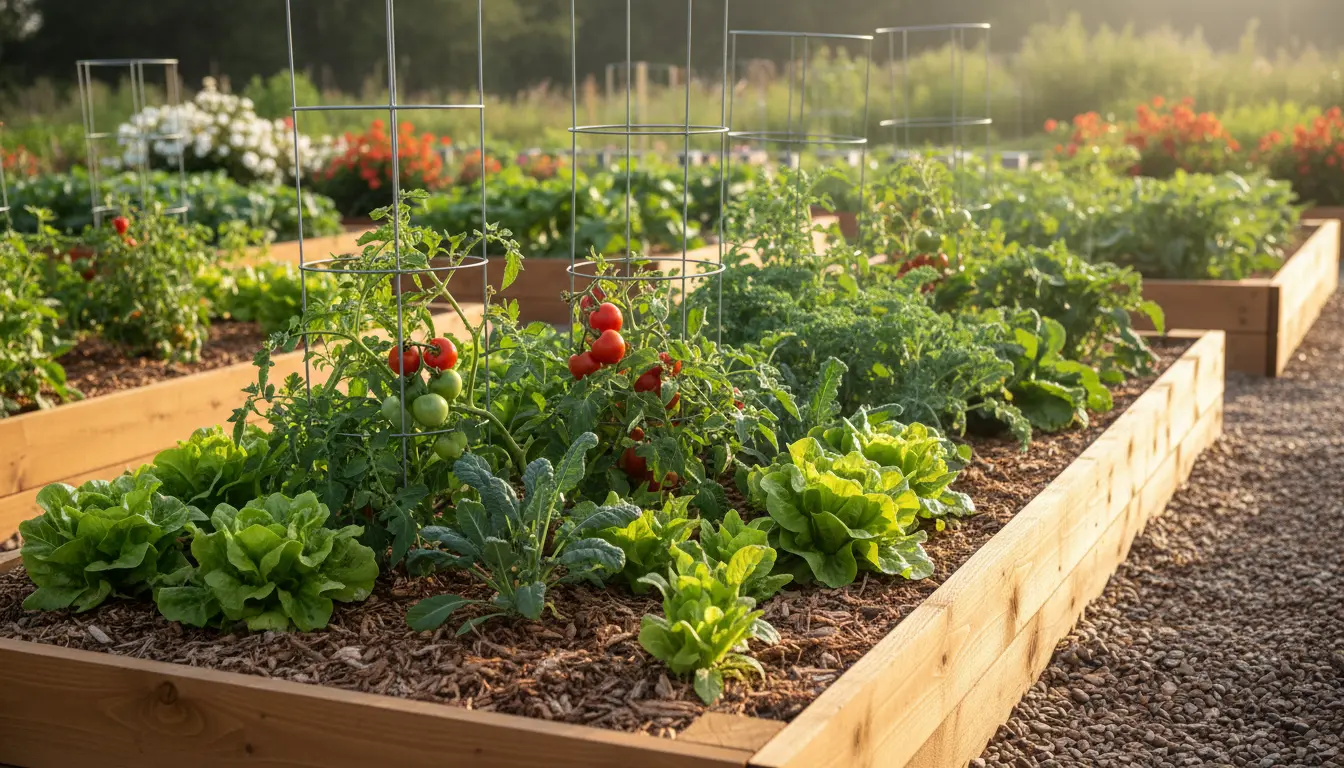
Why Choose a Raised Bed Vegetable Garden
Raised bed vegetable gardens offer better soil control, improved drainage, and easier access for planting and harvesting. They are ideal where native soil is poor, compacted, or contaminated.
Benefits include warmer soil in spring, fewer weeds, and the ability to concentrate nutrients for higher yields. This makes raised beds a practical choice for beginners and experienced gardeners.
Planning Your Raised Bed Vegetable Garden
Start by selecting a sunny location that gets at least six hours of direct sun daily. Consider proximity to water and ease of access for maintenance.
Decide on bed size and layout. Common dimensions are 4 feet wide by 8 feet long and 12 to 18 inches deep. The 4-foot width allows you to reach the center from either side without stepping onto the bed.
Materials and Tools
Choose durable materials for the bed frame such as cedar, composite lumber, or recycled plastic. Avoid treated woods that can leach chemicals into the soil.
- Tools: shovel, rake, drill, level, measuring tape
- Materials: boards or prefabricated bed kits, screws, landscape fabric (optional)
- Soil: a mix of topsoil, compost, and aeration materials (see soil mix below)
Building the Bed
Mark the bed footprint and ensure it is level. If the ground is uneven, use a level to adjust the frame so water won’t pool in one corner.
Assemble the frame and set it directly on the ground. For slopes, step the beds or use shorter legs on the downhill side to keep the top edge level.
Soil Mix for Raised Bed Vegetable Garden
Good soil is the heart of a raised bed vegetable garden. A reliable mix is 40% topsoil, 40% compost, and 20% aeration material such as perlite or coarse sand.
Adjust based on local soil quality. If you can source high-quality screened topsoil and rich compost, your plants will establish faster and yield better.
Planting and Crop Selection
Plan crops by height and root depth. Put taller plants at the north side of the bed to avoid shading shorter crops. Use succession planting to maximize yields through the season.
- Fast crops: lettuce, radishes, spinach
- Medium-term crops: beans, beets, carrots
- Long-season crops: tomatoes, peppers, eggplants
Include companion plants to deter pests and improve growth, such as basil with tomatoes or marigolds near roots.
Watering and Irrigation
Raised beds dry faster than in-ground beds, so consistent watering is essential. Use a drip irrigation system or soaker hose on a timer to provide even moisture without wetting foliage.
Mulch the surface with straw, shredded leaves, or bark to reduce evaporation and suppress weeds. Mulch also moderates soil temperature.
Maintenance Tips for a Healthy Raised Bed Vegetable Garden
Monitor soil fertility and pH annually. Add compost each season to replenish nutrients. Test pH if plants show deficiency symptoms; most vegetables prefer pH 6.0–7.0.
Rotate crops to reduce disease build-up and pest pressure. Avoid planting the same family (e.g., nightshades, brassicas) in the same bed two years in a row.
- Weed promptly—hand pull or use shallow cultivation
- Remove diseased plants and debris to reduce overwintering pests
- Stake or cage vining crops to save space and improve air flow
Pest and Disease Management
Inspect plants weekly for pests like aphids, slugs, and caterpillars. Use manual removal, insecticidal soap, or biological controls such as ladybugs where possible.
Encourage beneficial insects by planting flowering borders or herbs near the beds. Good drainage and proper spacing reduce fungal problems.
Raised beds can warm 5 to 10 degrees Fahrenheit earlier in spring, allowing earlier planting and longer growing seasons for many vegetables.
Simple Crop Rotation Plan for a Raised Bed Vegetable Garden
Use a three-year rotation between these groups: leafy greens, legumes and root vegetables, and fruiting crops (tomatoes, peppers). This reduces nutrient depletion and disease risk.
Example rotation for three beds:
- Year 1: Bed A leafy, Bed B legumes/roots, Bed C fruiting
- Year 2: Shift clockwise so each bed hosts a new group
- Year 3: Repeat shift to complete the cycle
Small Real-World Case Study
Sarah, a backyard gardener in Portland, built a 4×8 cedar raised bed and filled it with a 40/40/20 soil mix. She planted lettuce, spinach, and radishes in early spring and followed with tomatoes and beans in late spring.
By adding 2 inches of compost each fall and using drip irrigation with timers, she increased her bed’s production by nearly 50% in the second year. Her mulch and crop rotation reduced slug issues dramatically.
Quick Checklist to Start Your Raised Bed Vegetable Garden
- Choose a sunny, accessible site
- Select durable frame materials and build to 12–18 inches deep
- Fill with a balanced soil mix and add compost annually
- Plan crop layout, use succession planting, and rotate crops
- Install efficient watering and apply mulch
With straightforward planning and seasonal care, a raised bed vegetable garden can deliver reliable harvests and reduce common gardening problems. Start small, track what works, and expand as you gain experience.