
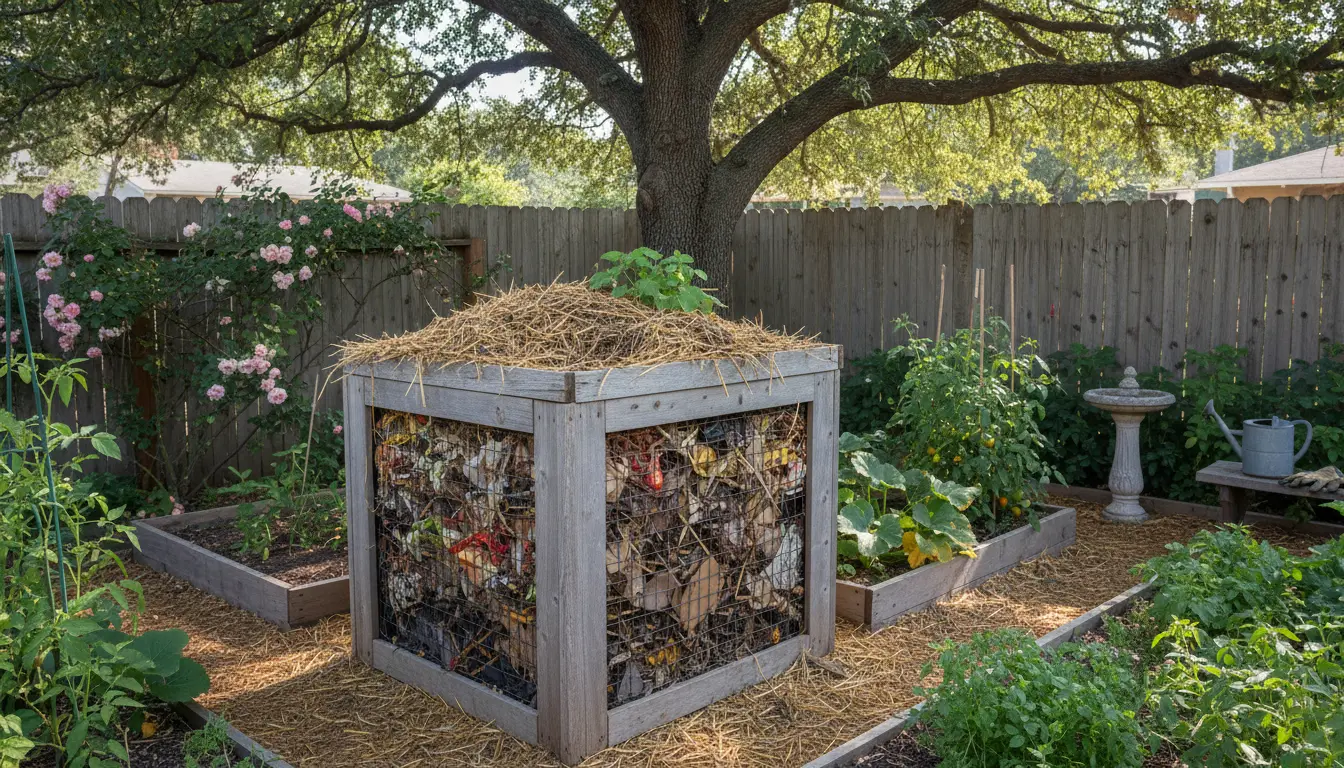
Home composting turns kitchen scraps and yard waste into a useful soil amendment. This guide focuses on practical steps that help beginners start composting at home with minimal cost and effort.
Why Home Composting Matters
Home composting reduces household waste and improves soil health for gardens and potted plants. It lowers the amount of organic material sent to landfills, cutting methane emissions and saving disposal costs.
Getting Started with Home Composting
Before you start, decide how much waste you produce and where you will place your compost. Choose a method that fits your space, climate, and time commitment.
Choose a Home Composting Method
There are simple options for every living situation. Pick one that suits your needs and will be easy to maintain.
- Tumbler bin: Fast and enclosed, good for small backyards.
- Static bin or pile: Low cost and flexible size, works for larger yards.
- Vermicomposting: Uses worms indoors or in a sheltered area; great for apartments.
- Bokashi or anaerobic composting: Handles cooked food and meat when space or regulations limit other options.
What to Compost in Home Composting
Balance ‘greens’ and ‘browns’ to keep decomposition active and odor-free. Greens provide nitrogen; browns provide carbon and structure.
- Greens: vegetable scraps, fruit peels, coffee grounds, fresh grass clippings.
- Browns: dry leaves, straw, shredded paper, cardboard, wood chips.
What to Avoid in Home Composting
Exclude items that attract pests or slow decomposition. Avoid adding meat, dairy, oily foods, diseased plants, and pet waste to typical backyard bins.
The Home Composting Process
Start with a base layer of coarse browns to encourage airflow. Alternate layers of greens and browns, keeping the pile moist but not soggy.
Turn the pile every 1–2 weeks for aerobic composting; tumblers simplify this step. For vermicomposting, keep the bedding moist and harvest worm castings every few months.
Temperature and Time
Hot composting reaches 130–160°F (55–70°C) and speeds up breakdown, killing most weed seeds. Cold composting takes longer but still produces good compost for garden use.
Maintaining Your Home Composting System
Regular checks prevent common issues like odors, pests, or slow breakdown. Simple adjustments restore balance and keep composting productive.
- If it smells bad: add more brown material and turn the pile to introduce air.
- If it’s dry: moisten evenly until a wrung-out sponge feel is achieved.
- If pests appear: use a closed bin, bury food scraps, or try bokashi for problem items.
Harvesting and Using Compost
Finished compost looks dark, crumbly, and earthy-smelling. Sift or screen if you prefer a fine texture for potting mixes.
Use finished compost to amend garden beds, topdress lawns, or mix into potting soil. Apply at planting time or as a seasonal soil improvement.
Common Problems and Fixes in Home Composting
Beginners often face a few recurring problems. Quick diagnosis and small fixes usually restore the composting process.
- Slow breakdown: increase surface area by chopping materials, add nitrogen-rich greens if pile is mostly browns.
- Foul odor: too wet or lacking air; turn and add dry browns.
- Flies or rodents: cover food waste, use a secured bin, or switch to bokashi or indoor worm composting.
Real-World Example: Small Backyard Compost System
Case study: A family of four started a 3-bin static system in a small backyard. They collected kitchen scraps in a counter bucket and added yard trimmings weekly.
After six months they produced usable compost for their vegetable beds, reduced trash volume by an estimated 30%, and reported healthier plants. Their routine: weekly turning, adding shredded cardboard when leaves ran low, and harvesting every 3–4 months.
Compost can hold up to five times its weight in water, helping soil retain moisture and reducing the need for frequent watering.
Quick Checklist to Start Home Composting
- Choose a composting method that fits your space and schedule.
- Collect greens and browns separately for balanced layers.
- Maintain moisture and aeration; turn regularly if possible.
- Monitor for pests and odors and adjust as needed.
- Harvest finished compost and use it in your garden annually or seasonally.
Home composting is a practical, low-cost way to recycle organic waste and improve your soil. Start small, follow the basic balance rules, and adapt the system to your household needs for steady success.