
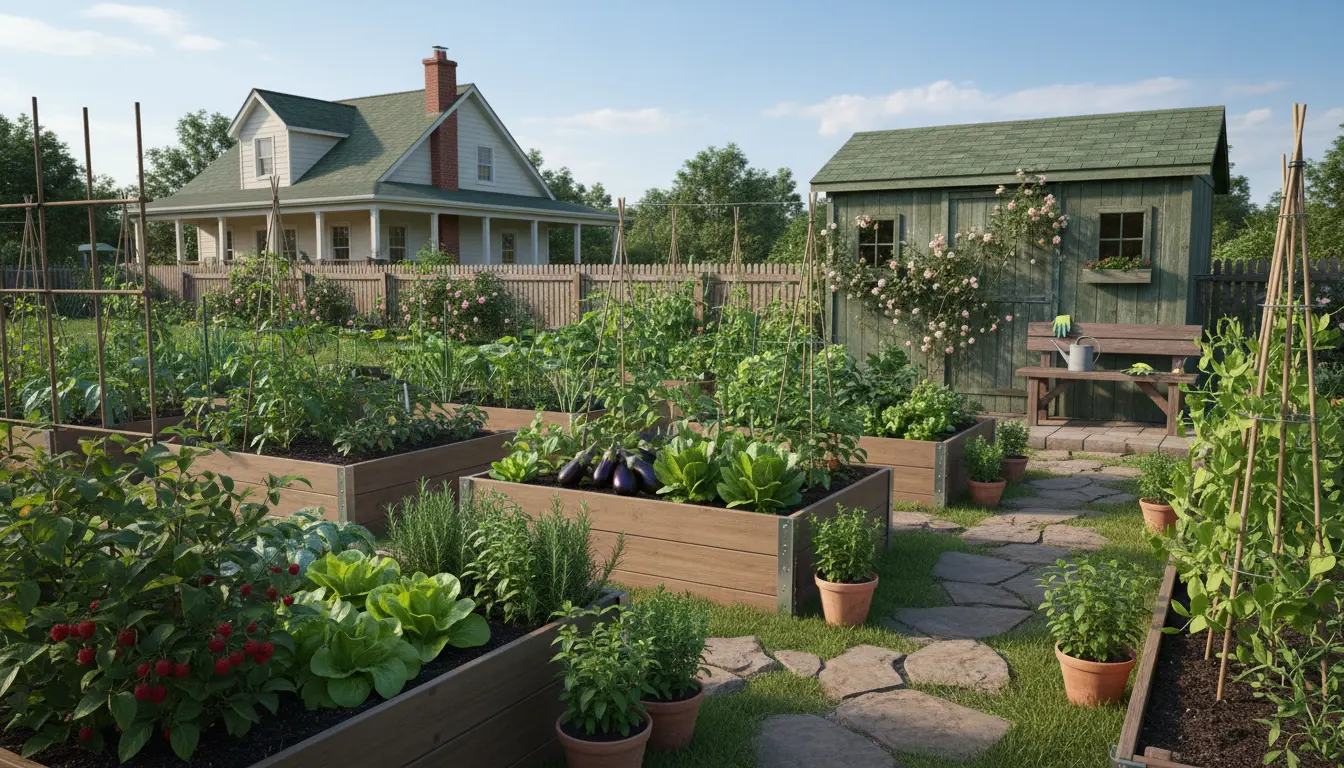
Starting a vegetable garden can be straightforward with basic planning and simple techniques. This guide breaks the process into clear steps so beginners can grow healthy vegetables in small yards, containers, or raised beds.
Why Start a Vegetable Garden
A vegetable garden delivers fresh produce, saves money, and reduces trips to the store. It also connects you to seasonal food and gives practical experience with soil, weather, and plant cycles.
For many beginners, the goal is realistic: three to five high-yield crops that reliably produce food through a season.
Planning Your Vegetable Garden: Site and Soil
Good planning reduces frustration. Choose a site and prepare soil before buying seeds or plants.
Choose a location
Pick a spot that receives at least 6 hours of direct sun. Vegetables need light to set fruit and build leaves.
Consider these practical points:
- Proximity to water for easy irrigation.
- Good drainage to avoid waterlogged soil.
- Wind protection if your area is exposed.
Test and improve soil
Healthy soil is the foundation of successful gardens. A simple soil test kit identifies pH and nutrient deficiencies.
Basic soil improvements:
- Add 2–3 inches of compost and work it into the top 6–8 inches of soil.
- Use well-draining raised beds or mounds on heavy clay sites.
- Adjust pH if needed: most vegetables prefer pH 6.0–7.0.
Choosing Plants for a Beginner Vegetable Garden
Select crops that match your climate, space, and taste. Start with reliable, low-maintenance varieties.
Best easy crops for beginners
- Leafy greens: lettuce, spinach, Swiss chard — quick to harvest.
- Tomatoes (determinate types): good yields in containers and beds.
- Radishes and carrots: fast and space-efficient root crops.
- Beans and peas: high yield and fix some nitrogen in soil.
- Herbs: basil, parsley, cilantro are forgiving and useful fresh.
Plan for succession
Sow or plant in stages so you don’t have one single harvest. For example, plant lettuce every two weeks for a steady supply.
Planting and Maintenance for a Vegetable Garden
Planting at the right time and maintaining simple routines will keep the garden productive without much stress.
Planting tips
- Follow seed packet or plant label spacing to avoid overcrowding.
- Harden off transplants by gradually exposing them to outdoor conditions over seven days.
- Mulch around plants to retain moisture and reduce weeds.
Watering and feeding
Water deeply and less frequently to encourage strong roots. Aim for 1–1.5 inches of water per week depending on weather.
Feed with a balanced organic fertilizer or compost tea every 3–4 weeks during active growth.
Pest and disease basics
Monitor plants weekly. Early detection makes control easier and reduces yields lost to pests or disease.
Low-effort controls include:
- Handpicking larger pests like slugs or caterpillars.
- Floating row covers to protect seedlings from insects.
- Crop rotation and cleaning up debris to reduce disease pressure.
Harvesting and Storage
Harvest crops at peak quality for best flavor and to encourage more production. Pick beans when pods are firm; harvest tomatoes when fully colored.
Simple storage tips:
- Leafy greens: wash, dry, and store in the fridge wrapped in a paper towel.
- Tomatoes: store at room temperature until used; refrigeration dulls flavor.
- Root crops: store in a cool, dark place in breathable containers.
Companion planting can improve yields: for example, planting basil near tomatoes may help improve flavor and deter some pests.
Small Case Study: A Balcony Vegetable Garden
Maria, a city resident with a small balcony, grew a productive garden in two 4×2 foot raised planters. She chose determinate tomatoes, basil, leaf lettuce, and radishes.
Her routine:
- Watered morning every other day, more often in heat.
- Fed with compost tea monthly.
- Used a lightweight trellis for tomatoes and trimmed lower leaves to improve air circulation.
Result: consistent salad greens and several weeks of tomato harvest. Her success shows that modest space and simple care deliver tangible results.
Actionable Checklist to Start a Vegetable Garden
- Choose a sunny site and plan layout (beds or containers).
- Test soil or use a quality potting mix for containers.
- Select 3–5 easy crops that match your climate.
- Prepare soil with compost and mulch to conserve moisture.
- Set a simple watering and feeding schedule and monitor pests weekly.
Starting a vegetable garden doesn’t require perfection. Begin with small, achievable goals and expand as you learn what works in your space. A little planning, regular attention, and seasonal adjustments yield steady harvests and growing confidence.