
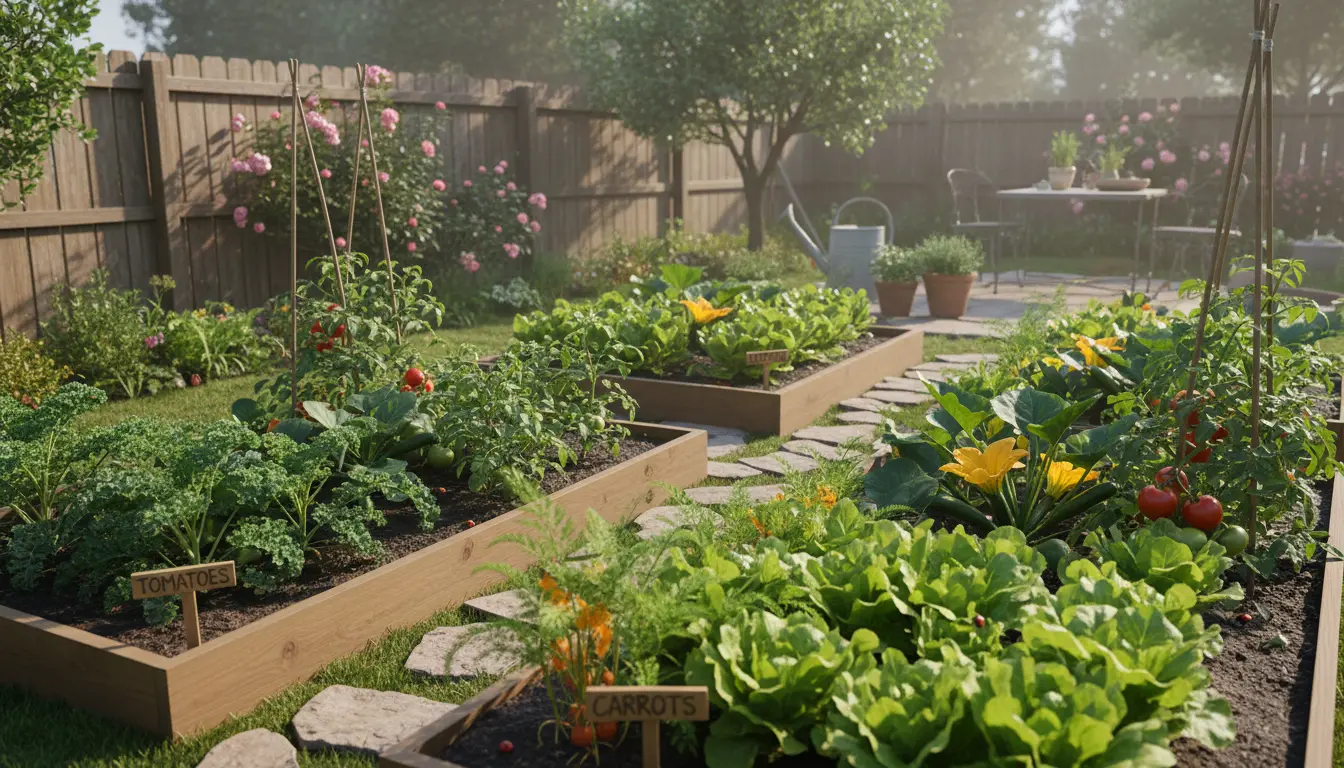
Why Start a Small Vegetable Garden
Starting a small vegetable garden is one of the quickest ways to get fresh produce, reduce grocery costs, and learn sustainable habits. You do not need a large yard; a balcony, patio, or small backyard will work.
This guide covers practical steps to plan, plant, and maintain a small vegetable garden so you can harvest healthy food in months.
Plan Your Small Vegetable Garden
Good planning saves time and resources. Start by deciding where you will grow and what you want to eat. Keep the scale small for your first season.
Choose the Right Location
Pick a spot with at least 4–6 hours of direct sunlight for most vegetables. Morning sun is especially helpful.
Ensure easy access to water and room to move. If you are using containers, consider weight and drainage when placing them.
Pick Easy Vegetables for a Small Garden
Begin with vegetables that grow well in small spaces and are forgiving to mistakes. Good options include:
- Lettuce and salad greens
- Radishes and carrots (shallow-root types)
- Bush tomatoes and peppers
- Herbs like basil, parsley, and chives
These crops give quick results and help build confidence.
Prepare Soil and Containers
Soil is the foundation of a productive garden. For container gardens, use a high-quality potting mix rather than garden soil.
If planting in the ground, improve native soil with compost and a balanced, slow-release fertilizer.
Soil Mix and Amendments
For raised beds or containers, mix equal parts compost, coconut coir or peat, and a loamy soil or potting mix. This blend drains well and holds nutrients.
Test your soil pH if you are planting in the ground. Most vegetables prefer a pH between 6.0 and 7.0.
Planting and Spacing
Follow seed packet or plant tag spacing recommendations. Overcrowding increases disease risk and reduces yield.
Sow fast-growing crops like radishes every two weeks for a continuous harvest. Use succession planting to extend production.
Timing and Depth
Plant cool-season crops (lettuce, peas) in early spring or fall. Warm-season crops (tomatoes, peppers) go out after the last frost.
Plant seeds at the depth specified on the packet. A simple rule: plant seeds at a depth twice their diameter.
Watering and Feeding Your Small Vegetable Garden
Consistent water is more important than frequent shallow watering. Aim for deep, regular watering so roots grow strong.
Practical Watering Tips
- Water early in the morning to reduce evaporation and disease.
- Use drip irrigation or soak hoses for containers and beds.
- Mulch around plants to retain moisture and suppress weeds.
Feed plants with a balanced fertilizer every 4–6 weeks or use compost tea for gentle feeding. Monitor plant leaves for signs of deficiency.
Pest and Disease Management
Small gardens can be managed with simple, low-toxicity methods. Prevention is the best strategy.
Nonchemical Controls
- Handpick pests like caterpillars and slugs.
- Use floating row covers to protect young plants from insects.
- Encourage beneficial insects with flowering companion plants like marigolds or dill.
If needed, choose targeted organic treatments like insecticidal soap or Bacillus thuringiensis for caterpillars.
Harvesting and Storage
Harvest regularly to encourage more production. Pick leafy greens before they bolt and harvest tomatoes when they are fully colored.
Store produce according to type: root vegetables in cool, dark places and tomatoes at room temperature for best flavor.
Many common kitchen herbs like basil and parsley can produce multiple harvests in one season when you regularly pinch or trim them.
Simple Case Study: Balcony Tomato and Lettuce Setup
Anna, a city renter with a north-facing balcony, started a small vegetable garden using four 12-inch containers. She planted two determinate tomatoes in large pots and two rectangular planters with lettuce mixes.
After improving potting mix with compost and placing the containers on the sunniest corner, she watered deeply every two days and mulched the lettuce pots. By late summer she harvested about 12 pounds of tomatoes and repeated lettuce harvests every three weeks.
Costs: initial setup about $120 for containers, soil, and plants. Benefits: fresh salad greens and tomatoes, lower grocery bills, and improved wellbeing.
Common Mistakes to Avoid
- Overwatering or poor drainage — always check pots drain freely.
- Planting too many crops at once — start small to learn spacing and timing.
- Ignoring pests until they cause heavy damage — early action prevents spread.
Quick Checklist to Start a Small Vegetable Garden
- Choose a sunny location and select easy crops.
- Prepare healthy soil or use quality potting mix for containers.
- Plant at the right time and follow spacing guidelines.
- Water consistently and mulch to retain moisture.
- Monitor for pests and harvest regularly.
Start with one or two crops and expand as you gain experience. A small vegetable garden is manageable, rewarding, and a practical way to grow your own food.