
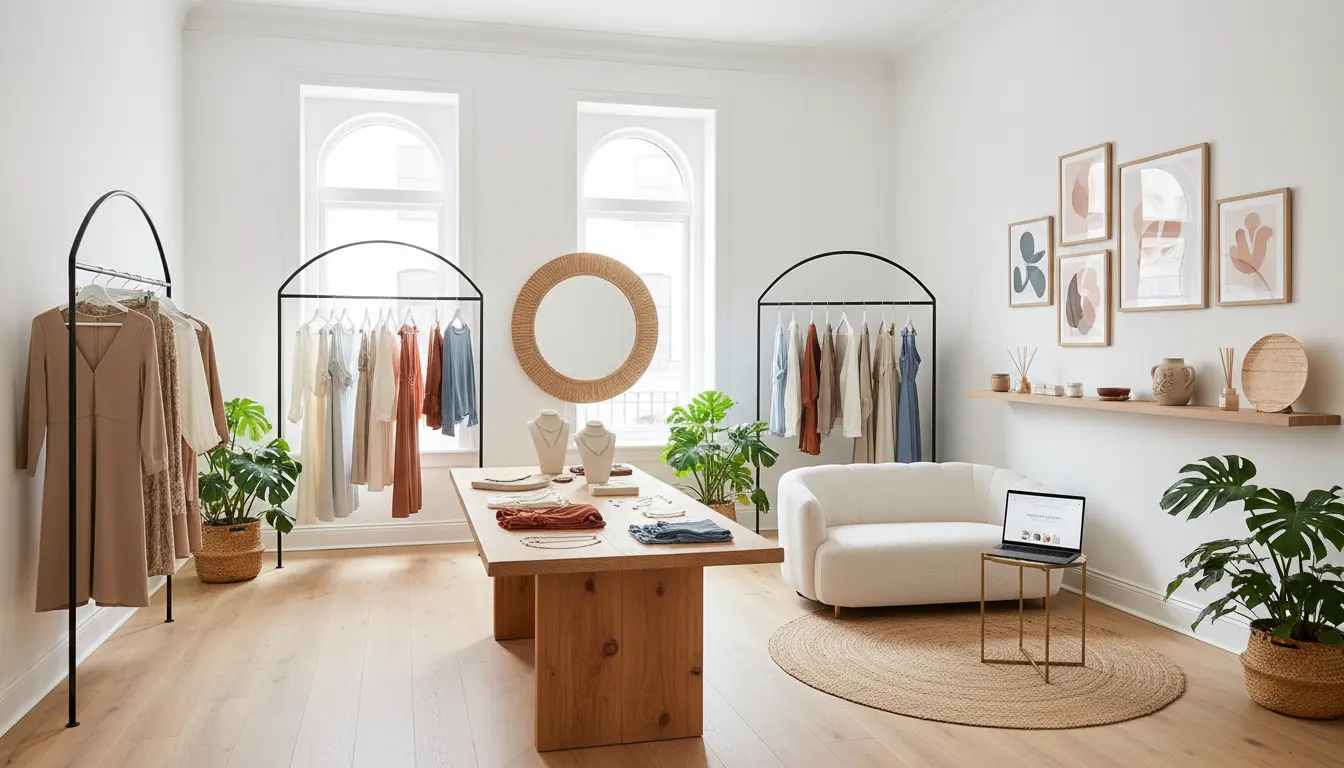
Plan Your Online Boutique Business
Before you build a site, write a short plan that clarifies what you will sell and who will buy it. Define a niche, price range, and target customer in simple sentences.
Decide one clear goal for the first year: sales revenue, number of orders, or a customer count. This keeps choices focused when you pick products and marketing channels.
Choose Products and Suppliers for Your Online Boutique
Select a small, coherent product range to start. Too many SKUs early on complicates inventory and marketing.
- Pick 10–30 SKUs: a mix of bestsellers and test items.
- Choose suppliers with reliable lead times and clear return policies.
- Consider dropshipping for low upfront stock cost, or small-batch inventory for better margins.
Product Sourcing Options
Use local wholesalers, trade shows, or vetted online suppliers. Request samples to check quality and packaging before listing live.
Keep a simple supplier scorecard with lead time, MOQ, price, and communication quality to compare options.
Set Up Your Online Store
Pick a platform that fits your skills and budget. Popular choices include Shopify for simplicity, WooCommerce for control, and BigCommerce for scaling.
Key pages to create at launch:
- Home page with a clear value statement
- Product pages with good photos and concise descriptions
- About page explaining brand story and policies
- Contact and returns pages for trust
Design and Product Pages
Use consistent product photos on a neutral background. Write benefits-focused descriptions that answer: who, what, size, care, and why it matters.
Include clear calls to action like Add to Cart, and show shipping estimates early to reduce abandoned carts.
Price Your Products and Set Shipping
Calculate base cost + overhead + desired margin. A simple formula is: Product cost + packaging + marketing share + fulfillment = base. Add a 40%–60% markup depending on niche.
Offer simple shipping choices: standard, expedited, and free over a threshold. Free shipping increases conversion if you factor it into product pricing.
Fulfillment and Inventory Basics
Decide whether to pick, pack, and ship yourself or use a fulfillment partner. Self-fulfillment is cheaper initially but requires time and space.
Use basic inventory tracking: low-stock alerts, reorder points, and a monthly review to avoid stockouts or overstock.
Promote Your Online Boutique
Start with two steady channels and one experimental channel. Common effective channels include Instagram, Facebook Ads, and email marketing.
- Instagram: visual product posts, stories, and simple shoppable tags
- Email: collect emails with a discount, then send a welcome series and product highlights
- Ads: run small-budget campaigns to test audiences and optimize by cost per purchase
Content and SEO for an Online Boutique
Create short blog posts or guides that answer customer questions, such as fit guides or care tips. This helps organic search and establishes expertise.
Optimize product pages with clear titles, target keyword phrases like start an online boutique, and concise meta descriptions for search results.
Measure and Improve
Track a few key metrics: conversion rate, average order value (AOV), customer acquisition cost (CAC), and repeat purchase rate.
Run weekly checks on traffic and monthly reviews of profit and loss. Small weekly changes compound into major improvements.
Offering free shipping for orders over a set amount typically raises average order value. Many boutiques offset the cost by slightly increasing product prices.
Simple Case Study: Local Boutique Moves Online
Maple & Moss was a small town clothing shop that launched an online boutique with 20 SKUs. They photographed items in-store, used Shopify, and offered free shipping over $80.
Within six months they hit their first goal: 200 online orders. Key moves were clear product photos, a welcome email series, and one Instagram ad targeting local customers. Their repeat purchase rate grew to 18% after adding personalized emails.
Checklist to Start an Online Boutique
- Define niche and target customer
- Pick 10–30 initial SKUs and test samples
- Choose a platform and build key pages
- Set pricing, shipping, and fulfillment method
- Launch with two marketing channels and an email signup
- Track metrics and iterate monthly
Starting an online boutique is a sequence of small, repeatable steps: plan, source, build, launch, and optimize. Keep choices focused, measure results, and scale what works.