
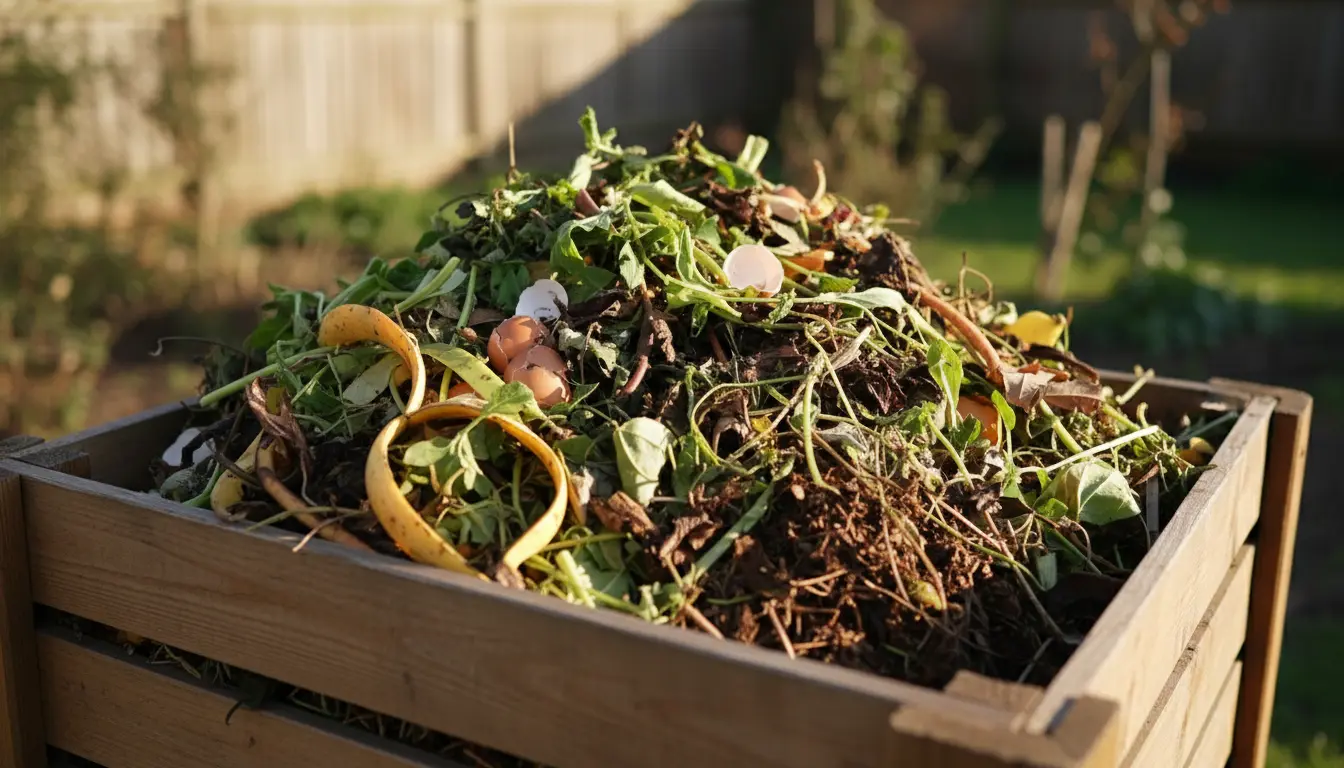
Why Choose Home Composting
Home composting turns kitchen scraps and yard waste into nutrient-rich soil. It lowers household waste, helps your garden, and reduces greenhouse gas emissions.
This guide covers simple, practical steps for home composting for beginners. Follow these steps to get a stable, low-maintenance system running.
Home Composting Basics
Compost is the decomposed result of organic materials. Microbes break down green (nitrogen-rich) and brown (carbon-rich) materials into humus.
Key components to manage are air, moisture, particle size, and the ratio of greens to browns.
What to Include and Avoid
- Greens (Nitrogen): fruit and vegetable scraps, coffee grounds, fresh grass clippings.
- Browns (Carbon): dry leaves, straw, paper, cardboard torn into small pieces.
- Avoid: meat, dairy, oily foods, diseased plants, and pet waste from carnivores.
How to Start Home Composting
Choose a method that fits your space and time. Popular options include a simple compost pile, a closed bin, or a tumbling composter.
Step-by-Step Setup
- Pick a location: a shaded, well-drained spot near a water source is ideal.
- Select a container: use a bin or create a heap. Bins keep things tidy and deter pests.
- Build a base layer: start with coarse browns like small branches to improve airflow.
- Add materials in layers: alternate greens and browns in 2–4 inch layers.
- Moisten: aim for the feel of a wrung-out sponge — not soggy, not bone dry.
- Turn occasionally: aerate every 1–2 weeks to speed decomposition and reduce odors.
Balancing Greens and Browns
The common recommendation is a carbon to nitrogen ratio (C:N) near 30:1. For practical use, mix about 2–3 parts browns to 1 part greens by volume.
Examples:
- One bucket of vegetable scraps + two buckets of shredded leaves.
- Use cardboard or paper to absorb excess moisture from wet kitchen waste.
Adding a thin layer of finished compost or garden soil when you start a new pile introduces beneficial microbes and speeds up decomposition.
Troubleshooting Home Composting Problems
Even simple systems can run into issues. Here are common problems and quick fixes for home composting.
Bad Smell
Cause: too much wet material or lack of air. Fix: add dry browns, mix the pile, and increase aeration.
Slow Decomposition
Cause: pile too dry, too large, or not balanced. Fix: moisten slightly, chop materials into smaller pieces, and add more greens or a nitrogen source.
Pests or Rodents
Cause: food scraps like meat or dairy, or an open bin. Fix: switch to an enclosed bin, bury scraps under a browns layer, or use a compost tumbler.
Maintenance Tips for Home Composting
Routine maintenance keeps the process steady without much effort. Spend 5–15 minutes weekly on the pile.
- Turn or tumble the compost every 1–2 weeks.
- Add a mix of browns and greens rather than large amounts of one type.
- Keep moisture moderate; cover with a lid or tarp in heavy rain.
- Chop or shred larger items to speed breakdown.
How to Know When Compost Is Ready
Finished compost is dark, crumbly, and smells earthy. Most home systems produce usable compost in 3–12 months depending on method and maintenance.
Use finished compost as a top dressing, soil amendment, or mix into potting soil at up to 25% by volume.
Small Real-World Case Study
Case: A two-person household in a suburban backyard started a 3-bin system. They separated kitchen scraps into a small countertop bucket and added them weekly to Bin 1, layering with shredded leaves collected in fall.
Results after 8 months: They diverted about 150 pounds of organic waste from trash and produced two 5-gallon buckets of finished compost. Their raised vegetable beds showed improved soil structure and healthier tomato plants.
Key actions that worked: consistent layering, keeping a tight lid on bins, and turning each active bin every 10–14 days.
Quick Tips Summary for Home Composting
- Start small and scale up as you get comfortable.
- Keep a balanced mix of greens and browns.
- Maintain moisture like a wrung-out sponge.
- Turn the pile to add oxygen and prevent odors.
- Use finished compost to improve your garden soil.
Home composting is an effective, low-cost way to manage organic waste and boost your garden’s health. With basic setup and regular, simple maintenance, beginners can achieve steady results and reduce household waste.