
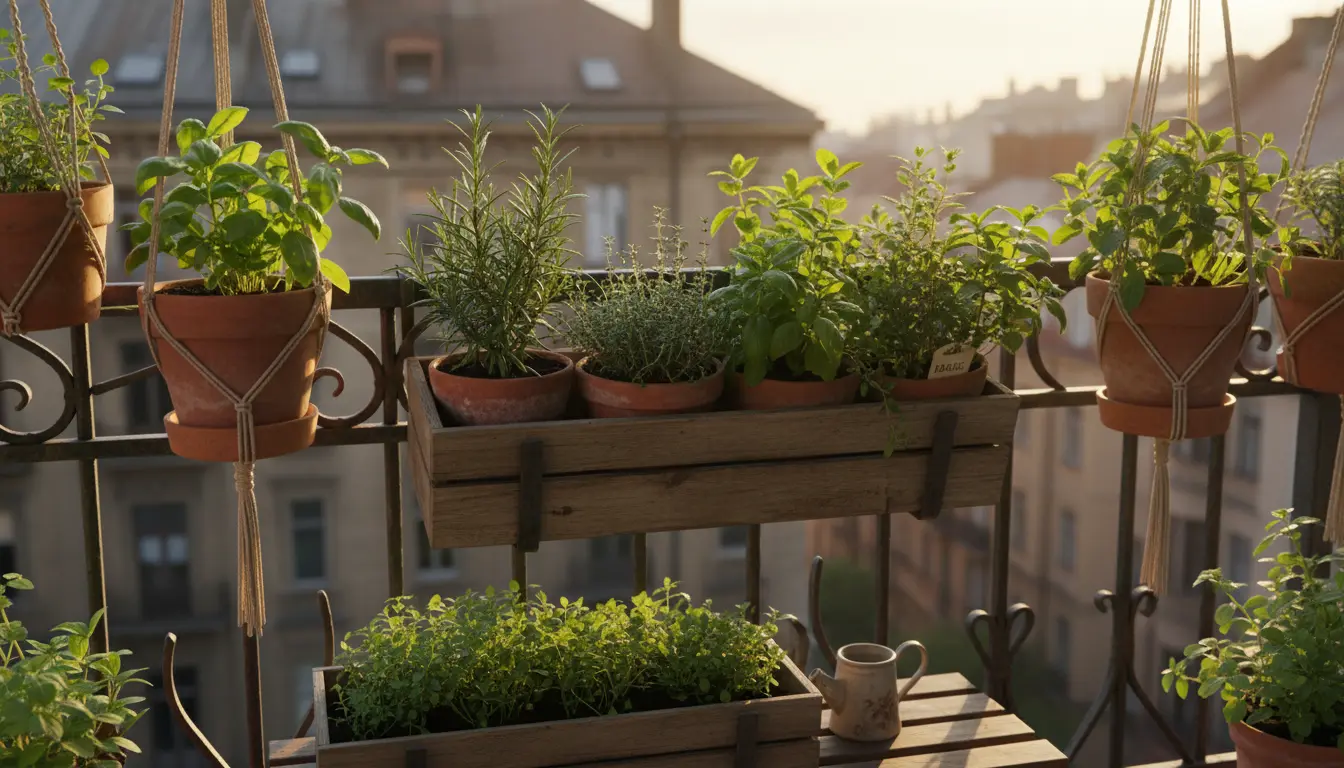
Balcony gardening turns limited outdoor space into productive green areas. This guide gives clear, practical steps for small space balcony gardening, from planning to harvest. Follow these tips to maximize yield and minimize effort.
Plan Your Small Space Balcony Gardening
Start by assessing light, space, and building rules. Note how many hours of direct sun your balcony receives and whether it faces north, south, east or west.
Measure available floor and railing space. Choose containers to fit dimensions and weight limits to avoid overloading the balcony.
Choose Plants for Your Balcony
Select plants that match your light and climate. Herbs, salad greens, cherry tomatoes, peppers, and compact flowers usually do well in containers.
- Full sun (6+ hours): tomatoes, peppers, basil, rosemary
- Partial sun (3–6 hours): lettuce, spinach, parsley, chives
- Shade (less than 3 hours): mint, coleus, ferns
Pick the Right Containers and Soil
Use containers with drainage holes to prevent root rot. Lightweight options include plastic, fabric grow bags, and resin pots for balconies with weight limits.
Choose a high-quality potting mix formulated for containers. Avoid garden soil; it compacts and limits drainage.
Container Size and Placement
Match container size to plant root needs. Small herbs do fine in 6–8 inch pots, while tomatoes and peppers need 5–10 gallon containers.
Place heavier pots on the floor or low shelves and hang lighter containers from railings or ceiling hooks. Group pots by watering needs for efficiency.
Watering and Feeding for Balcony Gardening
Containers dry out faster than garden beds. Check soil moisture daily in hot weather and water when the top inch feels dry. Water deeply until excess drains from the bottom.
Use a balanced liquid fertilizer or slow-release granules according to product directions. Feeding every 2–4 weeks is common for vegetables and herbs in containers.
Simple Watering Tips
- Mulch container surface with straw or bark to reduce evaporation.
- Use self-watering pots or a drip system if you travel often.
- Place saucers to protect balcony flooring, but empty them to prevent standing water and pests.
Pest Control and Plant Care
Inspect plants regularly for pests and disease. Early detection makes control easier and reduces chemical use.
Use physical removal, insecticidal soap, or neem oil for common pests like aphids and spider mites. Rotate susceptible crops and avoid overcrowding to reduce disease pressure.
Pruning and Harvesting
Trim herbs regularly to encourage bushy growth. Pinch off flower buds on basil and cilantro to prolong leaf production.
Harvest lettuce and greens by cutting outer leaves, allowing the center to continue growing for successive harvests.
Seasonal Care and Wintering Plants
Adjust care by season. In summer, increase watering frequency and provide shade cloth if temperatures soar. In cold climates, move containers indoors or use frost cloth during freezing nights.
Perennials and woody herbs like rosemary may survive winter if sheltered and in large insulated pots. Annuals should be replanted each year.
Maximizing Limited Space
Use vertical space for vines and trailing plants. Install shelves, wall planters, or trellises to increase planting area without crowding the floor.
Companion planting in larger containers can boost productivity. Plant basil with tomatoes or marigolds with peppers to deter pests and improve pollination.
Tools and Supplies Checklist for Balcony Gardening
- Lightweight containers and saucers
- High-quality potting mix
- Hand trowel, pruning shears, and watering can
- Fertilizer and mulch
- Netting or trellis for vertical plants
Case Study: 6-Foot Balcony Herb Patch
Emma converted a 6-foot south-facing balcony into an herb and salad patch. She used three 12-inch resin pots, two 5-gallon grow bags, and a hanging rail planter.
She planted basil, parsley, lettuce, and cherry tomatoes. By grouping plants with similar light and water needs, she reduced daily maintenance to 10–15 minutes.
After two months, she harvested weekly salads and trimmed basil for pesto. The setup cost under $200 and provided fresh herbs through the summer.
Common Mistakes to Avoid in Balcony Gardening
- Overwatering: causes root rot—check soil moisture before watering.
- Poor drainage: always use pots with holes and a free-draining mix.
- Ignoring weight limits: large wet pots can exceed balcony load capacity.
- Wrong plant choice: match plants to light and climate for best results.
Final Steps to Start Your Balcony Garden
Make a simple plan: choose plants, measure space, buy containers and soil, then plant. Start small and expand as you gain confidence.
Keep notes on what varieties work and when you water or fertilize. Small adjustments each season will improve productivity and reduce problems.
Balcony gardening is a practical way to bring food and beauty to urban living. With the right containers, soil, and routine care, even a small balcony can be a productive garden.