
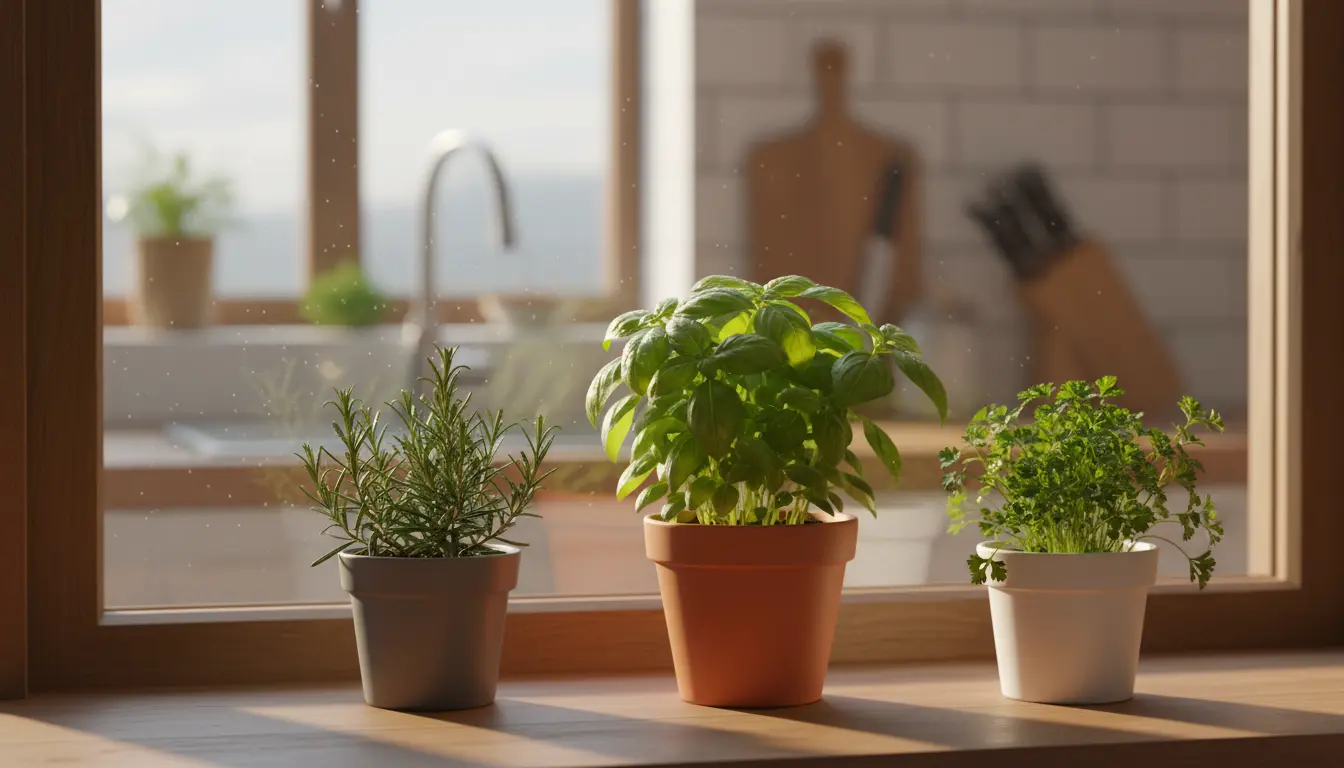
Why Indoor Herb Gardening Works
Indoor herb gardening is an easy, low-cost way to grow fresh flavors year-round. It fits small spaces and requires minimal tools.
This guide gives clear, practical steps to start and maintain a healthy indoor herb garden with common household setups.
Indoor Herb Gardening Basics
Choose herbs that tolerate indoor conditions and frequent harvesting. Start with small pots, plain potting mix, and a bright spot.
Focus on light, soil, water, and air circulation—the four fundamentals that determine success in indoor herb gardening.
Best Herbs for Indoor Herb Gardening
- Basil — quick-growing and great for kitchens
- Parsley — tolerant of moderate light
- Mint — vigorous and forgiving, use a separate pot
- Thyme — drought-tolerant and compact
- Chives — small clumping habit, good in containers
Choose the Right Containers
Select pots with drainage holes to prevent root rot. Use 4–8 inch pots for single herbs and 8–12 inch for mixed containers.
Terracotta pots dry faster, which suits Mediterranean herbs. Plastic pots retain moisture longer for herbs that like steady dampness.
Light and Soil for Indoor Herb Gardening
Light is the most important factor for indoor herbs. Most culinary herbs need 4–6 hours of bright light daily.
If natural light is limited, use a compact LED grow light placed 6–12 inches above the plants for 10–14 hours a day.
Soil Mix and Potting
Use a well-draining potting mix made for containers. A blend of peat-free compost, perlite, and composted bark works well.
Avoid garden soil, which compacts in pots and reduces drainage. Add a layer of coarse material at the bottom only if drainage is an issue.
Watering and Feeding in Indoor Herb Gardening
Watering frequency depends on pot size, pot material, and light. Check soil moisture with your finger—water when the top inch is dry.
Overwatering is the most common mistake. Ensure pots drain well and remove excess water from drip trays after 20 minutes.
Fertilizing Schedule
Feed herbs lightly with a balanced water-soluble fertilizer every 4–6 weeks during the growing season. Reduce feeding in winter when growth slows.
Organic options like fish emulsion or compost tea are gentle and reduce risk of buildup in pots.
Pruning, Harvesting, and Pest Management
Regular pruning encourages bushy growth. Pinch or cut just above a leaf node to stimulate new shoots.
Harvest small amounts regularly rather than removing large sections. This keeps plants productive.
Common Pests and Simple Controls
- Aphids — rinse plants with a strong water spray or use insecticidal soap
- Fungus gnats — allow surface to dry and use sticky traps
- Spider mites — raise humidity and wipe leaves with a damp cloth
Practical Setup Checklist for Indoor Herb Gardening
- Location: South or west-facing windowsill or under LED grow light
- Containers: Pots with drainage, saucers for excess water
- Soil: Light, well-draining potting mix
- Water: Check top inch of soil; water thoroughly, then allow to drain
- Feed: Balanced liquid fertilizer every 4–6 weeks
- Tools: Pruning shears, small trowel, watering can
Many herbs like basil and parsley release more essential oils and stronger flavors when grown in slightly drier soil and harvested in the morning.
Case Study: Small Kitchen Windowsill Herb Garden
Maria, a home cook in a city apartment, started a windowsill herb garden with three 4-inch pots: basil, chives, and parsley. She used a commercial potting mix and a south-facing window.
Within six weeks she had consistent cuttings for weekly cooking. Her plants needed watering every 3–4 days and a light feed every month. Minimal pests appeared and she resolved them by rinsing leaves weekly.
Outcome: Fresh herbs reduced grocery purchases and improved meal flavor without extra space or large expense.
Troubleshooting Common Indoor Herb Gardening Problems
Leggy growth usually means not enough light. Move plants closer to light or add a grow lamp.
Yellowing leaves often point to overwatering. Check drainage and let the soil dry slightly between waterings.
When to Replace or Repot
Repot when roots circle the pot or the plant slows despite good care—typically every 12–18 months. Choose a pot one size larger and refresh the potting mix.
Quick Tips to Succeed with Indoor Herb Gardening
- Start small—one or two herbs—and expand after a few harvests.
- Label pots with planting dates to track care and harvests.
- Rotate pots weekly for even light exposure.
- Dry or freeze excess herbs to preserve flavor.
Indoor herb gardening is practical and rewarding. With attention to light, soil, and water, even beginners can enjoy a steady supply of fresh herbs year-round.