
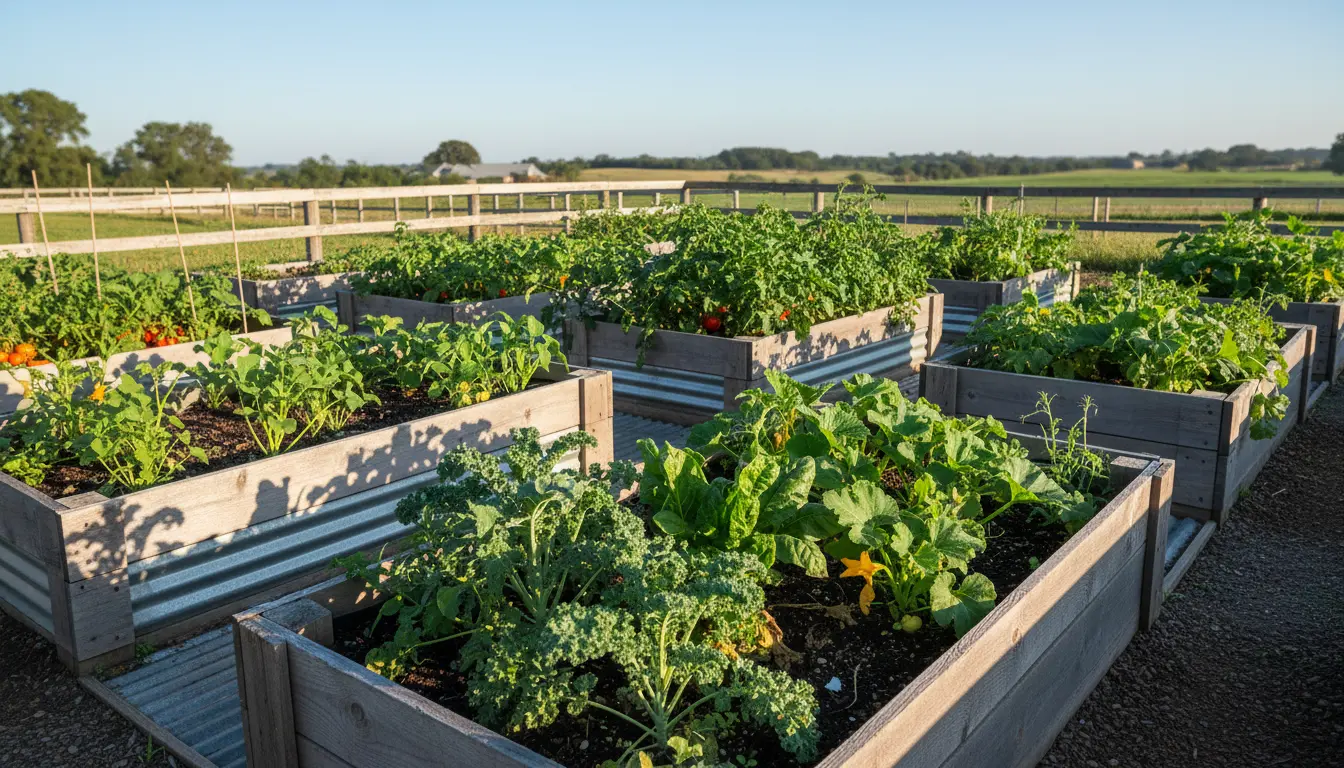
Why Start a Vegetable Garden
Growing your own vegetables saves money, improves taste, and gives you control over how food is grown. It also connects you to seasonal rhythms and can be calming physical activity.
This guide shows how to start a vegetable garden with practical, step-by-step instructions for beginners. Follow these simple actions to get a reliable, productive bed.
How to Start a Vegetable Garden: Plan First
Good planning reduces wasted time and crop failures. Start by picking a few easy crops and deciding on bed type and size.
Consider sunlight, access to water, soil type, and how much maintenance you can handle. A small, well-tended bed beats a large, neglected one.
Choose a Location
Most vegetables need 6–8 hours of direct sunlight a day. Observe your yard through the day to find the sunniest spot.
Also pick a spot near a water source and that is easy to access for planting and harvesting.
Select Bed Type and Size
Options include in-ground beds, raised beds, and containers. Raised beds warm faster, drain well, and reduce back strain.
For beginners, a 4×8 foot raised bed or several 2×3 foot containers is manageable and productive.
How to Start a Vegetable Garden: Prepare the Soil
Healthy soil is the foundation of a productive garden. Test the soil pH and texture before planting to know what to amend.
Most vegetables prefer slightly acidic to neutral soil (pH 6.0–7.0). Amend heavy clay with compost and sand; add organic matter to sandy soil to improve water retention.
Simple Soil Preparation Steps
- Clear the area of weeds and debris.
- Loosen the soil to 8–12 inches for in-ground beds; fill raised beds with a quality mix.
- Work in 2–4 inches of compost to add nutrients and improve structure.
- Apply a balanced organic fertilizer if needed based on a soil test.
How to Start a Vegetable Garden: Choose What to Plant
Start with easy, high-reward vegetables like tomatoes, lettuce, radishes, green beans, and herbs. These crops establish quickly and tolerate beginner mistakes.
Match crops to your climate and season. Use seed packets or plant tags to check days to maturity and spacing requirements.
Beginner-Friendly Vegetables
- Lettuce and salad greens — fast and continuous harvest.
- Radishes — ready in 3–4 weeks and great for quick success.
- Green beans — high yield, low maintenance.
- Tomatoes (determinate types) — great for containers and predictable harvests.
- Herbs like basil and parsley — useful and forgiving.
How to Start a Vegetable Garden: Planting and Care
Follow spacing guidelines and plant at the right depth. Overcrowding reduces yield and increases disease risk, so give roots room to grow.
Water deeply and less frequently to promote strong roots. Mulch to conserve moisture and suppress weeds.
Basic Care Routine
- Water thoroughly when the soil surface dries 1–2 inches down.
- Mulch with straw or wood chips to keep soil cool and moist.
- Fertilize lightly during the growing season following package directions.
- Inspect plants weekly for pests and diseases; remove affected leaves promptly.
Common Problems and Quick Fixes
Yellow leaves can indicate nutrient deficiency or overwatering. Check soil moisture and add compost or balanced fertilizer if needed.
Pests like aphids and slugs are best controlled early. Use hand removal, insecticidal soap, or barriers such as copper tape for slugs.
Planting marigolds near tomatoes can help deter nematodes and some insect pests. Companion planting is a simple way to reduce pest pressure without chemicals.
Case Study: Small Yard, Big Harvest
Maria had a 10×10 foot backyard and wanted fresh salad greens and tomatoes. She built two 4×2 foot raised beds and filled them with a mix of compost and topsoil.
By planting lettuce in succession every two weeks and using determinate tomatoes in containers, she had continuous salads and a solid tomato harvest the first season. Regular watering and a light fertilizer kept plants vigorous.
Seasonal Tips for Ongoing Success
Keep a planting calendar for your region to know when to start seeds indoors and transplant outdoors. Succession planting extends harvests of fast crops like greens and radishes.
Fall cleanup and adding compost in late autumn prepares beds for the next season. Consider cover crops to build soil in winter.
Quick Checklist to Start a Vegetable Garden
- Choose a sunny location close to water.
- Decide on raised beds or containers for easier soil control.
- Test and amend soil; add compost.
- Start with 3–6 beginner-friendly crops.
- Water deeply, mulch, and monitor for pests.
- Plan succession planting for continuous harvests.
Starting a vegetable garden is a practical project anyone can do with a bit of planning and weekly attention. Small, steady efforts yield fresh produce and gardening skills over time.