
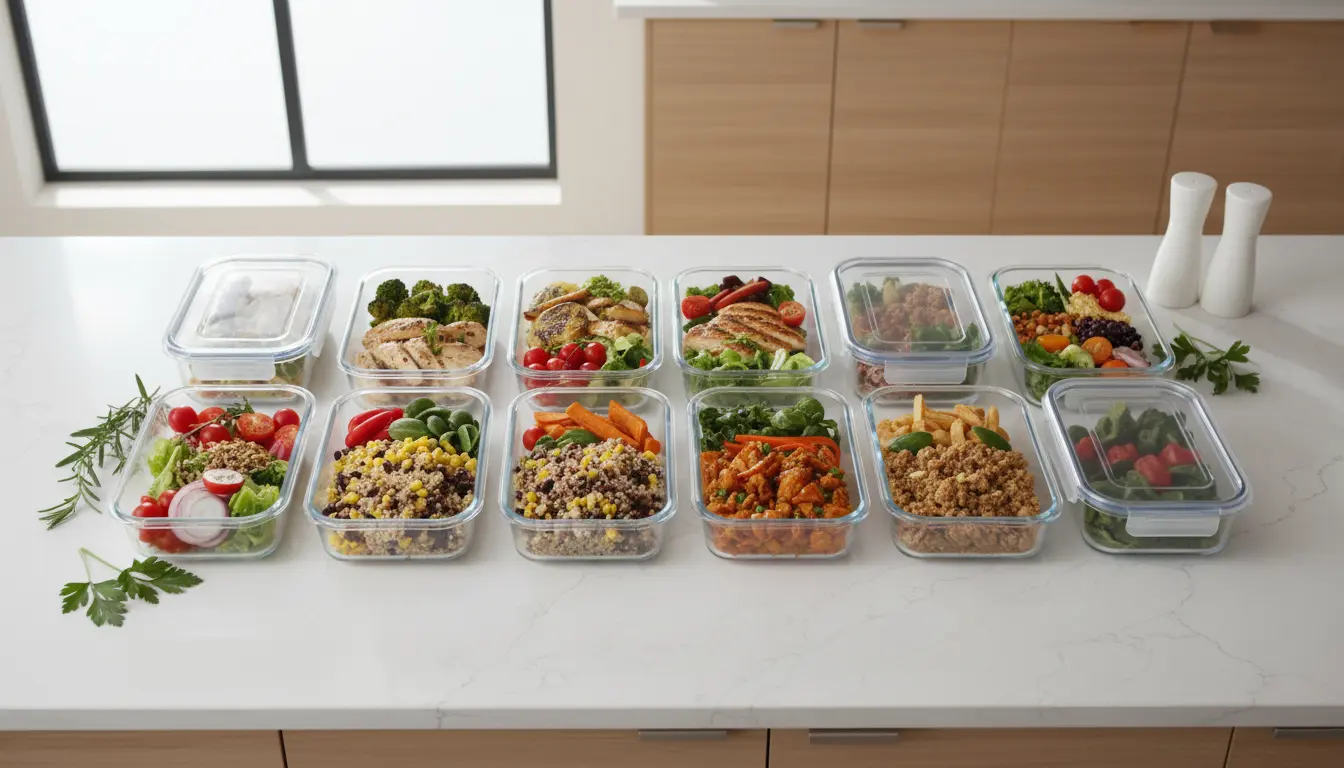
Busy work schedules make healthy eating a challenge. This guide offers a clear, practical system for meal planning that fits into a professional’s week without adding stress.
Meal Planning for Busy Professionals: A Simple System
Start with a compact, repeatable routine that takes 60 to 90 minutes once per week. The goal is to reduce daily decisions and free up time during workdays.
The system has three parts: plan, shop, and prep. Each part is fast when you use consistent templates and smart shopping lists.
Set Goals and Time Blocks for Meal Planning for Busy Professionals
Decide what you want from meal planning: save time, eat healthier, or reduce food waste. Limit your weekly planning session to a single time block.
- Plan: 20–30 minutes to choose meals and make a shopping list.
- Shop: 30–45 minutes using a list organized by store sections.
- Prep: 30–60 minutes to cook or assemble basics.
Block a predictable slot each week—Sunday afternoon or Wednesday evening—to keep the habit consistent.
Quick Meal Planning Steps
Follow these steps during your planning block. Keeping each step short helps maintain momentum and reduces procrastination.
- Choose 3–4 core proteins (chicken, tofu, salmon, beans).
- Pick 3 vegetables you like and a grain or starch for variety.
- Create five meal formulas you can mix and match (bowl, salad, stir-fry, sheet-pan, soups).
- Write a shopping list grouped by store aisle.
Meal Ideas and Weekly Template
Use simple formulas to speed decisions. Formulas let you substitute ingredients without rewriting recipes every week.
- Bowl = Grain + Protein + Veg + Sauce
- Sheet-Pan = Protein + Veg + Olive oil + Spice
- Stir-Fry = Protein + Veg + Quick sauce + Rice or noodles
- Salad = Leafy greens + Protein + Crunch + Dressing
- Soup = Stock + Protein/legume + Veg + Whole grain
Example weekly template:
- Monday: Bowl (leftover grains + roasted veg + grilled protein)
- Tuesday: Salad with pre-cooked protein
- Wednesday: Sheet-pan dinner
- Thursday: Stir-fry with quick sauce
- Friday: Soup or easy pasta
Smart Shopping and Prep Tips
Organize your list by store sections to avoid backtracking. Buy a mix of fresh and long-lasting items to reduce waste.
Prep the parts that save the most time: cook a large grain, roast a tray of vegetables, and portion proteins into containers.
- Buy pre-washed greens to save 5–10 minutes per salad preparation.
- Use frozen vegetables for busy days; they are nutrient-dense and quick.
- Label containers with date and meal to prevent confusion midweek.
Batch Cooking Examples
Batch cooking reduces nightly effort. Here are two fast batch ideas you can rotate weekly.
- Roast chicken thighs and root vegetables on a sheet pan. Use leftovers for bowls and salads.
- Cook a large pot of lentil soup. Portion into jars for lunches and light dinners.
Planning just one hour per week can save 3 to 5 hours of decision-making and cooking time during busy weekdays.
Packable Lunches and Quick Dinners
Choose meals that travel well and reheat cleanly. Mason jars, leakproof containers, and insulated bags pay off for professionals on the go.
For quick dinners when energy is low, keep two ready-to-heat options in the fridge: a hearty soup and a prepared grain bowl.
Simple Seasoning and Sauces
Keep three go-to sauces to change flavor profiles fast: citrus vinaigrette, quick peanut sauce, and a soy-ginger glaze. These convert the same ingredients into different meals.
- Citrus Vinaigrette: lemon juice, olive oil, honey, salt.
- Peanut Sauce: peanut butter, soy sauce, lime, water to thin.
- Soy-Ginger Glaze: soy sauce, rice vinegar, grated ginger, maple.
Real-World Example: Case Study
Sarah is a marketing manager with a 50-hour workweek. She used the 60-90 minute weekly routine for six weeks. Her strategy: rotate three proteins and use two sauces.
Results: Sarah reported saving four weeknights of cooking time and spent roughly $40 less per week on food. She also felt less stressed about dinners and had more predictable energy levels.
Why it worked: consistency, simple formulas, and one weekly planning session made decisions automatic.
Common Pitfalls and Fixes
Many professionals stop meal planning because they try to overcomplicate menus. Keep dishes repeatable and swap one or two ingredients each week to prevent boredom.
If you hate Sunday prep, shift your planning to a weekday evening or split tasks: 15 minutes of planning midweek and a shorter shopping trip on the weekend.
- Pitfall: Too many new recipes. Fix: Limit to one new recipe per week.
- Pitfall: No portable containers. Fix: Invest in 3-4 reliable containers.
- Pitfall: Wasting leftovers. Fix: Create a “leftover night” in your template.
Final Checklist for Meal Planning for Busy Professionals
- Reserve one weekly planning block (60–90 minutes).
- Choose 3–4 proteins and 3 vegetables to rotate.
- Create five meal formulas and a shopping list by aisle.
- Batch-cook staples and label containers.
- Use simple sauces to vary flavors quickly.
Meal planning does not need to be elaborate. With a short weekly routine and reusable templates, busy professionals can eat better, save time, and reduce stress around mealtimes.