
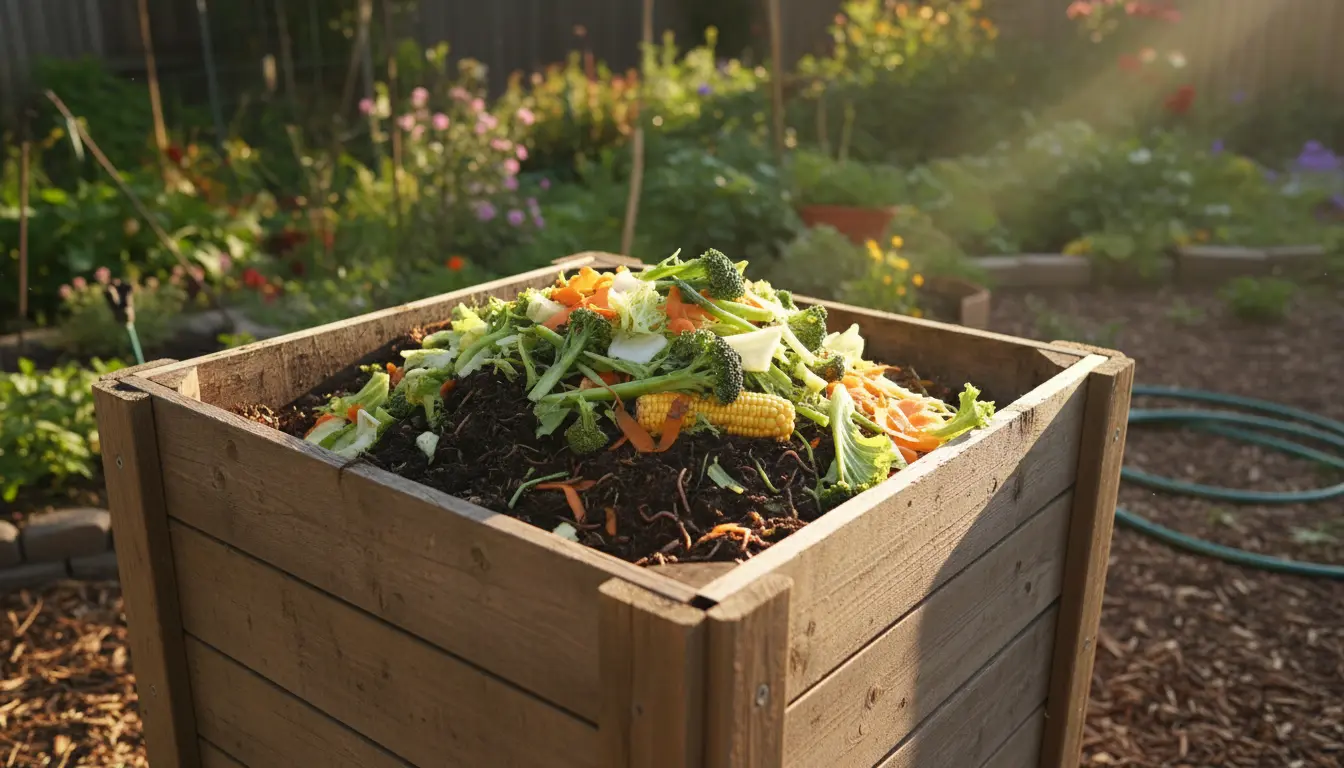
Getting Started with Home Composting for Beginners
Home composting is an easy way to turn kitchen scraps and yard waste into nutrient-rich soil. This guide gives simple, practical steps you can follow today.
Composting reduces landfill waste, improves garden soil, and can save money on fertilizers. You do not need special skills or a large yard to start.
Why Home Composting for Beginners Works
Composting relies on natural decomposition. Microorganisms break down organic matter into humus, which improves soil structure and water retention.
Even small compost systems create useful material for potted plants or garden beds in a few months when managed correctly.
Choose a Compost System
Select a bin or pile that fits your space and lifestyle. Options include tumblers, enclosed bins, or a simple open heap.
- Tumbler: Fast results, low effort to turn the pile.
- Enclosed bin: Neat and pest resistant.
- Open pile: Best for large gardens with plenty of yard waste.
Basics of What to Compost
Successful home composting needs a balance of carbon and nitrogen. Think of “browns” and “greens.”
- Greens (nitrogen): vegetable peels, coffee grounds, fresh grass clippings.
- Browns (carbon): dry leaves, shredded newspaper, cardboard, straw.
A good target is roughly 2 or 3 parts browns to 1 part greens by volume.
Home Composting for Beginners: Items to Avoid
Some items slow decomposition or attract pests. Avoid meat, dairy, oily foods, and diseased plants. Also skip pet waste from carnivores.
Large branches should be chipped first. Avoid adding treated wood or glossy paper with heavy inks.
Layering and Turning: Simple Steps
Layer materials to keep airflow and moisture balanced. Start with coarse browns at the base for drainage, then add alternating layers of greens and browns.
Turn the pile every 1–2 weeks to introduce oxygen and speed decomposition. Use a pitchfork or turn a tumbler.
Home Composting for Beginners: Moisture and Temperature
Compost should feel like a wrung-out sponge. Too dry and decomposition stalls; too wet and the pile smells.
In active piles, temperatures reach 120–160°F (49–71°C). High temperature helps kill seeds and pathogens but is not required for small backyard systems.
Common Troubleshooting
- Bad odor: Add more browns and turn the pile to add air.
- Slow breakdown: Chop materials smaller and check moisture and aeration.
- Pests: Use a closed bin, bury food scraps under browns, and avoid meat or oily foods.
Composting can reduce household waste by up to 30 percent. A single family compost system can divert hundreds of pounds from the landfill each year.
How to Use Finished Compost
Finished compost is dark, crumbly, and smells earthy. Use it as a top dressing, soil amendment, or mix it into potting soil.
Apply a thin layer around plants, or blend into garden beds to improve nutrient content and water retention.
Quick Checklist for Home Composting for Beginners
- Choose a bin type that fits your space.
- Collect greens and browns separately.
- Layer materials and keep the pile moist but not soggy.
- Turn regularly for faster results.
- Harvest finished compost when it is dark and crumbly.
Small Real-World Example: Case Study
Case: A two-person apartment household started a 40-liter indoor compost bin for food scraps and a small tumbling bin on their balcony.
They stored dry leaves and shredded paper as browns. After three months of weekly turning and checking moisture, they produced enough compost to fill two 5-gallon pots and reduced their trash volume substantially.
The compost improved the health of their balcony vegetables and cut the need to buy potting mix.
Tips to Keep Going
- Start small. Learn from one bin before expanding.
- Keep a small counter pail with a lid to collect kitchen scraps.
- Use a thermometer if you want to monitor temperature, but it is optional.
- Join a local gardening group or forum for troubleshooting and inspiration.
Final Notes on Home Composting for Beginners
Composting is simple, flexible, and scalable. With minimal effort and the right balance of materials, anyone can convert organic waste into a valuable resource.
Start with basic rules, observe your pile, and adjust. Over time you will refine the process to suit your space and needs.