
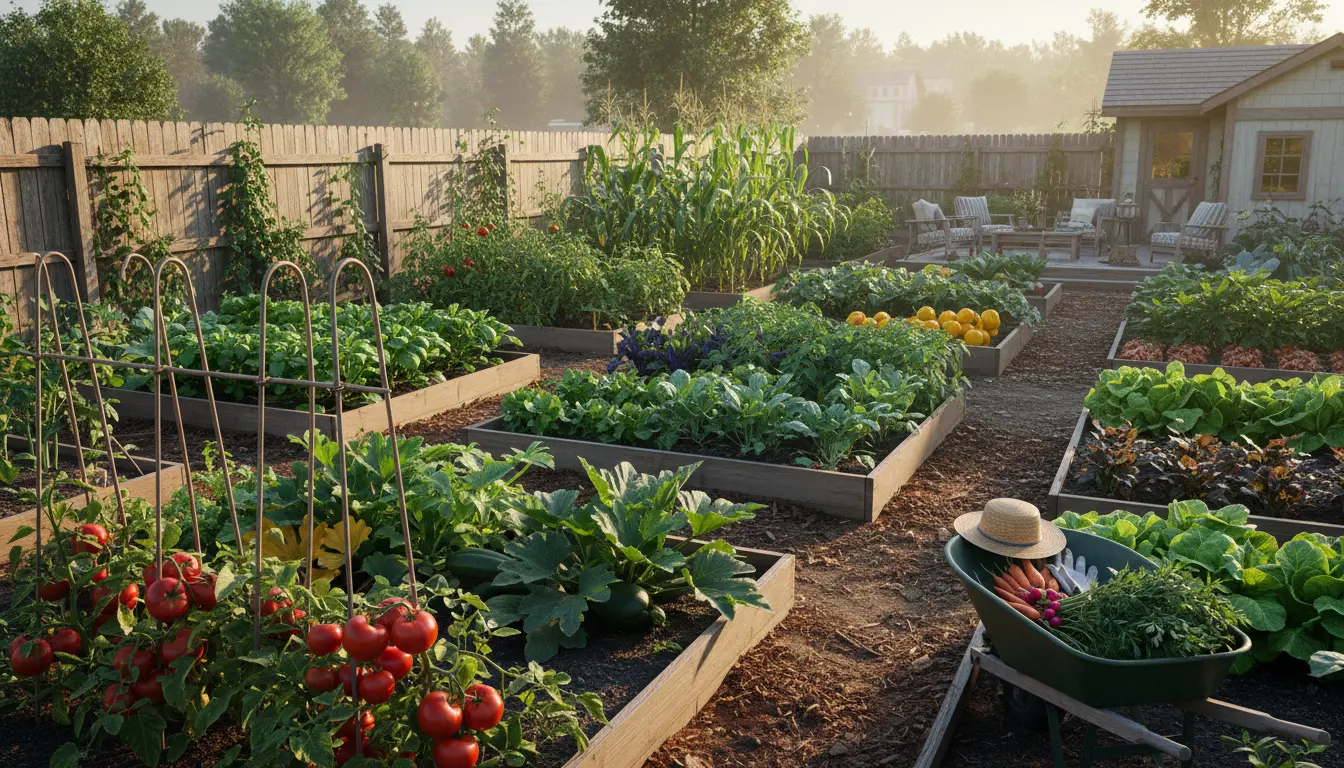
Starting a vegetable garden is a hands-on way to get fresh food, save money, and enjoy time outdoors. This guide gives step-by-step, practical advice so you can begin with confidence.
How to Start a Vegetable Garden: Choose the Right Site
Location makes the biggest difference to success. Choose a spot that gets at least six hours of direct sunlight daily for most vegetables.
Also consider access to water, drainage, and proximity to your door. A site close to the kitchen encourages regular care and harvesting.
Site checklist
- At least 6 hours of sun for vegetables
- Flat or gently sloping ground with good drainage
- Near a water source for easy irrigation
- Avoid low spots where frost or standing water collects
How to Start a Vegetable Garden: Plan and Design
Plan the size and layout based on time available and how much produce you want. Beginners do well with a compact area like a 4×8 foot raised bed.
Group plants by water needs and growth habit. Use vertical space for vining crops to save ground area.
Design tips
- Start small: a few beds or containers beats an overlarge space you cannot maintain
- Rotate crops yearly to reduce pests and disease buildup
- Include paths for easy access and maintenance
How to Start a Vegetable Garden: Prepare Soil and Fertility
Good soil is the foundation of a productive garden. Most vegetables prefer loose, fertile soil with good drainage.
Test the soil pH with a simple kit. Aim for pH 6.0 to 7.0 for most vegetables and adjust with lime or sulfur if needed.
Soil preparation steps
- Remove grass and weeds from the area.
- Loosen soil to a depth of 8 to 12 inches in beds; use raised beds if native soil is poor.
- Mix in 2 to 4 inches of compost or well-rotted manure to improve fertility and structure.
- Add a balanced, slow-release organic fertilizer according to package directions if needed.
How to Start a Vegetable Garden: Planting and Crop Selection
Choose crops suited to your climate and season. Beginners should start with easy, forgiving vegetables like tomatoes, lettuce, radishes, beans, and zucchini.
Decide between seeds and transplants. Seeds are cheaper and offer more variety, while transplants provide a head start for long-season crops.
Planting basics
- Follow seed packet or plant tag spacing and depth recommendations
- Stagger plantings of quick crops like lettuce to extend harvest
- Use mulch to conserve moisture, suppress weeds, and moderate soil temperature
How to Start a Vegetable Garden: Watering and Maintenance
Consistent watering is essential. Deep, infrequent watering encourages strong roots more than frequent shallow watering.
Aim to keep soil evenly moist. Early morning watering reduces evaporation and is less likely to encourage disease.
Maintenance checklist
- Water deeply 1 to 2 times per week depending on weather and soil
- Mulch 2 to 3 inches around plants to retain moisture
- Remove weeds promptly to reduce competition
- Monitor for pests and use integrated pest management practices
Many common vegetables grow well in containers. Tomatoes, peppers, lettuce, and herbs can thrive on a sunny balcony with correct pot size and watering.
How to Start a Vegetable Garden: Pest Control and Common Problems
Early detection and simple cultural steps prevent most problems. Encourage beneficial insects by planting a few flowering companion plants.
Use row covers for young seedlings to block insect pests, and hand-pick larger pests like caterpillars or slugs when you see them.
Common issues and fixes
- Yellowing leaves: test soil and correct nutrient deficiencies
- Poor growth: ensure plants receive adequate light and water
- Fungal diseases: improve air circulation and avoid overhead watering
Small Vegetable Garden Case Study
Case: A homeowner converted a 4×8 foot unused patch into a raised bed. They filled it with a 50/50 mix of garden soil and compost and planted tomatoes, bush beans, and leaf lettuce.
With weekly watering, mulch, and simple staking, the bed produced enough tomatoes and lettuce for a family of four through the summer. Early intervention with hand removal stopped a slug problem quickly.
How to Start a Vegetable Garden: Harvest and Year-Round Care
Harvest vegetables at peak ripeness for best flavor. Frequent harvesting of crops like beans and zucchini promotes continued production.
At season end, clear spent plants, add compost, and cover beds with mulch or a winter cover crop to protect soil and add nutrients.
Year-round tips
- Keep records of what worked and what did not for next season
- Save seeds from open-pollinated varieties to reduce costs
- Plan crop rotation to maintain soil health
Starting a vegetable garden is a repeating process of planning, planting, and learning. Begin small, observe changes, and scale as you gain confidence and time.
Use the steps above to create a productive plot this season and enjoy fresher, tastier vegetables right from your yard.