
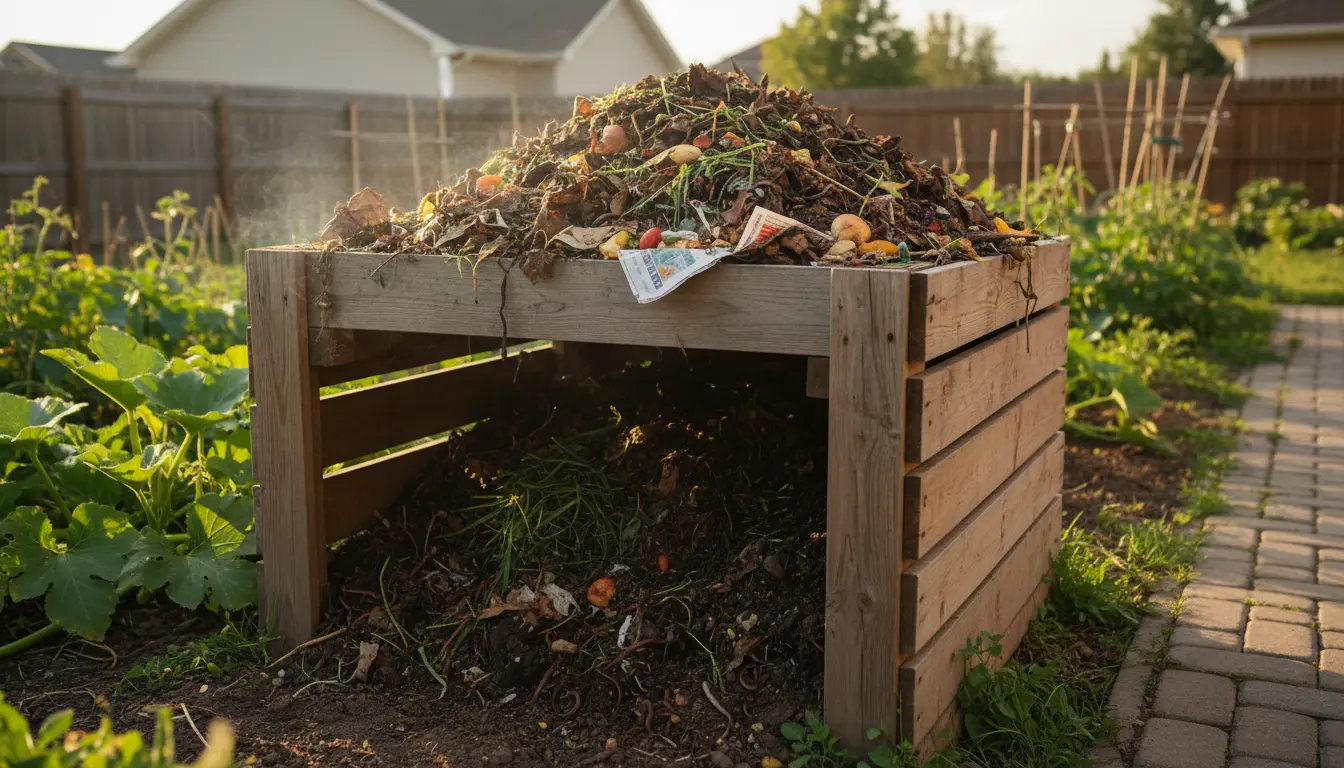
Home composting turns kitchen scraps and yard trimmings into rich soil that improves garden health and reduces waste. This guide explains simple, practical steps you can follow to start composting at home and keep it working well.
What Is Home Composting and Why It Matters
Home composting is the controlled decomposition of organic materials like vegetable peelings, leaves, and coffee grounds. The result is humus, a nutrient-rich material you can mix into soil to support plants.
Composting reduces household waste, lowers methane emissions from landfills, and returns nutrients to your yard. It is a low-cost practice with measurable environmental benefits.
How to Start Home Composting
Starting home composting requires only a few basic choices: location, container, and materials. Follow these practical steps to get going quickly.
Pick a Location for Home Composting
Choose a level spot that drains well and has some sun and shade. A location near your kitchen or garden makes adding material easier and encourages regular use.
Avoid placing the bin too close to neighbors or property lines if odors or pests are a concern.
Choose a Compost Bin
Select a container that fits your space and composting goals. Options include tumblers, stationary bins, and simple open piles.
- Tumbler: Easier turning, faster results, good for small yards.
- Stationary bin: Affordable and simple, good for gradual composting.
- Open pile: Best for larger spaces; requires some turning.
Collect the Right Materials
Compost needs a balance of carbon-rich “browns” and nitrogen-rich “greens.” Aim for a mix that prevents odor and encourages decomposition.
- Greens: Vegetable scraps, fruit peels, coffee grounds, fresh grass clippings.
- Browns: Dry leaves, shredded paper, straw, cardboard.
- Avoid: Meat, dairy, oils, diseased plants, and pet waste.
Maintain Your Compost
Good maintenance keeps compost active and odor-free. Focus on turning, moisture, and particle size.
Turning and Aeration
Turn the pile every 1–2 weeks to add oxygen. For tumblers, rotate as directed. Turning speeds up decomposition and helps prevent foul smells.
Moisture and Texture
Compost should feel like a damp sponge — moist but not dripping. Add water during dry spells and add more browns if the pile is too wet.
Shredding materials like cardboard speeds decomposition by increasing surface area.
Troubleshooting Common Problems
Composting problems are usually easy to fix with small adjustments. Check these common issues and quick solutions.
- Bad odor: Add more browns, turn the pile, check moisture.
- Pests: Avoid adding meat and dairy; use a closed bin or bury fresh food beneath browns.
- Slow decomposition: Chop materials smaller, increase greens, or warm the pile by adding more material and turning.
Uses of Finished Compost
Finished compost looks dark, crumbly, and earthy. Use it to enrich potting mixes, top-dress lawns, or work into garden beds.
Apply a 1–3 inch layer around plants or mix it into the top 4–6 inches of soil when preparing beds.
Composting one ton of food scraps can prevent about 0.5 to 1 ton of CO2-equivalent greenhouse gas emissions compared with sending the same material to a landfill.
Case Study: Urban Apartment Home Composting
Maria, a city renter with a small balcony, started home composting using a compact tumbler. She collected kitchen scraps in a sealed counter container and emptied it into the tumbler twice a week.
Within four months she produced enough compost to top-dress her container plants and herbs. She reduced her landfill waste by about 25% and saved money on potting soil.
Tips for Success with Home Composting
- Keep a small countertop container to make adding scraps easy.
- Balance greens and browns; a rough starting ratio is 2 parts browns to 1 part greens by volume.
- Chop or shred large items to speed breakdown.
- Inspect and adjust moisture regularly, especially in summer or winter.
- Be patient: small-scale systems may take several months to produce finished compost.
Final Checklist for New Home Composters
- Choose a suitable bin and location.
- Collect greens and browns and avoid banned items.
- Turn and monitor moisture weekly.
- Use finished compost in your garden and pots.
Home composting is a simple, effective way to close the loop on organic waste, improve soil health, and reduce your environmental footprint. Start small, keep consistent, and adjust as you learn what works best in your space.