
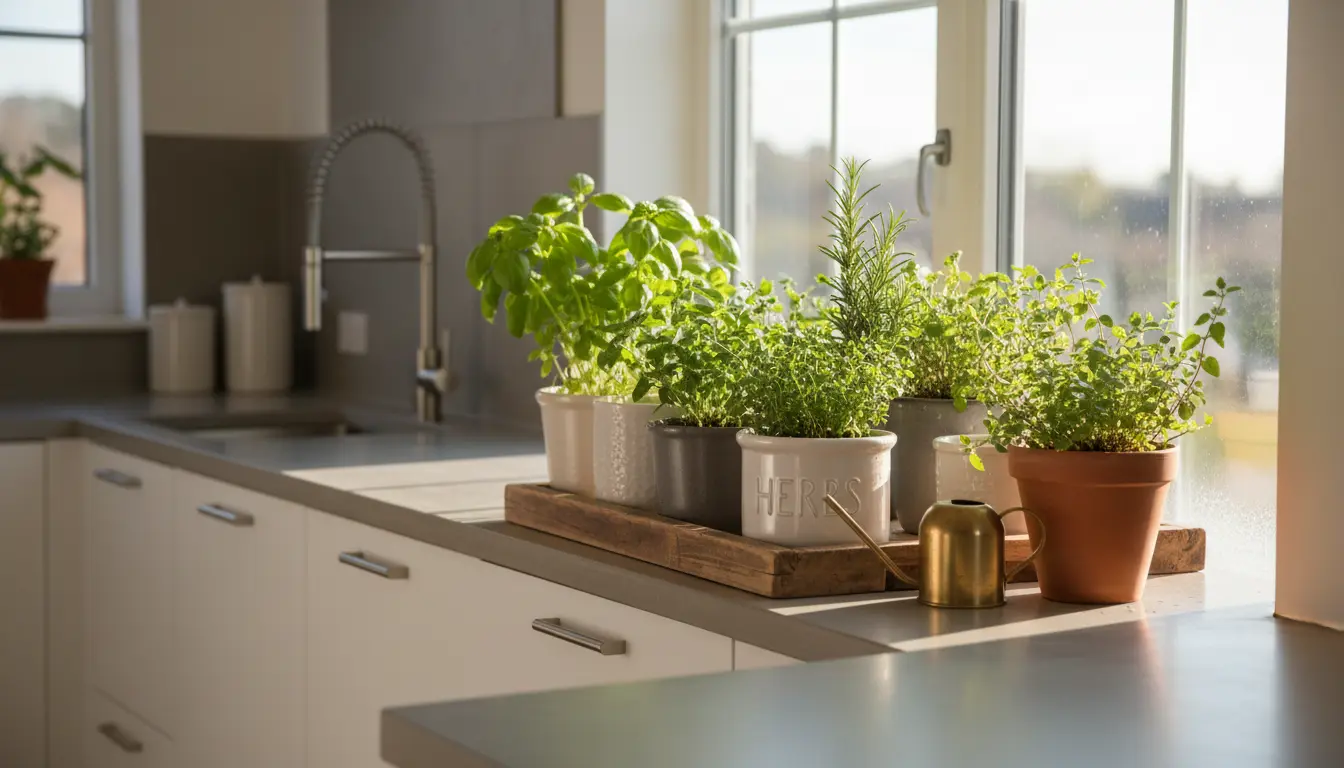
Why an Indoor Herb Garden Works
Growing an indoor herb garden is an easy way to add fresh flavor to meals and save money on store-bought herbs. Indoor gardens are compact, require little maintenance, and bring greenery into your living space.
This guide focuses on practical steps, simple supplies, and a routine you can follow whether you have a sunny windowsill or a small apartment.
How to Start an Indoor Herb Garden: Quick Overview
Start by choosing easy herbs, a proper container, and well-draining soil. Next, place the plants where they get adequate light and follow a regular watering and feeding schedule.
Below are the essential choices and step-by-step instructions to get a reliable indoor herb garden going.
Choose Herbs for an Indoor Herb Garden
Select herbs that adapt well to indoor light and container life. Beginners should pick low-maintenance varieties that offer frequent harvests.
- Basil — great for sunny spots and quick growth.
- Parsley — tolerates moderate light and lasts long.
- Mint — very forgiving but can be invasive in mixed pots.
- Thyme and Oregano — drought-tolerant and compact.
- Chives — small clumps, ideal for windowsills.
Pick Containers and Soil
Use containers with drainage holes to prevent root rot. Terracotta, ceramic, or plastic pots all work if drainage is available.
Choose a high-quality potting mix labeled for indoor plants or herbs. Avoid garden soil because it compacts and drains poorly in pots.
Lighting for an Indoor Herb Garden
Light is the most common limitation for indoor herbs. Most culinary herbs need 6 to 8 hours of bright light daily.
If you lack a sunny window, use a full-spectrum LED grow light positioned 6 to 12 inches above the plants. Timers set for 12–14 hours help maintain consistency.
Watering and Feeding
Water when the top inch of soil feels dry. Overwatering leads to yellow leaves and root problems, so let pots drain fully between waterings.
Feed herbs with a balanced liquid fertilizer at half strength every 3–4 weeks during active growth. Reduce feeding in winter when growth slows.
Placement and Microclimate Tips
Place the herb garden near kitchen prep areas for convenience and to encourage frequent harvesting. Keep herbs away from heat vents and cold drafts.
Increase humidity by grouping pots together or placing a shallow tray of water nearby. This helps Mediterranean herbs adapt to indoor dryness.
Maintenance Routine for an Indoor Herb Garden
Set a weekly routine: check soil moisture, prune for shape, and harvest leaves for use. Regular trimming encourages bushier growth and prevents legginess.
- Weekly: Inspect for pests, rotate pots for even light, and remove dead leaves.
- Every 2–3 weeks: Pinch back growth to promote branching.
- Seasonal: Repot when roots become crowded or soil quality degrades.
Common Problems and Simple Fixes
Yellow leaves usually mean overwatering or poor drainage. Move the pot to a brighter spot and reduce watering frequency.
Leggy, stretched plants indicate insufficient light. Use supplemental grow lights and trim back to encourage compact growth.
Pest Management
Small pests like aphids or spider mites can appear indoors. Wipe leaves with a damp cloth and use insecticidal soap on affected plants.
Isolate any infested plant to avoid spread and inspect neighboring pots regularly.
Small Real-World Case Study
Case Study: Maria, a city apartment renter, started a three-pot indoor herb garden on a south-facing windowsill. She planted basil, chives, and thyme in 6-inch pots with good potting mix.
Within six weeks she had weekly basil harvests and used fresh herbs in cooking. Occasional yellowing from overwatering was fixed by spacing watering to every 5–7 days and adding drainage saucers.
Result: Fresh herbs year-round, cost savings on grocery herbs, and a small boost to kitchen aesthetics.
Simple Shopping Checklist for an Indoor Herb Garden
- Herb starter plants or seeds (basil, parsley, chives, thyme)
- Pots with drainage holes (6–8 inch recommended)
- Indoor potting mix and a small hand trowel
- Full-spectrum LED grow light (if needed)
- Liquid fertilizer and a watering can
Final Tips for a Successful Indoor Herb Garden
Start small and expand as you gain confidence. Focus on herbs you use most in the kitchen so the garden becomes part of daily routines.
Keep notes on watering intervals and light placement. Small adjustments make a big difference to plant health and harvest yields.
With a few pots, proper light, and a simple care schedule, an indoor herb garden is an achievable and rewarding project for any home.