
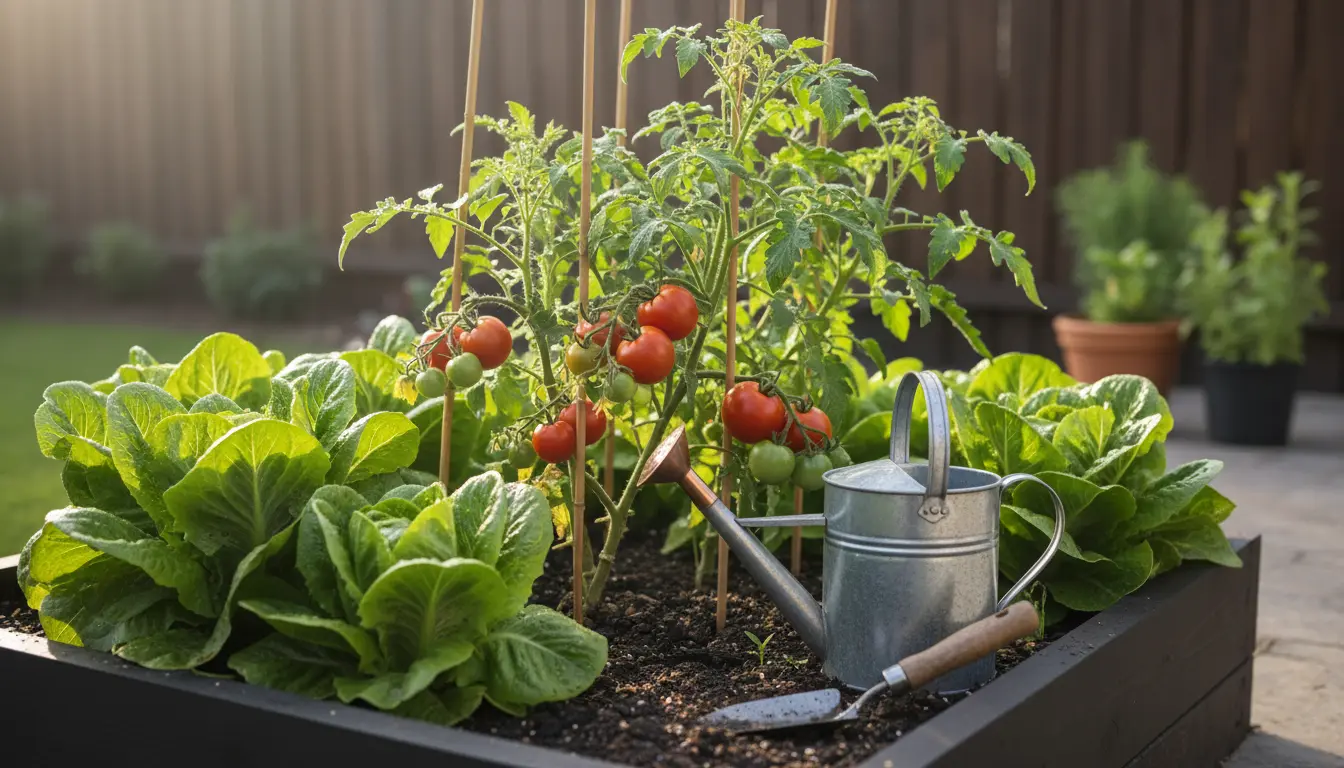
Starting a vegetable garden is a practical way to grow fresh food, save money, and enjoy outdoor activity. This guide gives clear steps you can follow whether you have a small balcony, a raised bed, or a modest backyard.
Choose the Right Location to Start a Vegetable Garden
Location is the first decision when you start a vegetable garden. Most vegetables need at least 6–8 hours of direct sunlight every day.
Look for a flat spot with good drainage. Avoid low areas that collect water and places shaded by large trees.
Assess sunlight and access
Check sunlight through the day before you plant. Make sure you can reach the area easily for watering and harvesting.
Near a water source and a garden tool storage spot is ideal for convenience.
Prepare Soil Before You Start a Vegetable Garden
Healthy soil is the foundation of a productive vegetable garden. Most soils benefit from added organic matter like compost.
Test pH if possible. Most vegetables prefer a pH between 6.0 and 7.0.
Steps to improve soil
- Clear weeds and grass using a spade or sheet mulching.
- Mix in 2–4 inches of compost over the planting area.
- Loosen compacted soil to a depth of 8–12 inches for better root growth.
Pick Vegetables That Make Sense for Your Space
Start with easy, high-reward crops to build confidence. Lettuce, radishes, green beans, tomatoes, and herbs are common beginner choices.
Consider your climate and season. Use seed packets or plant tags to check days to maturity.
Plan for succession and spacing
Use succession planting to extend harvests: plant a new row of fast crops every few weeks.
Follow spacing recommendations on seed packets to reduce disease and improve yields.
Planting Techniques When You Start a Vegetable Garden
Sow seeds at the depth recommended on the packet. Thinning seedlings early prevents overcrowding.
For transplants, dig a hole slightly larger than the root ball and firm soil around the base.
Timing and starter plants
- Start seeds indoors for long-season crops, like tomatoes and peppers.
- Direct sow root crops and quick greens in the garden once soil warms.
Watering and Mulching Basics
Consistent watering is critical, especially during germination and fruit set. Aim for deep, infrequent watering to encourage strong roots.
Mulch around plants to retain moisture, suppress weeds, and moderate soil temperature.
How to water effectively
- Water at the base of plants early in the morning to reduce evaporation.
- Use drip irrigation or soaker hoses where possible to save water and reduce leaf wetness.
Pest and Disease Control for a New Vegetable Garden
Start with prevention: healthy soil, proper spacing, and clean tools reduce many problems. Inspect plants weekly for early signs of issues.
Use physical barriers, companion planting, and organic options before chemical controls.
Simple organic strategies
- Handpick slugs and large pests in the morning.
- Use row covers to protect seedlings from insects.
- Introduce beneficial insects like ladybugs to manage aphids.
Many common kitchen scraps—coffee grounds, egg shells, and vegetable peels—can be composted to enrich garden soil and reduce waste.
Harvesting and Ongoing Care
Harvest vegetables when they reach the recommended size for best flavor and to encourage continued production. Regular harvesting can extend the productive period.
Rotate crops each season to reduce pest build-up and maintain soil health.
Record keeping and improvement
Keep a simple journal of what you planted, when you planted it, and any problems encountered. Notes help improve yields year to year.
Case Study: Small Container Garden Success
Maria started a container garden on her apartment balcony with five 12-inch pots. She planted cherry tomatoes, basil, lettuce, and a pepper plant.
After improving potting mix with compost and watering consistently, she harvested fresh salad greens twice a week and five pints of cherry tomatoes in one season. The key was regular feeding and sun exposure of 6 hours daily.
Quick Checklist Before You Start a Vegetable Garden
- Choose a sunny, accessible location.
- Test and improve soil with compost.
- Select easy crops suited to your climate.
- Set up watering and mulch to save time.
- Inspect plants weekly and record progress.
Starting a vegetable garden is a series of small, manageable steps. With the right site, good soil, proper watering, and attention to pests, you can grow healthy vegetables and enjoy the benefits season after season.