
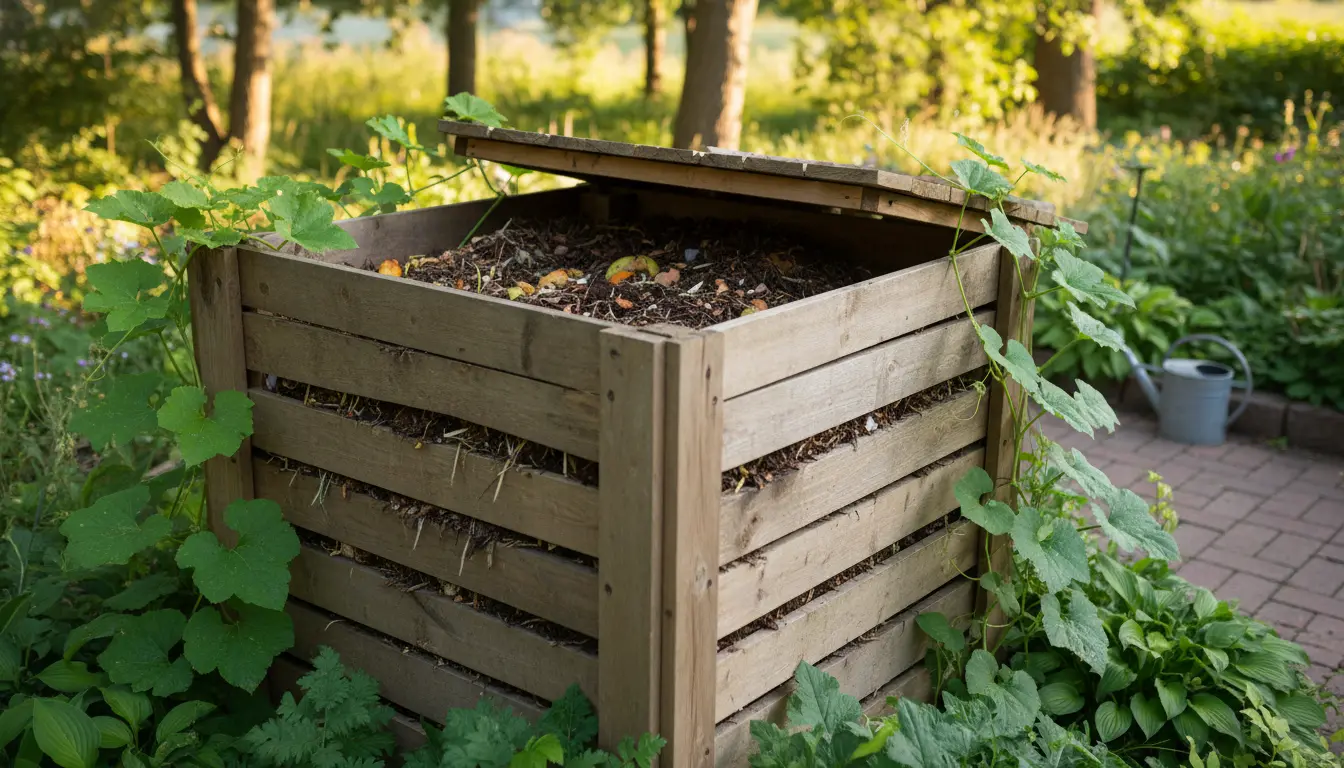
Home composting turns kitchen scraps and yard waste into a valuable soil amendment. This guide gives practical steps, troubleshooting tips, and a short case study to help beginners start composting at home.
Why Home Composting Matters
Composting reduces household waste, lowers methane emissions from landfills, and returns nutrients to soil. It also saves money on fertilizer and improves garden health.
For beginners, composting is accessible: you don’t need specialized equipment or lots of space to begin seeing benefits.
Home Composting Basics
Successful composting balances four key elements: carbon, nitrogen, oxygen, and moisture. Understanding these makes troubleshooting easier.
- Carbon (browns): dried leaves, shredded paper, cardboard.
- Nitrogen (greens): vegetable scraps, coffee grounds, fresh grass clippings.
- Oxygen: provided by turning the pile or using a bin that allows airflow.
- Moisture: the pile should be damp but not dripping.
Choosing a Composting Method
Select a method based on space, time, and effort. Each method supports home composting for beginners.
- Tumbler: easier turning and faster results; good for small yards.
- Open pile or bin: low-cost option for larger spaces; needs more effort to turn.
- Bokashi: fermenting kitchen scraps, including meat; requires finishing in soil or compost after fermentation.
- Vermicomposting: uses worms in a bin; ideal for apartments and limited space.
Step-by-Step: How to Start Home Composting
Follow these simple steps to start a compost pile or bin at home.
- Pick a Location: Choose a well-drained, shaded spot near water access or keep a small bin indoors for vermicomposting.
- Set Up a Container: Use a bin, tumbler, or create a simple DIY wooden frame.
- Add a Base Layer: Start with coarse browns like twigs to help airflow.
- Build in Layers: Alternate thin layers of greens and browns, aiming for roughly 2 parts browns to 1 part greens by volume.
- Maintain Moisture: Keep the pile as damp as a wrung-out sponge. Add water if dry or cover if too wet.
- Turn Regularly: Turn every 1–2 weeks to introduce oxygen and speed decomposition (less frequent for slow composting methods).
- Harvest Finished Compost: After a few months to a year, finished compost is dark, crumbly, and smells earthy.
What You Can and Cannot Compost
Knowing acceptable materials helps maintain a healthy pile.
- Compost: fruit and vegetable scraps, coffee grounds, eggshells, tea bags, leaves, grass clippings.
- Do Not Compost (in most home piles): meat, dairy, oils, diseased plants, pet feces—these attract pests and pathogens.
Troubleshooting Common Problems in Home Composting
Problems are usually easy to fix once you identify the cause.
- Bad smell: too much green or too wet. Add browns and turn the pile.
- Slow decomposition: not enough nitrogen or oxygen. Add greens and turn more often.
- Pests: avoid meat and dairy, use a closed bin, or bury food scraps under browns.
- Dry pile: add water and more greens, then turn.
Composting can reduce household waste by up to 30 percent. Finished compost improves soil structure, water retention, and nutrient content.
Small Real-World Example: Urban Balcony Composting Case Study
Case: Maria, a city apartment dweller, started vermicomposting in a 2-bin worm bin on her balcony. She had two goals: reduce kitchen waste and grow herbs in containers.
Process: Maria collected kitchen scraps in a small countertop pail, added them weekly to her worm bin, and maintained moisture and bedding (shredded cardboard and leaves).
Result: In six months Maria produced enough worm castings to top-dress three herb pots and reduced her trash volume by 40 percent. She fixed minor issues by adding more dry bedding when the bin became too wet.
Using Finished Compost
Finished compost can be used in multiple ways to improve plant health.
- Soil amendment: mix 10–30% compost into garden beds to boost organic matter.
- Potting mix: blend small amounts with potting soil for container plants.
- Mulch: apply a thin layer around plants to conserve moisture and suppress weeds.
Quick Tips for Busy Beginners
- Keep a small countertop container for scraps to make regular composting easy.
- Chop larger items into smaller pieces to speed decomposition.
- Balance greens and browns; if in doubt, add more browns.
Home composting is a practical way to reduce waste and build healthier soil. Start small, monitor your pile, and adjust as you learn. With a little routine, composting becomes a low-effort habit that benefits your garden and the environment.