
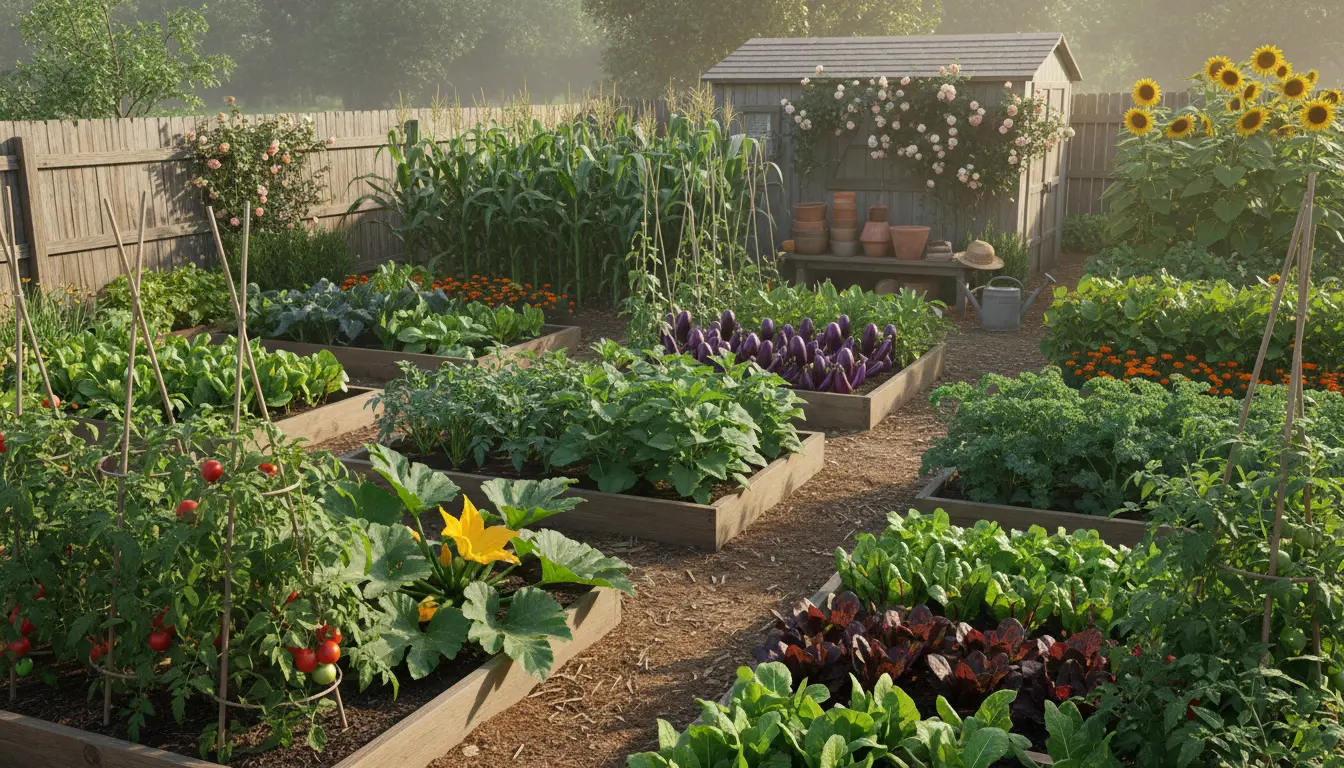
How to Start a Vegetable Garden: Quick Overview
Starting a vegetable garden is a practical, rewarding project you can begin with basic tools and a small space. This guide shows clear, step-by-step actions to plan, plant, and care for a productive garden.
Step 1: Choose the Right Spot to Start a Vegetable Garden
Select a location with at least six hours of sunlight per day for most vegetables. Good sunlight improves growth and reduces disease pressure in plants.
Consider access to water and soil drainage. Avoid low spots that collect water and places with constant shade from trees or buildings.
Site Checklist for a Successful Vegetable Garden
- Full sun for 6+ hours daily
- Level or gently sloped ground for drainage
- Easy water access within 50 feet
- Protected from strong winds if possible
Step 2: Prepare Soil and Beds
Soil is the foundation of a productive vegetable garden. Test soil pH (ideal 6.0–7.0 for most vegetables) and add amendments as needed.
Create raised beds or prepare in-ground rows. Raised beds improve drainage and warm up faster in spring.
How to Improve Garden Soil
- Add 2–4 inches of compost to enrich organic matter
- Mix in aged manure or slow-release organic fertilizer if needed
- Use coarse sand or grit only if drainage is very poor
Step 3: Choose Vegetables and Plan Layout
Start simple with easy-to-grow vegetables: tomatoes, lettuce, radishes, beans, and zucchini. Choose varieties marked as “disease resistant” when possible.
Plan spacing to avoid overcrowding. Use companion planting to maximize space and deter pests.
Beginner-Friendly Planting Plan
- Leafy greens (lettuce, spinach) in early spring or shade
- Root crops (radish, carrot) in well-tilled beds
- Warm-season crops (tomato, pepper) after last frost
- Climbers (beans, peas) on trellises to save space
Step 4: Planting and Timing
Follow seed packet or plant tag directions for depth and spacing. Plant transplants deeper for stronger root development when appropriate.
Stagger plantings every 2–3 weeks for continuous harvest of crops like lettuce and radishes. Note local frost dates and plant accordingly.
Step 5: Watering and Mulching
Water consistently to keep soil evenly moist. Deep, infrequent watering encourages deep root growth and improves drought tolerance.
Apply 2–3 inches of organic mulch around plants to retain moisture, moderate soil temperature, and suppress weeds.
Watering Tips
- Water at the base of plants to reduce leaf disease
- Use drip irrigation or soaker hoses for efficiency
- Water early in the morning when possible
Step 6: Manage Pests and Diseases
Monitor plants weekly to catch problems early. Identify common pests like aphids, slugs, and tomato hornworms quickly.
Use integrated pest management (IPM): hand-pick pests, apply insecticidal soap, and use row covers for seedlings when needed.
Natural Pest Control Options
- Introduce beneficial insects (ladybugs, lacewings)
- Use floating row covers to protect young plants
- Rotate crops yearly to reduce soil-borne diseases
Step 7: Harvesting and Ongoing Care
Harvest vegetables at peak maturity for best flavor. Frequent harvesting often encourages more production for crops like beans and zucchini.
Continue adding compost and monitor soil fertility mid-season. Replace spent plants and plan fall or winter crops if climate allows.
Small Case Study: Sarah’s 10×10 Raised Bed
Sarah, a beginner gardener, built a 10×10 raised bed on her sunny patio. She amended the soil with compost and chose simple crops: cherry tomatoes, basil, lettuce, and bush beans.
In her first season she harvested tomatoes and beans regularly. Key actions that helped were regular mulching, trellising tomatoes, and weekly checks for pests. Her garden produced enough for weekly salads for her family.
Common Beginner Mistakes and How to Avoid Them
- Overwatering: Check soil moisture before adding water to avoid root rot.
- Planting too close: Follow spacing guidelines to reduce disease and competition.
- Neglecting soil tests: Simple pH and nutrient tests can save time and improve yields.
Final Checklist to Start a Vegetable Garden
- Pick a sunny site and prepare soil with compost
- Choose beginner-friendly vegetables and plan spacing
- Plant at the right time and water deeply
- Mulch, monitor for pests, and harvest regularly
Starting a vegetable garden is a manageable project with clear steps and tangible benefits. Follow these practical instructions, start small, and learn as you grow.