
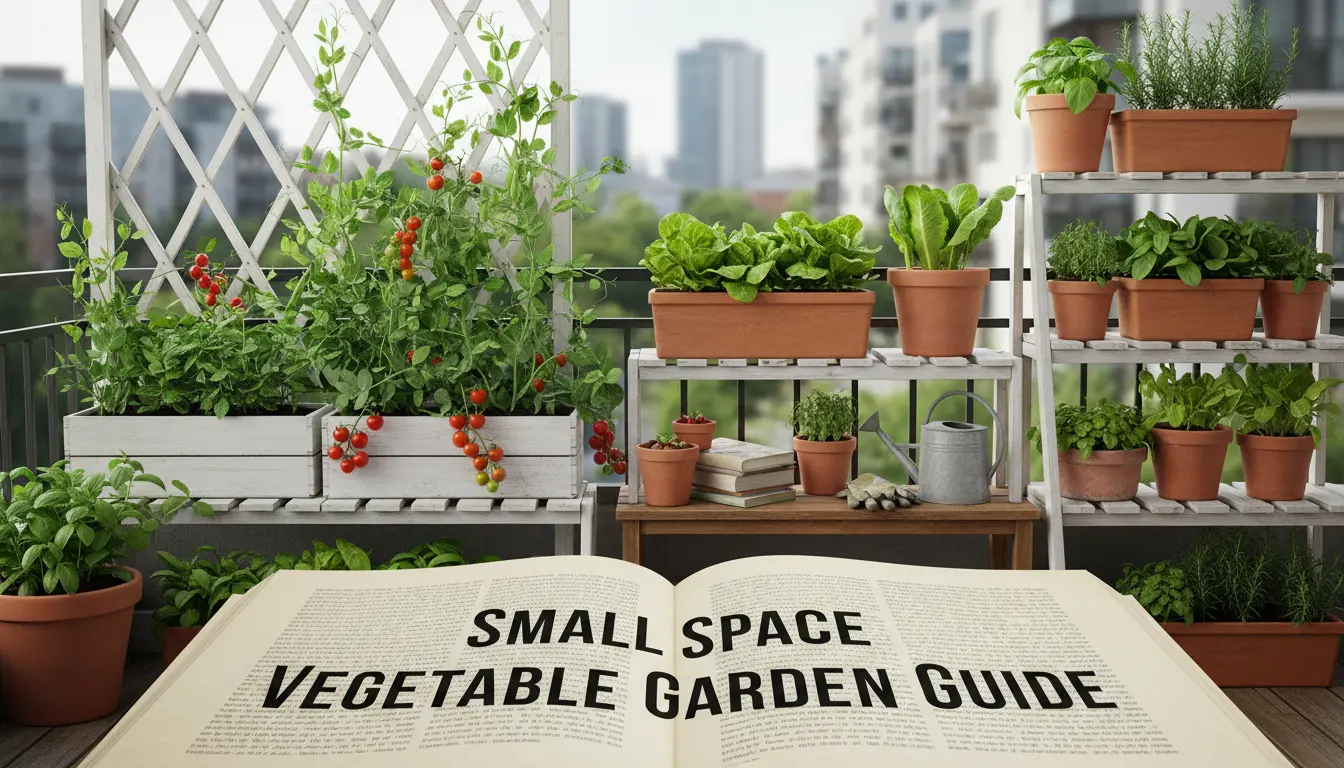
Starting a vegetable garden in small spaces is practical and rewarding. This guide gives clear, step-by-step instructions so you can grow produce on a balcony, patio, or tiny yard.
Planning Your Vegetable Garden in Small Spaces
Begin with a simple plan that lists what you want to grow and how much space you have. Focus on high-yield, compact vegetables and herbs suited to containers.
Consider sunlight, access to water, and the weight limits for balconies. A basic plan prevents wasted time and expense.
Choosing Plants for a Vegetable Garden in Small Spaces
Pick plants that do well in containers and have short time-to-harvest. Good options include:
- Leafy greens: lettuce, spinach, arugula
- Herbs: basil, parsley, chives
- Compact fruiting plants: cherry tomatoes, dwarf peppers
- Root crops in deep containers: radishes, baby carrots
Limit large vines unless you can stake or trellis them vertically.
Choosing Containers for a Vegetable Garden in Small Spaces
Containers come in many materials and sizes; choose by plant needs and durability. Ensure every container has drainage holes to prevent root rot.
Some container options and considerations:
- Plastic pots: lightweight and affordable, retain moisture well.
- Ceramic or clay: breathable but heavier and can dry faster.
- Fabric grow bags: good root aeration and lightweight when empty.
- Self-watering containers: reduce watering frequency, useful for busy gardeners.
How Many Containers Do You Need?
Match container size to plant type. Examples:
- Herbs: 1–3 gallon pots
- Leafy greens: 3–5 gallon pots or troughs
- Tomatoes: 5–10 gallon pots for dwarf varieties
Soil, Water, and Light for a Vegetable Garden in Small Spaces
Good soil and consistent watering are more important in containers than in ground gardens. Use a high-quality potting mix formulated for vegetables.
Essential care tips:
- Use a lightweight potting mix with compost for nutrients.
- Fertilize every 2–4 weeks with a balanced liquid feed or slow-release granules.
- Water deeply and regularly; containers dry out faster than garden beds.
- Place plants where they receive 4–8 hours of sunlight, depending on crop needs.
Watering Strategies
Check moisture with a finger test or a moisture meter. Early morning watering reduces evaporation and plant stress.
To conserve water, group pots with similar needs and use mulch on the soil surface to slow drying.
Pest Management and Maintenance
Small-space gardens still face pests and diseases, but problems are easier to spot and manage early. Use physical controls first.
- Handpick pests and remove damaged leaves.
- Use insecticidal soap or neem oil for soft-bodied insects.
- Rotate crops in containers and refresh potting mix yearly to reduce disease buildup.
Support and Pruning
Trellises, cages, or stakes help vertical growers use less horizontal space. Regular harvesting and light pruning encourage more production in limited areas.
Simple Layouts for a Vegetable Garden in Small Spaces
Organize containers for efficient light exposure and ease of care. Some layout ideas:
- Single row along a sunny railing for herbs and salad greens.
- Stacked planters or shelving to maximize vertical space for small pots.
- Group heavy, deep pots on the ground and lighter pots on tables or shelves.
Seasonal Timeline
Plan by season: start seeds indoors or buy seedlings, transplant after last frost, and rotate crops with the seasons to keep production steady.
Cost and Time Estimates
Initial setup can be modest. A starter setup often includes a few containers, potting mix, and basic tools. Expect to invest time weekly for watering, harvesting, and minor care.
Estimated startup costs (approximate):
- Containers: $10–$50 each depending on size and material
- Potting mix and compost: $20–$50
- Tools and stakes: $20–$40
Small Real-World Case Study
Case: Rita, a city renter with a narrow balcony, planted a vegetable garden in small spaces using three 10-inch pots and two 5-gallon containers. She chose basil, lettuce, cherry tomatoes, and radishes.
Outcome: In one growing season Rita harvested weekly salad greens, a dozen cherry tomato batches, and continuous basil. Her total spend was about $85, and she reduced store-bought herbs by 75%.
Key lessons from Rita’s garden: choose compact varieties, water consistently, and harvest frequently to encourage more growth.
Quick Start Checklist
- Measure your space and sunlight hours.
- Choose 3–6 crops suited to containers and your climate.
- Select containers with good drainage and appropriate size.
- Use quality potting mix and add compost or slow-release fertilizer.
- Plan a watering schedule and plant support if needed.
With thoughtful planning and consistent care, a vegetable garden in small spaces can supply fresh produce, reduce grocery bills, and add green life to any compact area. Start small, learn each season, and expand as you gain experience.