
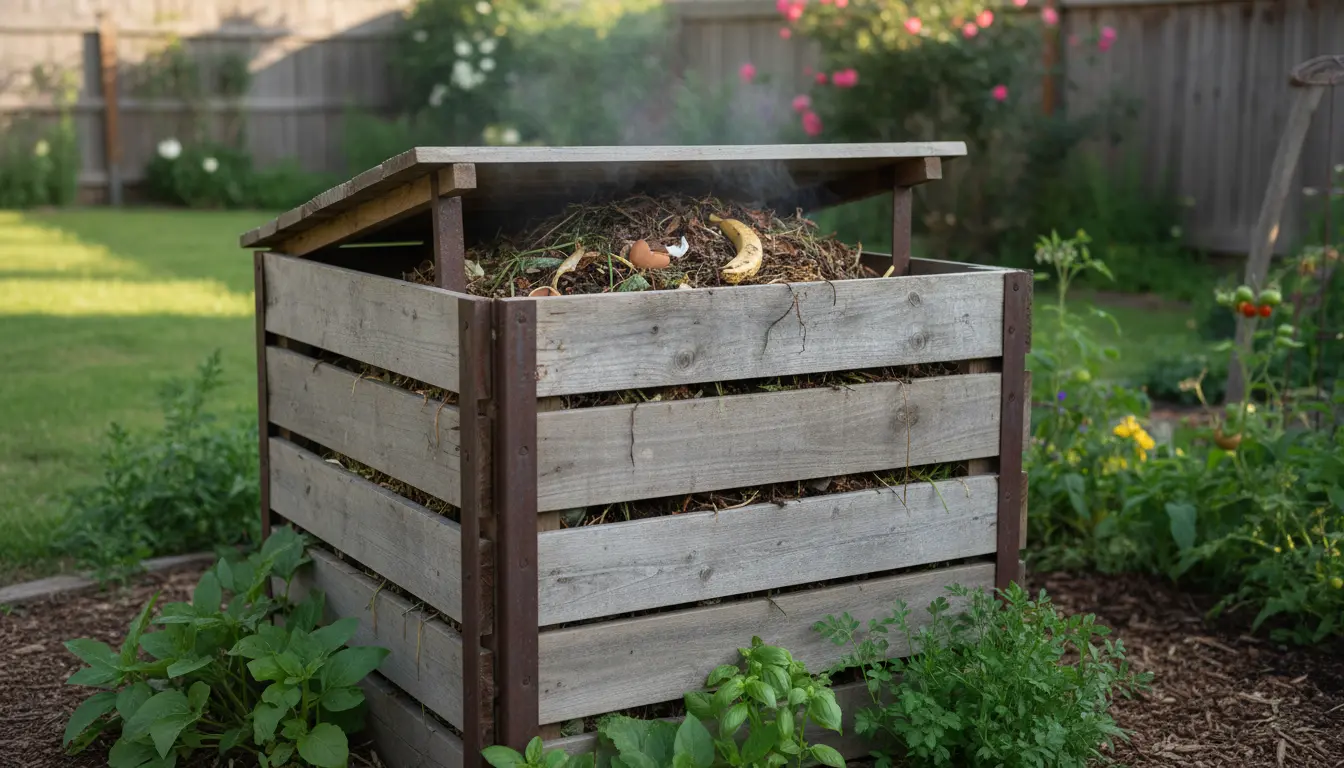
Composting at home turns kitchen and yard waste into nutrient-rich soil. This guide gives clear, practical steps you can follow whether you have a backyard, balcony, or small kitchen.
Why start Home Composting
Home composting reduces household waste and returns nutrients to soil. It lowers trash volume and cuts methane emissions from landfills.
It is also a low-cost way to improve garden soil structure and water retention. You do not need special skills to begin.
Basic steps to start Home Composting
Follow a simple loop: choose a bin, collect materials, manage the pile, and harvest the compost. Each step is manageable for beginners.
1. Choose a bin for Home Composting
Select a container that fits your space and needs. Options include tumblers, stationary bins, wooden pallets, and a simple heap on the ground.
- Tumbler: Fast turning, good for small yards.
- Stationary bin: Simple and low-cost, works for larger batches.
- Bokashi or vermicompost: Ideal for apartments or limited space.
2. Add the right mix of materials for Home Composting
Compost works best with a balanced mix of greens and browns. Aim for about 2 parts browns to 1 part greens by volume.
- Greens: fruit and vegetable scraps, coffee grounds, fresh grass clippings.
- Browns: dry leaves, shredded paper, straw, wood chips.
Avoid meat, dairy, diseased plants, and pet waste in regular backyard compost to prevent pests and odors.
Managing and troubleshooting Home Composting
Good management keeps the pile active and odor-free. Check moisture, turn the pile, and monitor temperature where possible.
Common issues and quick fixes
- Bad odor: Add more browns and turn the pile to increase airflow.
- Too wet: Mix in dry materials like shredded paper or leaves and cover to reduce rain exposure.
- Too dry: Sprinkle water and mix to rehydrate the pile.
- Slow breakdown: Chop large items, increase green content, or turn more frequently.
How to speed up Home Composting
To accelerate decomposition, increase surface area and oxygen. Shred kitchen scraps, layer materials, and turn the pile weekly if possible.
Adding a shovel of finished compost or a compost starter introduces helpful microbes. Maintain a balanced carbon-to-nitrogen ratio to promote microbial activity.
Composting can reduce household waste by up to 30 percent and greenhouse gas releases from food waste by preventing anaerobic decomposition in landfills.
Finishing and using compost from Home Composting
Finished compost looks dark, crumbly, and smells earthy. It typically takes 2–12 months, depending on method and management.
Use finished compost as a top dressing, mixed into potting soil, or worked into garden beds to improve structure and fertility.
How to know compost is ready
- Uniform dark color and crumbly texture.
- No recognizable food or yard waste pieces.
- Earthy smell rather than sour or rotten odors.
Small real-world example: Apartment Vermicomposting Case Study
Sara lives in a two-bedroom apartment and started vermicomposting in a 20-liter plastic bin with red worms. She used kitchen scraps and shredded cardboard as bedding.
After three months of feeding the worms small amounts daily and keeping the bin moist, Sara harvested rich castings. She mixed these into potting soil for balcony tomatoes and noticed better growth and fewer watering needs.
Key takeaways from Sara’s case: choose a small system, feed in small amounts, and keep moisture consistent.
Tips and examples for different living situations
Backyard: Use a larger bin or open heap and turn weekly for faster results.
Small yard or balcony: Choose a tumbler or compact bin and mix with dry materials to control odor.
Apartment: Try bokashi for fermenting scraps or vermicompost for nutrient-rich castings.
Quick checklist to start Home Composting today
- Pick a bin type that fits your space.
- Gather browns (dry leaves, shredded paper) and greens (kitchen scraps).
- Build layers and maintain moisture like a wrung-out sponge.
- Turn regularly to add oxygen and speed decomposition.
- Use finished compost in gardens, pots, or as soil amendment.
Home composting is a practical way to reduce waste and improve soil health. Start small, learn by doing, and adjust your approach based on space and goals. With basic care you can convert household waste into valuable compost year-round.