
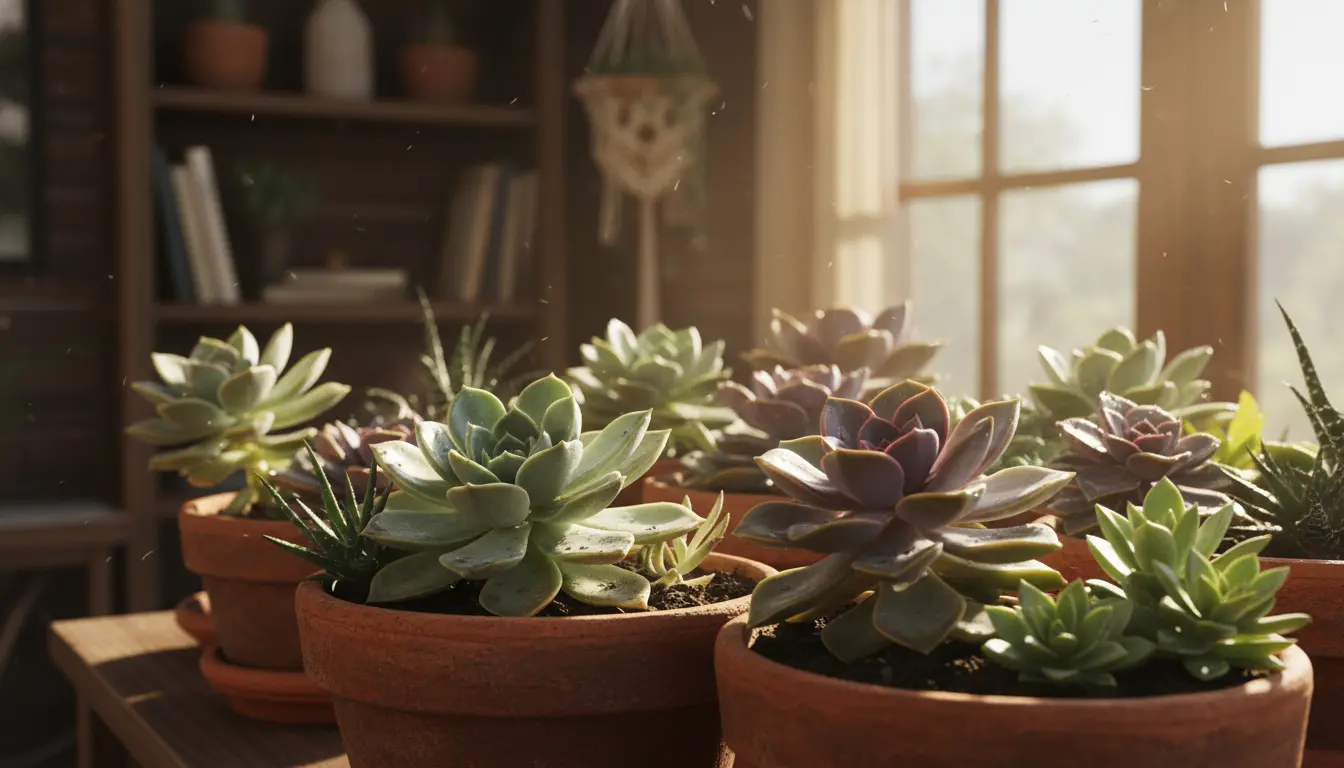
Indoor succulents are popular because they are attractive and generally low maintenance. Still, many beginners make avoidable mistakes that stress plants. This guide covers proven steps for consistent succulent care indoors.
Understanding Indoor Succulent Care Basics
Succulent care centers on three things: light, water, and soil. Get these right and most varieties will thrive with minimal effort.
Learn the needs of your specific species. Some succulents like Haworthia tolerate lower light, while Echeveria prefers bright sun.
Key Elements of Succulent Care
- Light: Bright, indirect or direct depending on species.
- Water: Deep but infrequent; allow soil to dry between waterings.
- Soil and drainage: Fast-draining soil and pots with drainage holes.
- Temperature and humidity: Warm and dry conditions are ideal.
How to Water Succulents Indoors
Water is the most common cause of problems. Overwatering leads to root rot, while underwatering causes shriveled leaves.
Watering Schedule and Technique
Use a soak-and-dry approach. Water thoroughly until it runs from drainage holes, then let the soil dry completely before watering again.
Frequency varies by season. Most succulents need water every 2–4 weeks in summer, and much less in winter.
Signs of Improper Watering
- Overwatered: Yellowing, soft leaves, black stems.
- Underwatered: Wrinkled, thin leaves.
Light Requirements for Indoor Succulent Care
Light quality strongly affects growth, color, and flowering. Match the plant to the light available in your home.
Choosing the Right Spot
South- or west-facing windows provide the most light. East-facing windows are good for gentler morning sun. Avoid north-facing windows unless light is supplemented.
If light is insufficient, use a full-spectrum LED grow light for 10–12 hours daily.
Best Soil and Pot Choices
Succulents need soil that drains fast and doesn’t stay soggy. Regular potting mix retains too much moisture for many succulents.
Soil Mix and Pots
- Use a commercial cactus/succulent mix or make one with 50% potting soil and 50% coarse sand or perlite.
- Choose pots with drainage holes. Unglazed clay pots help evaporate excess moisture.
Fertilizer, Repotting, and Dormancy
Succulents don’t need heavy feeding. Light fertilization supports growth in spring and summer, while most need rest in winter.
Feeding and Repotting Tips
- Fertilize once or twice during the growing season with a balanced, diluted fertilizer.
- Repot every 1–2 years to refresh soil and check roots. Spring is best for repotting.
- Reduce watering and stop fertilizing during dormancy (usually winter).
Pest Control and Common Problems
Indoor succulents can face pests like mealybugs and scale. Early detection keeps infestations small and manageable.
Simple Pest Management
- Inspect plants regularly, especially in leaf axils and undersides.
- Use isopropyl alcohol on a cotton swab to remove mealybugs manually.
- Apply insecticidal soap or neem oil for larger infestations, repeating as directed.
Propagation Techniques for Succulent Care
Propagation is easy and rewarding. Popular methods include leaf cuttings, stem cuttings, and offsets.
Step-by-Step Leaf Propagation
- Gently twist a healthy leaf from the stem.
- Let the leaf dry for a few days to form a callus.
- Place on top of well-draining soil and mist every few days until roots form.
Some succulents, like Sedum and Echeveria, can regrow a whole plant from a single leaf. This makes propagation an efficient way to expand your collection.
Small Case Study: A Simple Success
Case study: Maria had a leggy Echeveria in low light. She moved it to an east-facing window, repotted into a gritty mix, and switched to soak-and-dry watering. Within three months the plant developed compact rosettes and stronger colors.
This shows how adjustments in light, soil, and watering quickly improve succulent health.
Quick Troubleshooting Checklist for Succulent Care
- Leaves mushy or black: Check roots for rot; reduce watering and repot in fresh dry mix.
- Stretching stems (etiolation): Increase light or use grow lights.
- Yellow leaves near base: Normal leaf shedding or sign of overwatering—assess watering routine.
- Pests present: Isolate plant and treat with alcohol or insecticidal products.
Final Tips for Consistent Indoor Succulent Care
Keep a routine. Observe plants weekly, adjust water based on season, and prioritize drainage and light. Small, regular checks prevent most problems.
With attention to these basics, your indoor succulents will be resilient and rewarding additions to your home.