
Why Start a Small Vegetable Garden
Growing vegetables in a small space is practical and rewarding. It saves money, gives fresher food, and helps you learn simple gardening skills.
This guide shows clear steps to plan, plant, and maintain a small vegetable garden suitable for beginners and busy homeowners.
Plan Your Small Vegetable Garden
Choose the Best Location for a Small Vegetable Garden
Select a spot that gets at least six hours of sunlight daily for most vegetables. Consider proximity to water and easy access for planting and harvesting.
Raised beds, containers, and sunny balconies all work. Measure available space before choosing plant types and layout.
Decide What to Grow in a Small Vegetable Garden
Pick vegetables you and your family will eat. Start with 4–6 easy crops rather than many varieties.
- Leafy greens: lettuce, spinach
- Quick growers: radishes, baby carrots
- Compact producers: cherry tomatoes, bush beans
- Herbs: basil, parsley
Consider succession planting to maximize yields from limited space.
Prepare Soil for a Small Vegetable Garden
Good soil is the single most important factor for success. For raised beds or containers, use a mix of compost, topsoil, and well-draining material.
Test or assess soil: look for crumbly texture and a pleasant earthy smell. If soil is heavy clay or very sandy, add organic matter to improve structure and fertility.
Soil Preparation Steps
- Clear weeds and debris from the area.
- Loosen soil to a depth of 8–12 inches for beds; use quality potting mix in containers.
- Incorporate 2–3 inches of compost and a balanced slow-release fertilizer as needed.
Adding 1 inch of compost per year improves soil organic matter and supports beneficial microbes that help plants absorb nutrients.
Planting in a Small Vegetable Garden
Follow seed packet or plant tag spacing to avoid overcrowding. Crowded plants increase disease risk and reduce yields.
Use vertical supports like trellises for vining crops to save ground space and improve air circulation.
Planting Tips for Small Spaces
- Stagger planting dates for continuous harvest (e.g., plant lettuce every two weeks).
- Try interplanting fast and slow growers (radishes with carrots) to maximize use.
- Use containers for herbs and small peppers to keep flavor close to the kitchen.
Care and Maintenance for a Small Vegetable Garden
Establish a short routine for watering, weeding, and monitoring pests. Small gardens respond quickly to weekly attention.
Water deeply and less frequently to encourage root development. Early morning watering reduces disease risk.
Pest and Disease Management
Inspect plants regularly for holes, yellowing, or sticky residue. Remove affected leaves promptly and use physical barriers if needed.
Encourage beneficial insects by planting herbs and flowers like marigolds and alyssum nearby.
Harvesting and Troubleshooting a Small Vegetable Garden
Harvest crops at their recommended stage to encourage further production. For example, pick beans when they are young and tender.
Common problems and solutions:
- Yellow leaves: check watering and soil nutrients.
- Stunted growth: test for compacted soil or root crowding.
- Pests: hand-pick large insects and use soapy water sprays for small infestations.
Case Study: A Backyard 4×8 Foot Plot
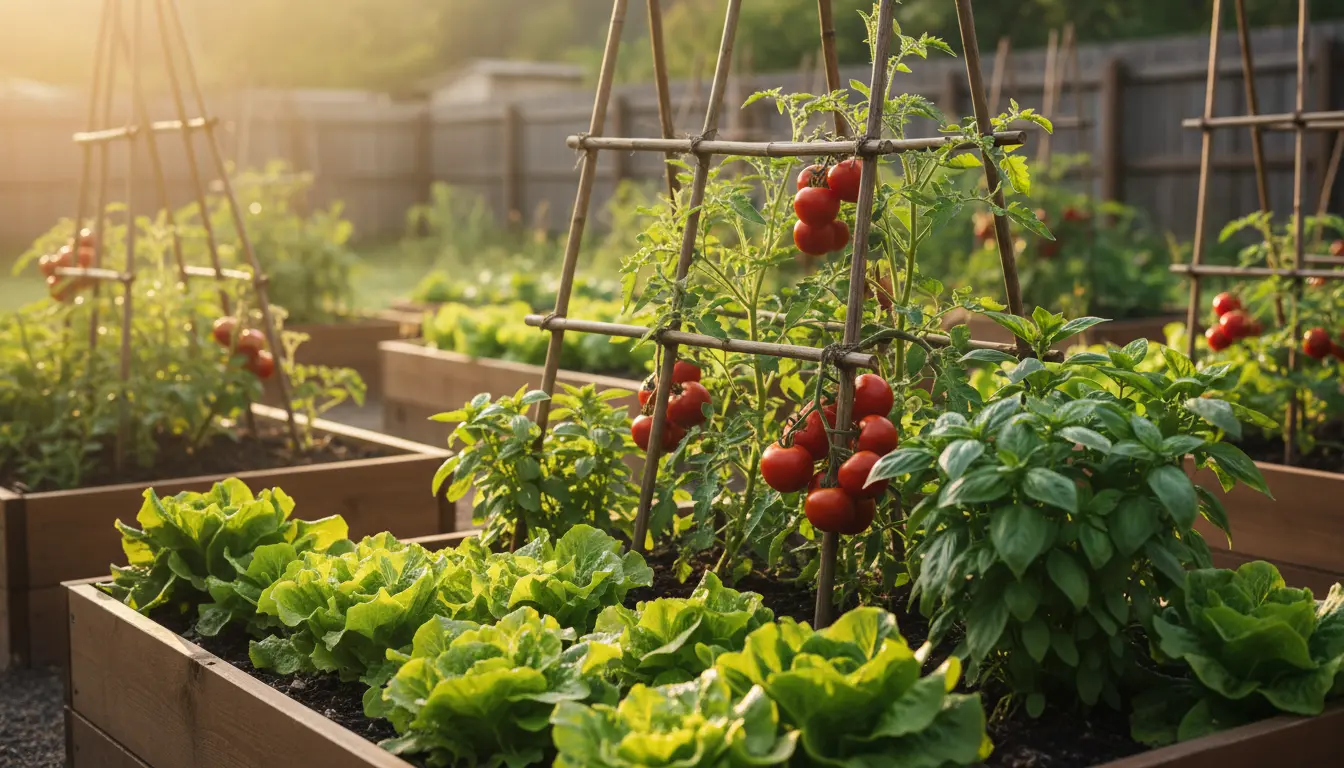
Sara converted a 4×8 foot strip of lawn into a raised bed. She chose lettuce, cherry tomatoes, bush beans, and basil. After improving soil with compost and planting in early spring, she harvested weekly salads by June.
Results after one season: continuous harvest of greens for three months, six tomato plants producing 45 pounds of fruit, and herbs used fresh daily. Small investments in soil and trellising paid off quickly.
Tools and Supplies Checklist for a Small Vegetable Garden
- Quality trowel and hand fork
- Watering can or hose with gentle nozzle
- Compost and balanced fertilizer
- Trellis or stakes for vertical crops
- Mulch to retain moisture and suppress weeds
Quick Examples of Easy Small Garden Plans
- Container mix: two tomato plants, one basil, one pepper per large container.
- Raised bed 4×4: two rows of lettuce, one row of bush beans, three tomato plants on one side.
- Window box: herbs and salad greens for direct kitchen use.
Starting a small vegetable garden is a manageable project that delivers fresh food and satisfaction. With proper planning, soil care, and simple routines, even compact spaces become productive.
Follow these steps, adjust based on your climate, and treat each season as a learning opportunity. Small changes and regular attention lead to steady improvement and better harvests.