
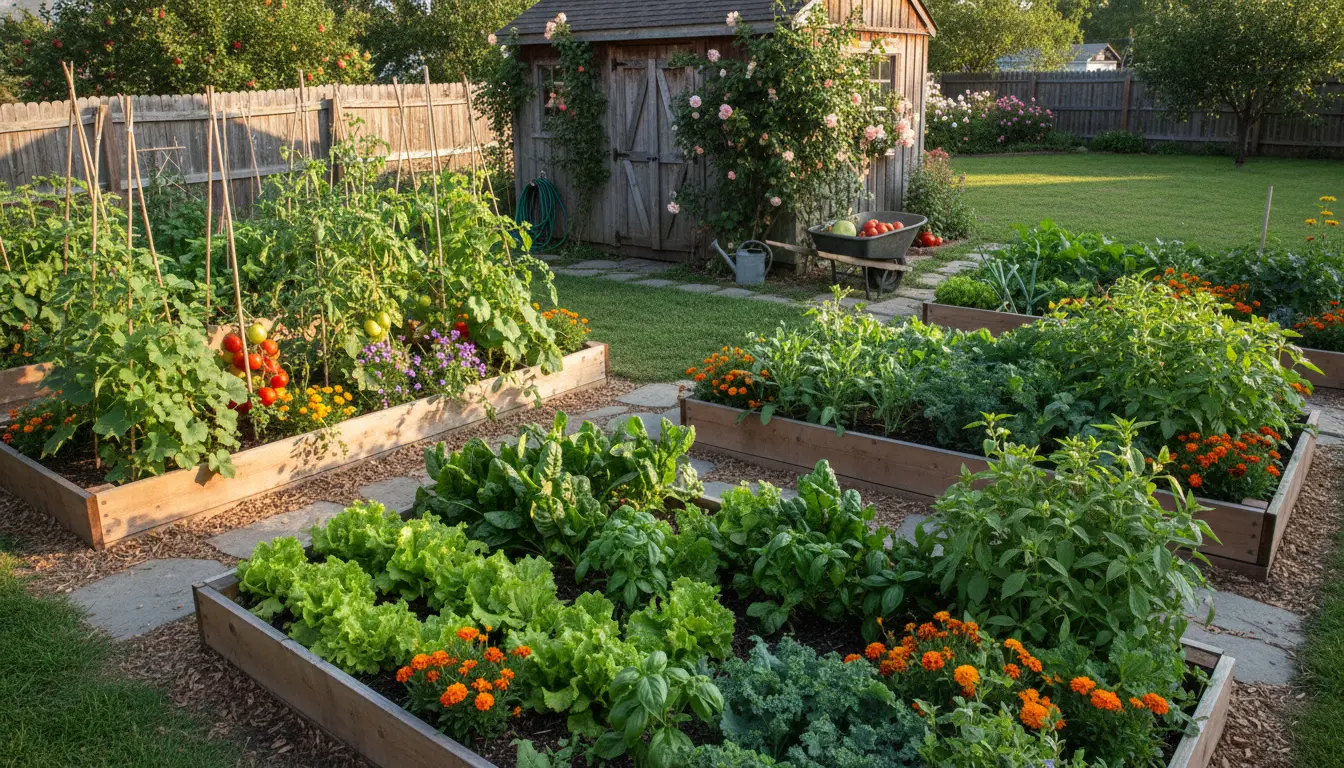
Starting a vegetable garden at home is practical and achievable, even with limited space. This guide gives step-by-step actions you can follow to get reliable results in your first season.
Start a Vegetable Garden: Plan and Choose the Right Site
Good planning makes gardening easier and more productive. Choose a site that gets at least six hours of sunlight and has good drainage.
Consider proximity to water, wind exposure, and convenience for regular care. If you lack yard space, use containers or raised beds on a balcony or patio.
Site checklist
- Sun: 6+ hours of direct light for most vegetables.
- Water access: a hose or rain barrel nearby.
- Soil drainage: avoid low spots that stay soggy.
- Space: allow room to move and to harvest.
Prepare Soil Before You Plant
Healthy soil is the foundation of productive vegetable beds. Start by testing or observing your soil texture and drainage.
Improve compacted or poor soil with organic matter and simple amendments. Aim for a loose, crumbly texture that drains but holds moisture.
Soil preparation steps
- Clear weeds and grass from the planting area.
- Loosen soil to 8–12 inches using a fork or tiller.
- Add 2–3 inches of compost and work it in.
- Optional: mix a balanced organic fertilizer per package directions.
Pick Easy Vegetables to Start
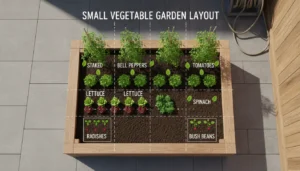
Beginners should focus on low-maintenance, high-reward crops. Choose varieties suited to your climate and season.
Start with fast-growing or forgiving plants so you build experience and confidence.
Good starter vegetables
- Leafy greens: lettuce, spinach, Swiss chard.
- Root crops: radishes, carrots.
- Bush beans and peas.
- Tomatoes and peppers (in pots or cages for support).
Planting: Seeds vs. Seedlings
Decide whether to sow seeds directly or buy seedlings from a nursery. Seeds are cheaper and offer more variety; seedlings give a faster start.
Follow packet directions for depth and spacing. Overcrowding reduces airflow and increases disease risk.
Basic planting tips
- Plant deeper for long-root vegetables and shallower for small seeds.
- Label rows or pots to avoid confusion later.
- Stagger plantings every 2–3 weeks for continuous harvests.
Watering and Feeding Your Vegetable Garden
Consistent watering is essential. Most vegetables need about 1 inch of water per week, more in hot weather.
Water at the base of plants to keep leaves dry and reduce disease. Use mulch to retain moisture and suppress weeds.
Fertilizing basics
- Use a balanced organic fertilizer or compost tea early in the season.
- Feed fruiting crops like tomatoes and peppers more often during bloom.
- Avoid over-fertilizing leafy crops if you want a balanced harvest.
Maintenance: Weeds, Pests, and Support
Regular maintenance prevents small problems from becoming big ones. Inspect plants weekly for pests and signs of stress.
Use simple supports like stakes or cages for tomatoes and tall beans. Remove weeds when small to reduce competition.
Low-effort pest control
- Handpick larger pests like caterpillars and slugs.
- Encourage beneficial insects by planting flowers nearby.
- Use row covers early in the season to protect young plants.
Mixing different vegetable families—like tomatoes, beans, and carrots—can reduce disease risk and improve soil health through varied root activity.
Harvesting and Saving Seeds
Harvest regularly to encourage more production. Pick leafy greens before they bolt and harvest tomatoes when fully colored for best flavor.
If you enjoy seed saving, choose open-pollinated varieties and collect seeds from healthy plants at the end of the season.
Simple harvest tips
- Use clean scissors or a knife to avoid plant damage.
- Harvest in the morning for peak freshness.
- Store produce properly: root vegetables in cool, dark places; tomatoes at room temperature.
Small Real-World Case Study
Case: Emma converted a 200 sq ft backyard patch into raised beds. She chose three 4×8 beds, filled them with compost-amended soil, and planted lettuce, bush beans, carrots, and tomatoes.
In her first season, Emma harvested weekly salads for two people and enough green beans to freeze. Regular mulching and weekly inspections kept pests low. Her initial cost was under $200 for soil, seeds, and lumber.
Common Beginner Mistakes and How to Avoid Them
- Overwatering: water deeply and infrequently rather than daily surface wetting.
- Plant overcrowding: follow spacing guidelines to improve airflow.
- Skipping soil prep: add compost before planting to avoid nutrient gaps.
Starting a vegetable garden at home is mostly about small, consistent actions: choose the right site, prepare soil, pick suitable plants, and maintain them with regular care. Follow these basic steps and adjust to your local climate as you gain experience.