
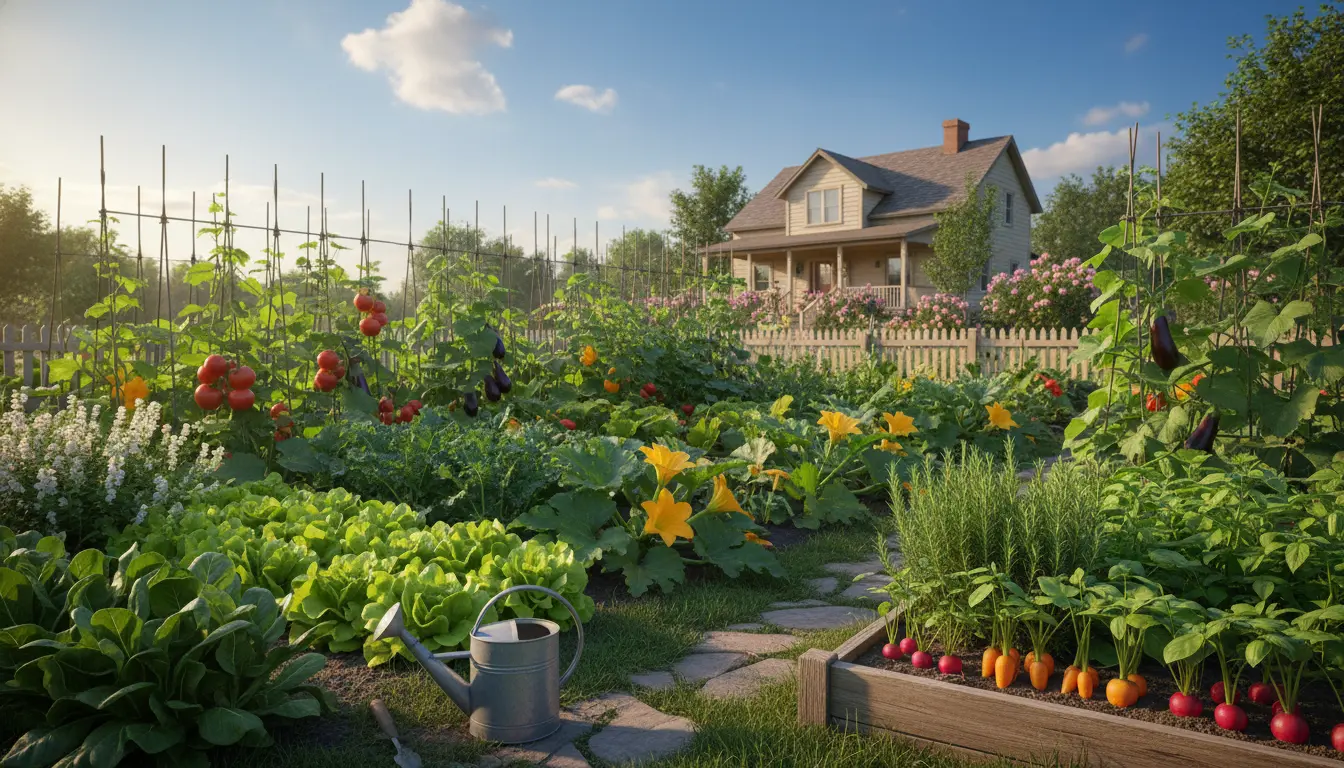
How to Start a Vegetable Garden: First Steps
Starting a vegetable garden is a practical project that rewards planning and small daily effort. This guide covers the core steps to start a vegetable garden and maintain productive beds through the season.
Decide Why You Want a Vegetable Garden
Be clear about your goals: fresh salad greens, year-round vegetables, or a few tomatoes and herbs. Your goals determine space, time, and variety choices.
Choosing a Spot for Your Vegetable Garden
Light and accessibility are the two most important factors when you start a vegetable garden. Most vegetables need 6–8 hours of direct sunlight.
Also consider proximity to water and ease of access for daily checks and harvests. Avoid low spots that collect cold air or flood after rain.
Sunlight and Microclimate
Observe the chosen spot for a full day if possible. Note morning vs. afternoon sun—some crops prefer cooler morning sun.
South-facing sites get the most light in the northern hemisphere; adjust for your location accordingly.
Soil and Compost: The Foundation
Soil quality determines how well plants grow. Good soil has structure, organic matter, and adequate drainage.
Test the soil pH and basic nutrients with a home kit or local extension service before you start a vegetable garden. Most vegetables prefer pH 6.0–7.0.
Improving Soil
- Add 2–4 inches of compost and work it into the top 6–12 inches of soil.
- Use well-rotted manure or leaf mold for organic matter.
- For heavy clay, add coarse sand and organic matter to improve drainage.
- Raised beds with a mix of topsoil and compost can speed results if native soil is poor.
Planning What to Plant
Choose vegetables that match your climate, season, and culinary preferences. Start with easy crops like lettuce, radishes, beans, and cherry tomatoes.
Group plants by water and sun needs to simplify care when you start a vegetable garden. Use companion planting only as a helpful guideline, not a strict rule.
Sample Planting Plan for Small Spaces
- Bed A (4×4 ft): Leafy greens—lettuce, spinach, chard.
- Bed B (4×8 ft): Two tomato plants, basil, and marigolds for pest help.
- Containers: Herbs like rosemary, thyme, and mint on a sunny patio.
Planting and Seasonal Care
Follow seed packet dates and local frost schedules to decide when to sow. Direct sow fast-maturing crops and start slow crops indoors when needed.
Water consistently. Early morning watering reduces evaporation and fungal risk. Mulch beds to conserve moisture and suppress weeds.
Fertilizing and Feeding
Use a balanced organic fertilizer or compost tea during peak growth. Avoid over-fertilizing leafy crops with high nitrogen late in the season when fruiting is desired.
Pest and Disease Management
Monitor plants weekly to catch pests early. Hand-pick larger pests and use row covers for butterflies or beetles on vulnerable crops.
Encourage beneficial insects by planting flowers like calendula and dill near the vegetable beds.
Simple Controls
- Physical barriers: netting, collars for seedlings.
- Cultural controls: crop rotation and clean-up of plant debris.
- Biological: introduce or attract predators such as ladybugs.
Leafy greens like lettuce and spinach can be harvested within 30–45 days from direct sowing. Quick crops allow multiple plantings in one season.
Harvesting and Rotation
Harvest regularly to encourage production. Pick tomatoes when they have full color and slight give.
Rotate families of vegetables each year to reduce disease and pest build-up in the soil when you start a vegetable garden.
Simple Crop Rotation Example
- Year 1: Solanaceae (tomatoes, peppers)
- Year 2: Leafy greens and brassicas
- Year 3: Root crops like carrots and beets
Small Real-World Case Study
Maria, a beginner gardener in Portland, used a 4×8 raised bed to start a vegetable garden. She added 3 inches of compost and planted lettuce, radishes, and two cherry tomato plants.
In the first season she harvested salad greens every two weeks and 18 pounds of tomatoes. Her key actions: regular watering, mulching, and weekly inspections for aphids.
Common Mistakes When You Start a Vegetable Garden
- Planting too many varieties at once—start small and expand.
- Ignoring soil tests—fixable problems can cut yields if left unchecked.
- Overwatering or watering late in the day—this leads to fungal issues.
Final Checklist to Start a Vegetable Garden
- Choose a sunny, accessible spot.
- Test and improve soil with compost.
- Pick easy crops that match your season.
- Plan watering, mulching, and pest checks.
- Start small, note what works, and expand next season.
Starting a vegetable garden is a manageable project with the right site, soil, and simple routines. Use this guide as a practical checklist and adapt based on your local climate and available space.