
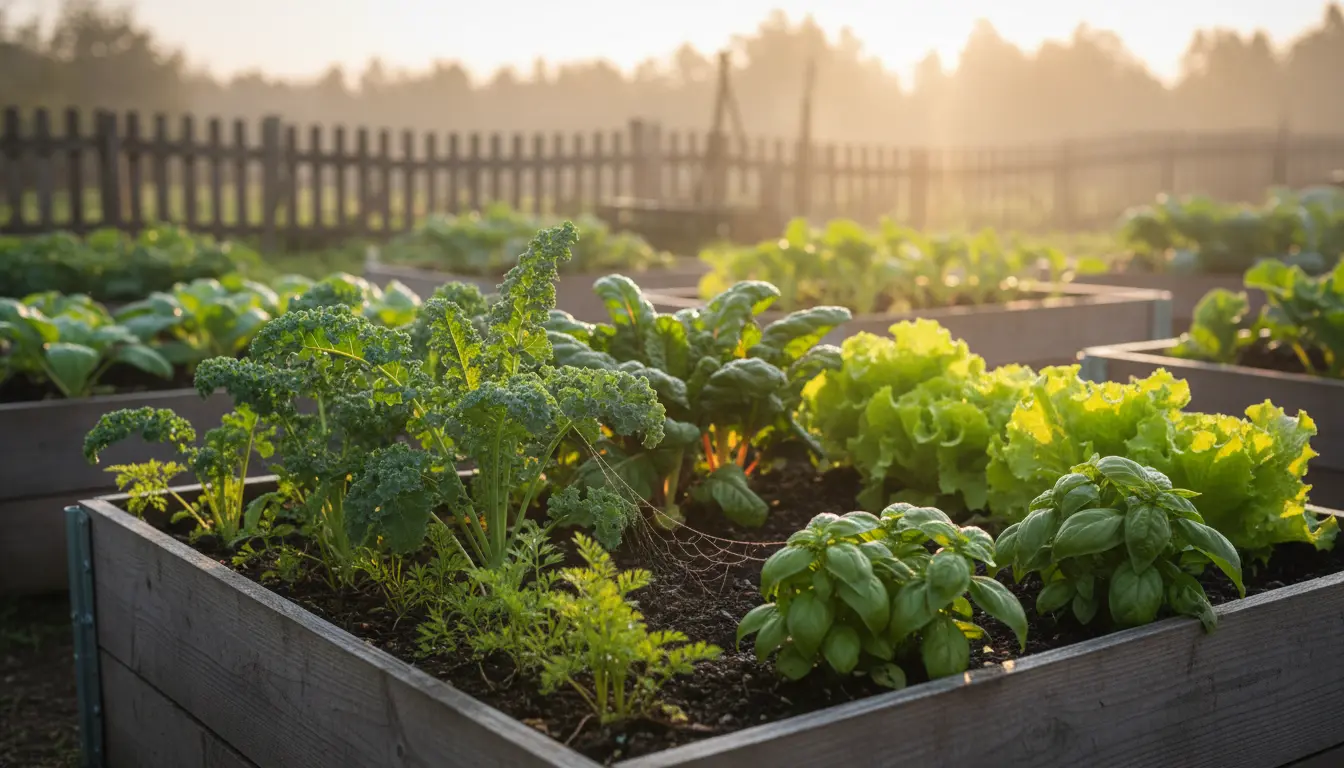
Getting Started with Your Vegetable Garden
Starting a vegetable garden is a practical way to grow fresh food and learn basic horticulture. This guide gives clear steps you can follow, whether you have a backyard, balcony, or small yard.
Choose a Site for Your Vegetable Garden
A successful vegetable garden needs the right location. Look for a spot with at least six hours of sunlight and easy access to water.
Consider proximity to the house for convenience and visibility. Good drainage and protection from strong winds are also important.
Sunlight and Soil for Vegetable Garden
Most vegetables need full sun to produce well. Observe the site for a few days to confirm how sunlight moves across it.
Check soil texture by digging a small hole and feeling the soil. Loamy soil with organic matter is ideal for most crops.
Prepare Soil and Compost
Preparing soil is one of the best investments for long-term garden success. Remove grass and weeds, then loosen soil to a depth of 8–12 inches.
Add compost or well-rotted manure to improve fertility and structure. Mix 2–3 inches of compost into the top 6–8 inches of soil.
Soil Tests and pH for Vegetable Garden
Do a simple soil test to check pH and nutrient levels. Most vegetables prefer a pH between 6.0 and 7.0.
Buy a basic soil test kit or send a sample to a local extension service for more precise recommendations.
Select Vegetables and Create a Planting Schedule
Choose vegetables that match your climate, space, and taste. Start with easy crops like tomatoes, lettuce, beans, and radishes.
Use a planting calendar to time seeds and transplants. Note your last frost date and plan cool-season crops before or after that window.
- Easy starters: Lettuce, radish, spinach, green beans
- Good beginner fruiting crops: Tomatoes, peppers, bush beans
- Root crops: Carrots, beets, potatoes
Planting Techniques for Vegetable Garden
Sow seeds at the correct depth and spacing listed on the seed packet. Thin seedlings early to avoid overcrowding and disease.
When transplanting, water seedlings before moving and bury slightly deep for stronger roots on tomato transplants.
Watering and Mulching
Consistent watering encourages steady growth and reduces stress on plants. Water deeply at the base rather than frequent shallow watering.
Apply organic mulch around plants to retain moisture, suppress weeds, and moderate soil temperature. Use straw, shredded leaves, or composted bark.
Pest Control and Common Problems
Inspect plants regularly for signs of pests or disease. Early detection limits damage and reduces the need for heavy treatments.
Use integrated pest management: physical barriers, handpicking, encouraging beneficial insects, and targeted organic sprays when necessary.
Natural Pest Control Tips
- Plant companion flowers to attract pollinators and predators.
- Use row covers to protect young plants from insects.
- Rotate crops yearly to reduce soil-borne diseases.
Harvesting and Continuous Production
Harvest vegetables when they reach recommended size for the best flavor and to encourage continued production. For many crops, frequent harvesting increases yield.
Keep a planting rotation with successive sowings for lettuce and radishes to maintain a steady supply through the season.
Beans and peas fix nitrogen in the soil, improving fertility for later crops like tomatoes and peppers.
Case Study: Small Raised Bed Success
Sarah, a first-time gardener, used a 4 x 8 foot raised bed in her sunny backyard. She filled it with a mix of topsoil and compost and planted tomatoes, bush beans, and salad greens.
By following a planting calendar and mulching, she harvested salad greens within 4 weeks and tomatoes by mid-summer. Her approach used simple tools and cost under $150 to set up.
Tools and Budget Tips for a Vegetable Garden
Basic tools you need are a shovel, hand trowel, watering can or hose with nozzle, and gloves. Raised beds or containers are useful if in-ground soil is poor.
Start small to limit expense and focus on a few high-value crops. Reuse materials and save seeds from healthy plants to reduce costs over time.
Quick Checklist to Start Your Vegetable Garden
- Choose a sunny site with good drainage
- Test and amend soil with compost
- Select easy-to-grow crops suited to your climate
- Plan planting dates around your frost schedule
- Mulch, water deeply, and monitor pests
Final Tips for New Vegetable Gardeners
Keep records of planting dates, varieties, and yields to improve each season. Small adjustments in site, soil, or plant choices make big differences over time.
Be patient and treat early mistakes as learning; gardening skill builds with experience. With consistent care, your vegetable garden will become more productive and rewarding each year.