
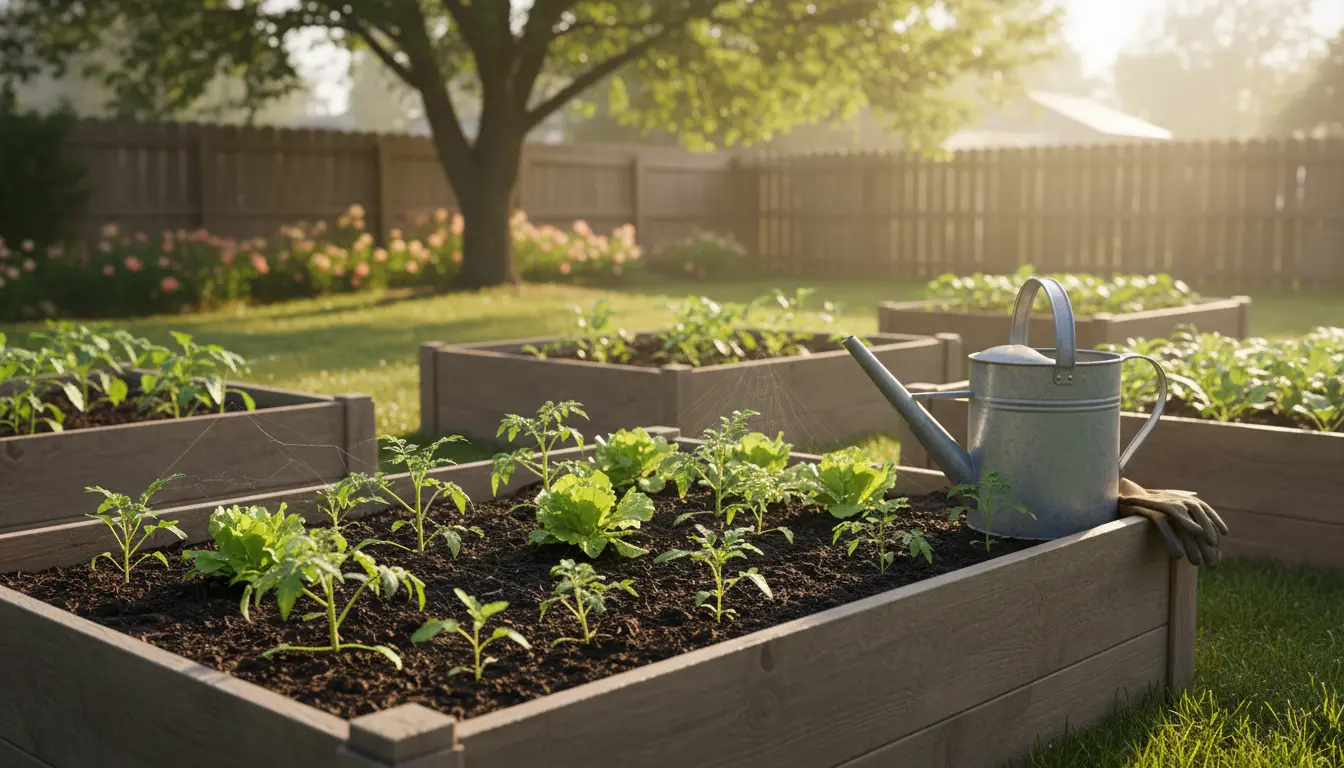
How to Start a Vegetable Garden: Simple First Steps
Starting a vegetable garden can feel overwhelming, but breaking the process into clear steps makes it manageable. This guide shows how to start a vegetable garden with practical actions you can take in a single weekend.
Choose a Site to Start a Vegetable Garden
Pick a location that gets at least six hours of sun each day. Good light is the single most important factor for most vegetables.
Also check for access to water, level ground, and proximity to your kitchen. A garden close to your door is more likely to be maintained.
Choosing Where to Start a Vegetable Garden
Observe potential sites at different times of day to verify sunlight and shade patterns. Avoid low spots where water collects for long periods.
Decide Between Beds, Containers, or Rows
Decide whether to use raised beds, containers, or in-ground rows based on your space, budget, and mobility needs. Each method has trade-offs.
- Raised beds: Better drainage and soil control, good for small yards.
- Containers: Ideal for patios and renters; choose large pots for vegetables.
- In-ground rows: Cost-effective for larger areas but require more soil management.
Prepare Soil to Start a Vegetable Garden
Healthy soil is the foundation of a productive garden. Test your soil or start with a mix if using raised beds or containers.
Loosen the soil to at least 8–12 inches and remove weeds and rocks. Add organic matter—compost or well-rotted manure—to improve structure and nutrients.
Soil Amendments for a New Garden
Common amendments include:
- Compost for nutrients and microbial life
- Perlite or sand for drainage in heavy clay
- Lime or sulfur only if soil test indicates pH adjustment is needed
Plan What to Plant When You Start a Vegetable Garden
Choose vegetables suited to your climate and season. Start with easy, reliable crops to build confidence.
Good beginner vegetables include tomatoes, lettuce, radishes, beans, and zucchini. Focus on crops you and your family will actually eat.
Seed vs. Transplants When You Start a Vegetable Garden
Seeds are cheaper but take longer. Transplants give a head start for long-season crops like tomatoes and peppers. Use a mix depending on your timeline and budget.
Planting and Spacing
Follow seed packet or plant tag instructions for depth and spacing. Crowded plants compete for light, water, and nutrients, reducing yields.
Consider succession planting to spread harvest over weeks: plant a new row of lettuce every 2–3 weeks.
Watering Practices for a New Vegetable Garden
Water deeply and less frequently to encourage strong roots. Most vegetables need about 1 inch of water per week, more in hot weather.
Use soaker hoses or drip irrigation to keep foliage dry and reduce disease risk.
Mulch and Weed Control
Mulch with straw, shredded leaves, or compost to retain moisture and suppress weeds. Apply a 2–3 inch layer around plants, keeping mulch slightly away from stems.
Hand-pull weeds early before they set seed. A hoe is effective for larger areas.
Pest and Disease Management
Monitor plants weekly for signs of pests or disease. Early detection lets you act with targeted measures rather than broad sprays.
- Use row covers to protect young plants from insects.
- Encourage beneficial insects like ladybugs and lacewings.
- Remove diseased leaves promptly and rotate crops each year to reduce soil-borne issues.
Harvesting and Ongoing Care
Harvest vegetables at their peak for best flavor and to encourage continued production. Regular harvesting of beans, cucumbers, and zucchini promotes more fruit.
Keep adding compost annually and monitor soil fertility. A simple side-dress of compost in mid-season keeps heavy feeders productive.
Many garden vegetables can be grown from kitchen scraps. For example, regrowing green onions and celery from root ends is an easy way to get free seedlings.
Small Case Study: A Weekend Start to a Productive Bed
Maria had a 10 ft by 4 ft patch that was unused. In one weekend she built a raised bed, filled it with a 60/40 mix of topsoil and compost, and planted tomatoes, lettuce, and bush beans.
She watered daily for two weeks, mulched heavily, and used a trellis for tomatoes. By mid-summer she harvested consistent salads and beans, and the soil improved enough to add peppers the next year.
Quick Checklist to Start a Vegetable Garden
- Select a sunny site close to water.
- Choose bed type: raised, containers, or in-ground.
- Prepare and amend soil for healthy structure.
- Pick easy crops suited to your season.
- Plant with correct spacing and water deeply.
- Mulch, monitor for pests, and harvest on time.
Final Tips for Beginners
Start small to avoid getting overwhelmed. A few well-tended plants are better than many neglected ones.
Keep a simple journal of planting dates and varieties. Over a few seasons you will learn timing and preferences specific to your yard.
With modest planning and weekly attention you can successfully start a vegetable garden that provides fresh produce and gardening confidence.