
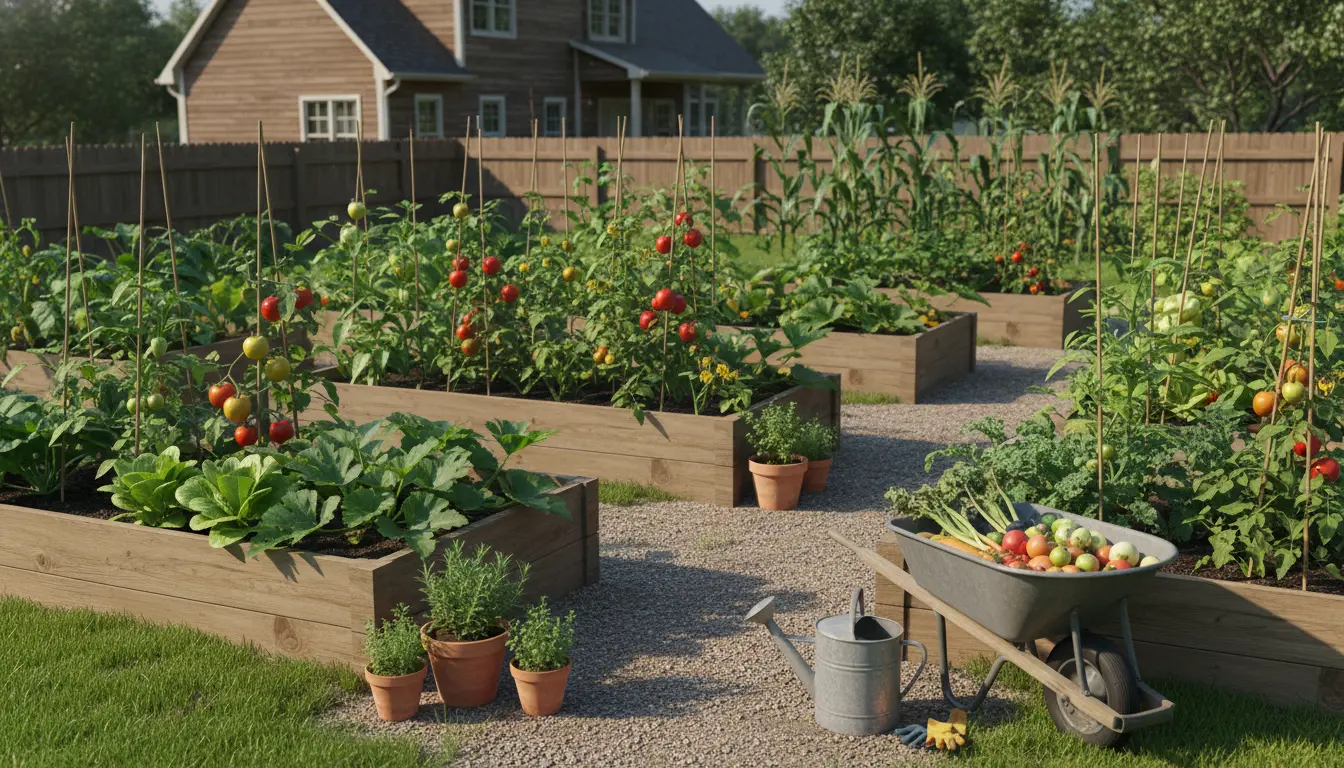
Starting a vegetable garden is rewarding and practical. This guide gives clear steps you can follow from planning to harvest, with hands-on tips and a short case study.
Start a Vegetable Garden: Planning and Site Selection
Pick a site with good sunlight and easy access. Most vegetables need at least six hours of direct sun each day to produce well.
Consider water access, slope, and nearby trees. A flat spot near a water source simplifies irrigation and maintenance.
Start a Vegetable Garden: Choosing Vegetables
Begin with easy crops that suit your climate. Fast-growing, low-maintenance choices include lettuce, radishes, bush beans, tomatoes, and zucchini.
Match vegetables to your zone and planting season. Check local frost dates and seed packet instructions for timing.
Start a Vegetable Garden: Size and Layout
Start small to learn the basics without getting overwhelmed. A few 4×4 or 4×8 raised beds or a 10×10 plot is a manageable first project.
Plan rows or beds with simple pathways. Allow space for tools and for reaching plants without stepping into beds.
Prepare Soil and Beds for a Vegetable Garden
Good soil is the foundation of a productive vegetable garden. Test soil pH and nutrient levels before planting.
Amend soil as needed using compost and balanced organic fertilizer. Well-draining, loamy soil supports healthy roots.
Soil Testing and Amendments
Use a basic soil test kit or send a sample to a local extension service. Aim for a pH near 6.0–7.0 for most vegetables.
Add compost to improve structure and fertility. For heavy clay, mix in coarse sand and more organic matter to enhance drainage.
Raised Beds vs In-Ground Vegetable Garden
Raised beds warm earlier in spring and offer better drainage. They are easier on the back and reduce soil compaction.
In-ground gardens work well if you have deep, healthy topsoil. Both methods can succeed with proper soil amendment and planning.
Planting and Care in Your Vegetable Garden
Follow spacing and depth guidelines on seed packets or plant tags. Overcrowding increases disease risk and reduces yield.
Establish a consistent watering routine. Most vegetables prefer deep, infrequent watering rather than light daily sprinkling.
Watering, Mulch, and Fertilizer
Water early in the day to reduce evaporation and leaf wetness at night. Use drip irrigation or soaker hoses for efficiency.
Apply 2–3 inches of organic mulch to conserve moisture, suppress weeds, and regulate soil temperature.
Crop Rotation and Companion Planting
Rotate vegetable families to reduce pest and disease buildup. Avoid planting the same family in the same spot year after year.
Use companion planting to deter pests and improve growth. For example, basil near tomatoes can help with flavor and insect control.
Pest and Disease Management for a Vegetable Garden
Monitor plants regularly for pests and early signs of disease. Early detection makes control simpler and less chemical-reliant.
Use physical controls first: hand-pick pests, install row covers, and remove diseased leaves promptly.
- Introduce beneficial insects like ladybugs for aphid control.
- Use neem oil or insecticidal soap for soft-bodied pests if needed.
- Practice good sanitation: clean tools and compost healthy plant material only.
Harvesting and Preparing for Winter
Harvest vegetables when mature but still fresh for best flavor and nutrition. Regular harvesting encourages continued production.
After the season, clear spent plants and add them to compost if disease-free. Apply a winter mulch or cover crop to protect soil.
Simple Schedule and Checklist to Start a Vegetable Garden
- Weeks 1–2: Choose site, test soil, plan layout and crops.
- Weeks 3–4: Amend soil, build beds, buy seeds and seedlings.
- Planting: Sow seeds or transplant seedlings per seed packet dates.
- Ongoing: Water, mulch, thin seedlings, and scout for pests weekly.
- Harvest: Pick mature produce and record notes for next season.
Many common garden vegetables, such as lettuce and radishes, can mature in 30 days or less. Quick crops are ideal for learning and frequent harvests.
Real-World Example: A Simple Case Study
Case: Sarah, a busy renter, used two 4×4 raised beds on a sunny patio. She selected container-friendly varieties and fast growers like salad greens and cherry tomatoes.
She started with a soil mix of compost, topsoil, and perlite, and installed a drip hose on a timer. Within two months she had steady salad harvests and learned to manage watering and pruning.
Lesson: Start small, use containers or raised beds, and choose crops that match your routine. This approach reduces risk and builds confidence quickly.
Starting a vegetable garden is a learned skill. With basic planning, good soil, regular care, and patience, you can grow fresh produce at home.
Try a single bed or a few containers this season and keep notes to improve next year. Small steps lead to steady success.