
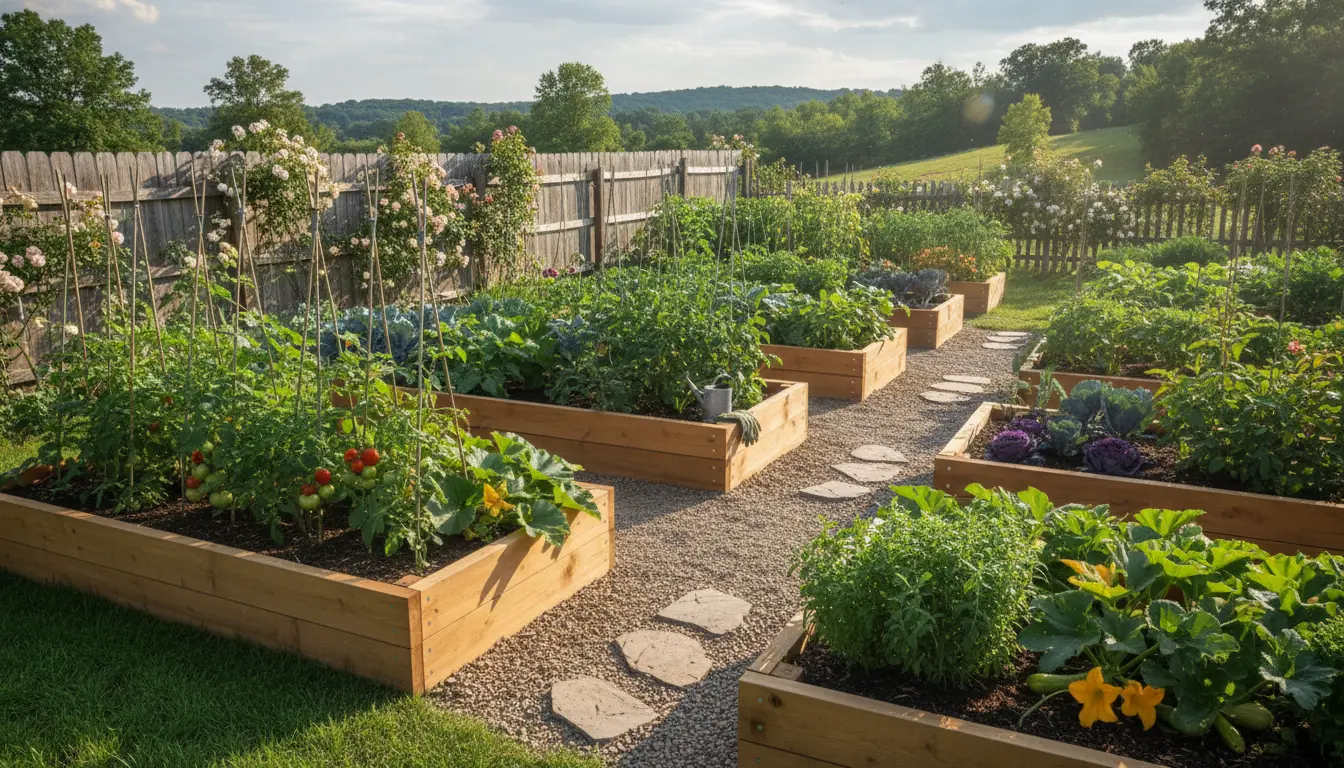
Starting a vegetable garden is a rewarding way to grow fresh food, learn new skills, and save money. This guide gives practical steps you can use whether you have a small balcony or a backyard plot.
Why Starting a Vegetable Garden Works
Growing vegetables at home reduces grocery trips and gives control over how food is grown. Even small gardens can produce significant yields when planned and maintained properly.

Success depends on site choice, soil quality, plant selection, and consistent care. Focus on simple, repeatable actions.
How to Start a Vegetable Garden: Step-by-Step
1. Choose the Right Site
Most vegetables need 6 to 8 hours of direct sunlight daily. Pick the sunniest spot you have. If sunlight is limited, choose leafy greens and herbs that tolerate partial shade.
Ensure good drainage and easy access to water. If the ground is poor or shady, consider raised beds or containers.
2. Decide Between Beds, Rows, or Containers

Raised beds are efficient for soil control and weeding. Containers work well for small spaces and patios. In-ground rows are cost-effective for larger areas.
- Raised beds: better soil control, less compaction.
- Containers: good for herbs, cherry tomatoes, peppers.
- In-ground: best for extensive crops like potatoes or corn.
3. Prepare and Improve Soil
Good soil is the foundation. Test soil pH if possible; most vegetables prefer pH 6.0 to 7.0. Add compost to improve structure and nutrients.
For raised beds, mix 40% topsoil, 40% compost, and 20% loam or coconut coir for water retention. Avoid heavy clay or compacted soil without amendment.
4. Choose Easy First Crops
Begin with low-maintenance vegetables that grow quickly. These build confidence and give early rewards.
- Lettuce and other salad greens
- Radishes and baby carrots
- Beans and peas
- Cherry tomatoes and basil in containers
5. Planting Tips and Timing
Plant according to your local frost dates. Use seed packets or plant labels to check spacing and depth. Start cool-season crops earlier and warm-season crops after the last frost.
Stagger plantings for a continuous harvest: sow lettuce every 2–3 weeks, for example.
6. Watering and Feeding
Water deeply and less often to encourage strong roots. Aim for 1 to 1.5 inches of water per week, more in hot, dry weather.
Mulch around plants to conserve moisture and suppress weeds. Feed with compost tea or a balanced fertilizer at planting and again mid-season for heavy-feeding crops like tomatoes.
7. Common Pests and Simple Controls
Inspect plants regularly for slugs, aphids, and caterpillars. Remove pests by hand or use row covers to protect young plants.
Encourage beneficial insects by planting flowers like calendula, marigold, or dill near vegetables. Rotate crops yearly to reduce disease buildup.
Maintenance Tasks for a Healthy Garden
Routine care keeps the garden productive. Spend short, regular sessions on these tasks rather than long, irregular workdays.
- Water early in the morning to reduce disease risk.
- Weed weekly to prevent competition for nutrients.
- Prune indeterminate tomatoes and stake tall plants.
- Harvest regularly to encourage more production.
Saving Time with Planning
Group plants with similar water and sun needs. Use square-foot gardening or companion planting to maximize space and reduce maintenance.
Keep a small notebook with planting dates, varieties, and harvest notes for next season planning.
Did You Know?
Did You Know? A single 4×8 foot raised bed can produce enough salad greens for a small family through spring and early summer when planted in succession.
Small Real-World Example: A 4×8 Raised Bed Case Study
Jana, a beginner gardener in a small city lot, built a 4×8 raised bed filled with a compost-rich mix in April. She planted 6 tomato seedlings, a row of bush beans, and successive plantings of lettuce.
By July, the tomatoes produced regular harvests and provided 30–40 lbs of fruit total. Lettuce harvests continued through June with sowings every 2 weeks. A single watering routine and weekly weeding kept labor to 2–3 hours per week.
Key takeaways: start small, plan successions, and prioritize soil quality for the best results.
Quick Checklist to Start Your Garden Today
- Pick a sunny, accessible spot.
- Decide bed type: raised, container, or in-ground.
- Amend soil with compost and test pH if possible.
- Choose easy crops for your season and space.
- Mulch, water deeply, and monitor pests weekly.
Starting a vegetable garden is a process of small improvements. Begin with basic steps, observe results, and expand or adjust in the next season. With routine care and simple planning, you can grow reliable food and enjoy the learning process.