
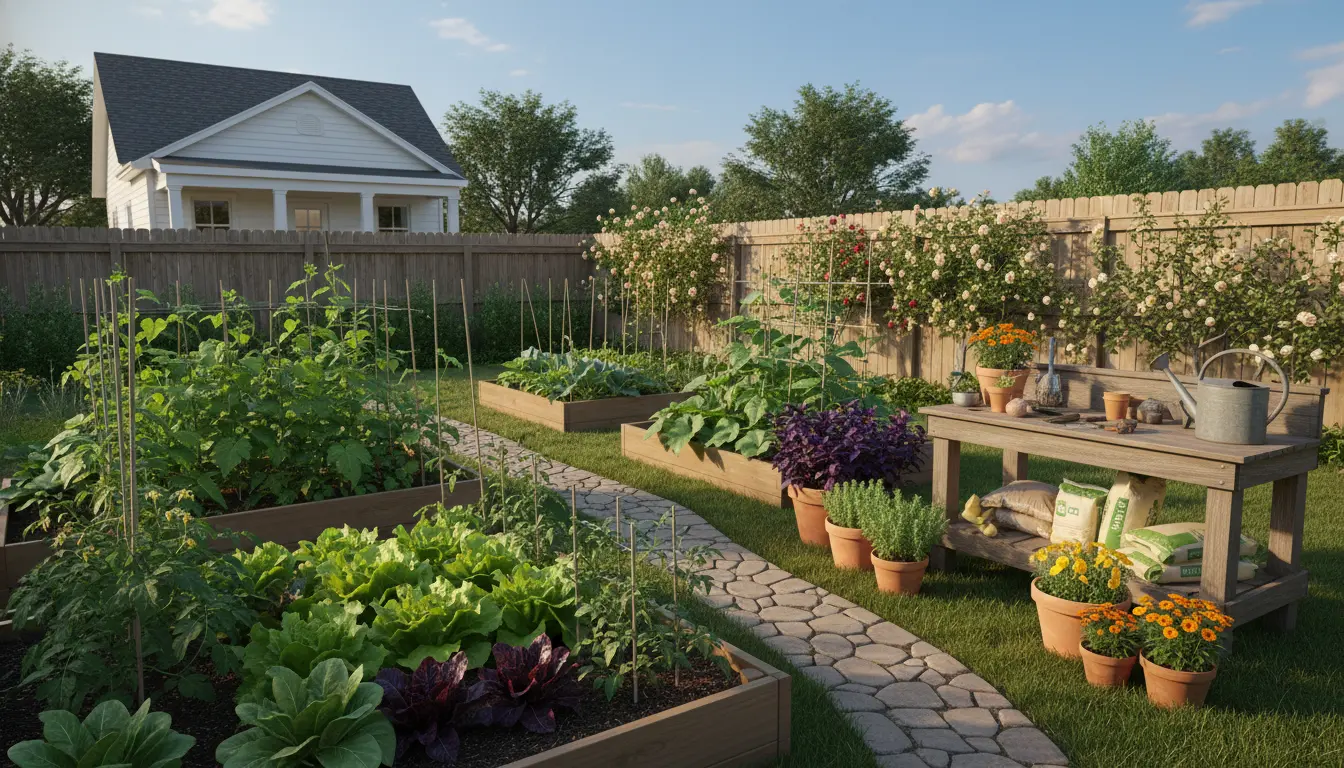
Start a Vegetable Garden: A Practical Introduction
Starting a vegetable garden is a practical way to grow fresh food, save money, and enjoy outdoor activity. This guide explains clear, actionable steps you can follow whether you have a small balcony or a backyard plot.
Why Start a Vegetable Garden
Growing your own vegetables improves food quality and reduces trips to the store. It also gives you control over seeds, soil, and pest management.
Begin with a realistic plan and basic tools to avoid common mistakes and build confidence over time.
Planning Your Vegetable Garden
Good planning sets the stage for success. Consider location, size, and what you like to eat before buying seeds or plants.
Choose the Right Location for Your Vegetable Garden
Most vegetables need at least six hours of direct sunlight. Pick a spot with good sun exposure and easy access to water.
Also check for level ground and reasonable drainage to prevent standing water around roots.
Decide the Garden Size and Layout
Start small: a 4×4 or 4×8 raised bed is manageable for beginners. Small beds are easier to maintain and let you test soil and plant choices.
Use simple layouts: rows, square-foot gardening, or raised beds. Choose the one that matches your time and space.
Soil Preparation and Composting
Soil quality is the most important factor. Good soil holds moisture, drains well, and supplies nutrients.
Test your soil pH if possible. Most vegetables prefer pH 6.0–7.0. Add lime or sulfur only when tests indicate a need.
Improve Soil with Compost
Incorporate 2–4 inches of well-rotted compost into the top 6–8 inches of soil. Compost adds organic matter and improves structure.
If you don’t have compost, use a balanced organic soil mix for raised beds or containers.
Choose Vegetables and Planting Times
Pick vegetables based on your climate, season, and taste. Start with easy crops like lettuce, radishes, beans, and tomatoes.
Check your local frost dates and use them to schedule planting for cool-season and warm-season crops.
- Cool-season: lettuce, spinach, peas, broccoli
- Warm-season: tomatoes, peppers, cucumbers, squash
Direct Sow vs. Transplants
Some crops do well sown directly into the ground, like carrots and beans. Others, like tomatoes and peppers, are easier when started as transplants.
Use seed packets for exact planting depth and spacing to avoid crowding and disease issues.
Watering, Mulching, and Fertilizing
Consistent watering is critical. Most vegetables need about 1 inch of water per week. Adjust for heat and soil type.
Mulch around plants to retain moisture, suppress weeds, and regulate soil temperature.
- Water early in the day to reduce evaporation and disease risk.
- Apply a balanced organic fertilizer according to label directions.
- Use drip irrigation or soaker hoses for efficient watering.
Pest and Disease Management
Monitor plants regularly for pests and diseases and act early. Small problems are easier to fix than large infestations.
Use integrated pest management: handpick pests, use row covers, rotate crops, and choose disease-resistant varieties.
Common Problems and Quick Fixes
- Aphids: spray with strong water jet or insecticidal soap.
- Slugs: use beer traps or copper barriers.
- Blight and fungal diseases: remove affected foliage and improve air circulation.
Harvesting and Crop Rotation
Harvest vegetables when they are ripe for the best flavor and nutrition. Frequent harvesting often encourages more production.
Practice crop rotation year to year to reduce soil-borne disease and nutrient depletion. Move families of plants to different beds each season.
Tomato plants can produce fruit for months if you remove the lower leaves and provide steady water and nutrients.
Small Case Study: 10×10 Backyard Garden
Maria converted a 10×10 patch behind her house into a productive garden. She chose raised beds, added compost, and planted tomatoes, lettuce, beans, and herbs.
In the first season she harvested lettuce for six weeks and picked 40–50 tomatoes. Her investment in soil and irrigation paid off with steady yields and less waste.
Starter Tools and Supplies
You don’t need expensive gear. Start with a few reliable tools and add items as the garden grows.
- Hand trowel and garden fork
- Watering can or hose with nozzle
- Mulch and compost
- Seed packets and labels
Final Tips to Start a Vegetable Garden
Begin small, keep a planting calendar, and learn from each season. Mistakes are part of the learning curve and help you improve next year.
Join a local gardening group or use online resources to find plant varieties suited to your climate.
With basic planning, proper soil, and consistent care you can successfully start a vegetable garden and enjoy fresh, homegrown produce.