
Why Start a Vegetable Garden
Starting a vegetable garden gives you fresh produce, saves money, and connects you to the food you eat. It also supports local biodiversity and can be adapted to nearly any space.
This guide shows practical, step-by-step actions to start a productive vegetable garden, whether you have a yard, patio, or balcony.
Planning Your Vegetable Garden
Good planning makes planting and maintenance easier later on. Start by choosing the right location and deciding what to grow.
Choosing the Right Location for a Vegetable Garden
Pick a spot that gets at least 6 hours of sunlight daily for most vegetables. South-facing locations usually work best in northern hemisphere climates.
Consider access to water, wind protection, and how close the garden is to your door for daily care.
Decide What to Grow
Begin with 3–6 easy crops so you can learn basic care without getting overwhelmed. Good starter vegetables include tomatoes, lettuce, radishes, beans, and herbs.
Match plant choices to your climate and the season. Use seed packets or local nursery advice for timing.
Preparing Soil for a Vegetable Garden
Soil quality determines how well plants grow. Spend time improving soil before planting to reduce problems later.
Soil Testing and Amendment
Test pH and nutrient levels with a simple kit or local extension service. Most vegetables prefer a pH between 6.0 and 7.0.
Add organic matter like compost or well-rotted manure to improve structure and fertility. Mix 2–4 inches of compost into the top 6–8 inches of soil.
Raised Beds vs. In-Ground Garden
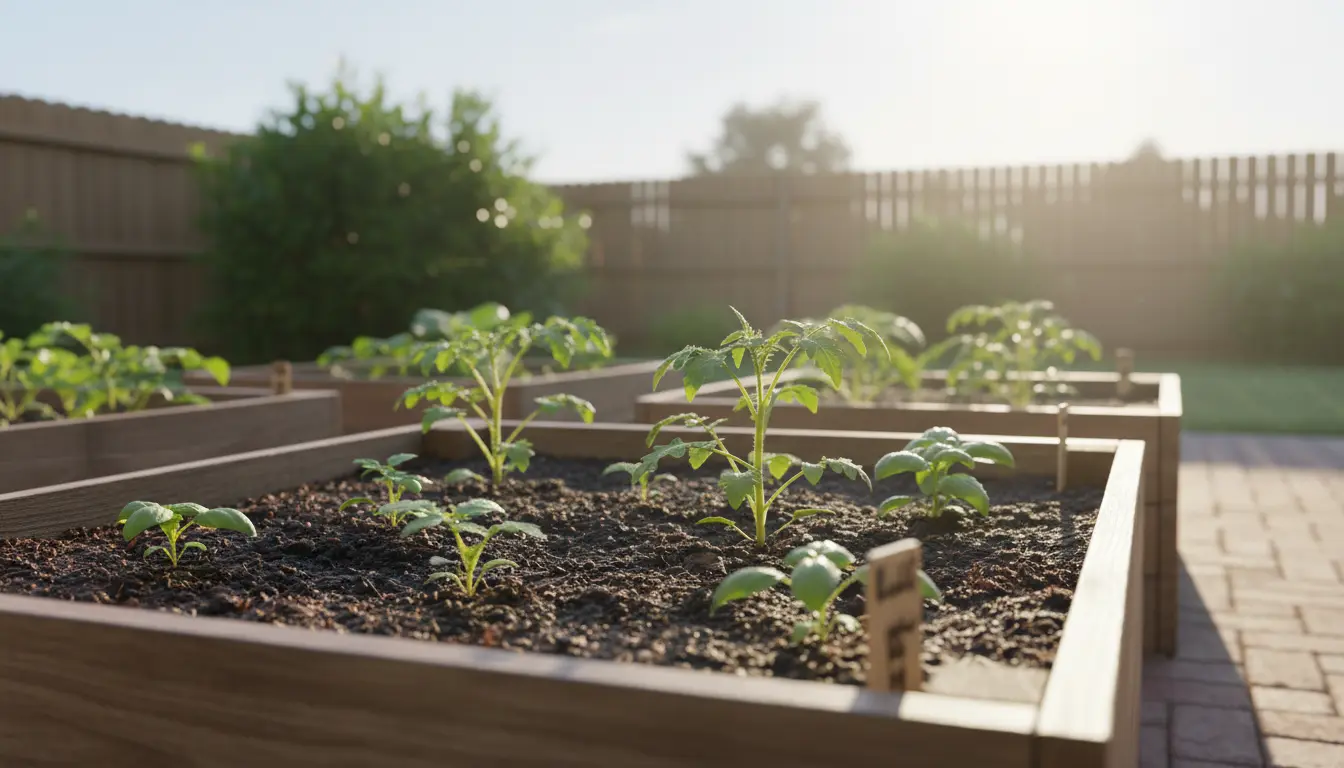
Raised beds heat faster, drain well, and are easier to manage in poor soil. In-ground beds are cheaper and can be amended over time.
Choose based on space, budget, and mobility needs. A common raised bed size is 4 feet wide by 8 feet long for easy access.
Planting Your Vegetable Garden
Follow planting dates for your region and pay attention to spacing. Crowded plants compete for nutrients and light.
Using Seeds vs. Starts
Seeds are cheaper and offer more varieties. Starts (transplants) give a head start for long-season crops like tomatoes or peppers.
Read seed packet instructions for depth and spacing, and harden off seedlings before planting outside to reduce shock.
Companion Planting and Crop Rotation
Companion planting can reduce pests and improve yields—examples include basil near tomatoes and beans with corn. Rotate families of crops yearly to lower disease risk.
Maintaining a Vegetable Garden
Regular maintenance ensures steady production. Tasks include watering, weeding, feeding, and monitoring for pests.
Watering and Feeding
Water deeply and infrequently to encourage strong roots. Aim to keep soil consistently moist but not waterlogged.
Apply balanced organic fertilizer or compost tea according to plant needs, especially during fruiting or leafy growth.
Pest and Disease Management
Inspect plants weekly and remove affected leaves early. Use physical barriers, beneficial insects, and organic sprays when needed.
Keep records of problems and successes so you can adjust practices each season.
Tools and Supplies for a Vegetable Garden
- Hand trowel and spade
- Garden fork or cultivator
- Watering can or hose with a gentle nozzle
- Soil test kit and compost
- Mulch and stakes or cages for support
Small Real-World Case Study
Case Study: A two-bedroom urban apartment converted a 6×3-foot balcony into a raised bed and container garden. Over one season, the gardener grew lettuce, cherry tomatoes, basil, and pole beans.
They saved roughly $250 on produce, reduced food waste by using kitchen scraps for compost, and harvested weekly salads from June to October. Simple drip irrigation and trellises minimized maintenance time to 20 minutes per day.
Simple Seasonal Planting Schedule
- Spring: peas, lettuce, radishes, spinach
- Summer: tomatoes, peppers, beans, cucumbers
- Fall: kale, carrots, beets, broccoli
Tomatoes are native to western South America and were first domesticated in Mexico. They are one of the most grown home garden crops worldwide.
Tips to Ensure Success
- Start small and expand as you gain confidence.
- Keep a garden journal with dates, varieties, and problems observed.
- Use mulch to conserve moisture and suppress weeds.
- Learn basic pruning and harvest timing for each crop.
Final Thoughts on Starting a Vegetable Garden
Starting a vegetable garden is a practical project that pays dividends in fresh food and skills. With basic planning, soil care, and consistent maintenance, most beginners can harvest a meaningful amount of produce the first season.
Commit to small, manageable steps and adapt based on results. Gardening is iterative—each season teaches you how to improve yields and reduce work.