
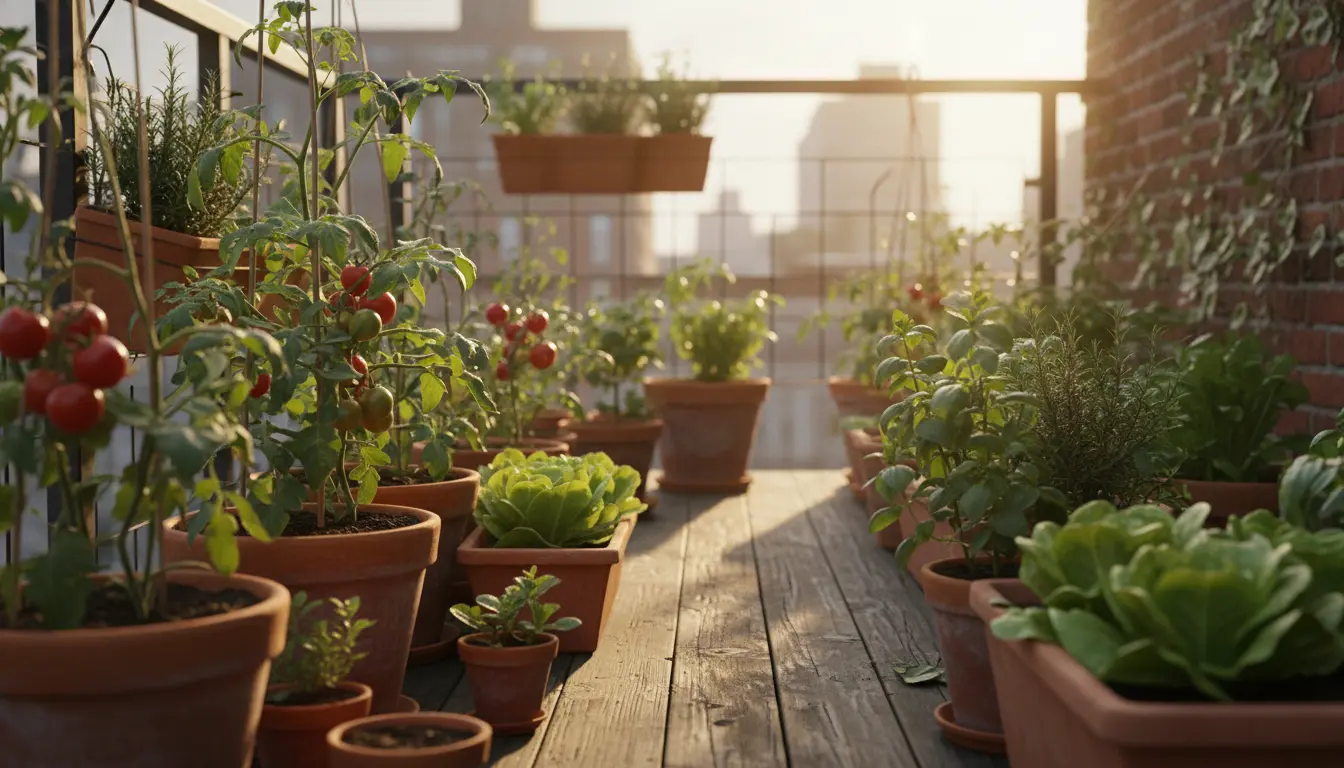
Container gardening makes it possible to grow fresh vegetables even in small spaces. This guide shows practical steps to start a vegetable container garden at home, choose the right containers, soil, and plants, and maintain healthy crops.
Why choose a vegetable container garden
Container gardens are flexible and low-cost. They let you control soil quality, move plants for better light, and avoid many ground pests and weeds.
They work on balconies, patios, rooftops, and small yards. For beginners, container gardening reduces initial effort while delivering quick, visible results.
Planning your vegetable container garden
Start by assessing light, space, and your goals. Most vegetables need 6–8 hours of direct sun, so map where sunlight falls during the day.
Decide whether you want quick wins like herbs and salad greens, or larger crops like tomatoes and peppers that need bigger pots.
Checklist before you start
- Measure available space and note sunlight hours.
- Set a small budget for containers, soil, and tools.
- Choose 3–6 easy vegetables for your first season.
- Plan watering access and a routine.
Choosing containers for a vegetable container garden
Container size matters. Larger containers hold more soil and retain moisture better, which reduces watering frequency.
Use containers with drainage holes. Materials like plastic, terracotta, and fabric pots each have pros and cons.
Container types and when to use them
- Small pots (1–3 gallons): best for herbs and small lettuces.
- Medium pots (5–10 gallons): good for peppers, dwarf tomatoes, and bush beans.
- Large pots (15+ gallons): ideal for full-size tomatoes, potatoes, and eggplants.
- Fabric grow bags: lightweight, good drainage, root pruning benefits.
Soil and fertilizer for container vegetables
Use a high-quality potting mix designed for containers. Avoid garden soil, which compacts and drains poorly in pots.
Mix in slow-release organic fertilizer or use a balanced liquid feed during the growing season to replace nutrients lost by frequent watering.
Basic potting mix recipe
- 60% high-quality potting mix
- 20% compost for nutrients
- 20% perlite or coarse sand for drainage
Selecting vegetables for a container garden
Pick compact or determinate varieties labeled for containers. They’re bred to stay smaller and set fruit earlier.
Good beginner vegetables include cherry tomatoes, peppers, leaf lettuce, radishes, bush beans, and herbs like basil and parsley.
Examples of container-friendly varieties
- Tomatoes: patio or determinate cherry varieties
- Peppers: bell or chili plants under 3 feet
- Lettuce: looseleaf and mesclun mix
- Root crops: radish and baby carrots in deep pots
Watering and maintenance for a vegetable container garden
Containers dry out faster than garden beds. Check soil moisture daily in hot weather and water when the top inch feels dry.
Water deeply until it runs from the drainage holes. This encourages roots to grow deeper and stay healthy.
Simple maintenance routine
- Water early in the morning to reduce evaporation.
- Feed plants every 2–4 weeks with a balanced fertilizer.
- Prune spent flowers and yellow leaves to promote growth.
- Rotate crops or replace soil each season to reduce disease build-up.
Pest and disease management in a container garden
Common pests include aphids, slugs, and whiteflies. Inspect plants regularly and act quickly to prevent outbreaks.
Use organic controls like insecticidal soap, hand removal, or row covers for protection. Good air flow, clean pots, and fresh soil help reduce fungal problems.
Did You Know?
Harvesting and season extension
Harvest leafy greens early and often to encourage regrowth. Pick fruits when fully colored and slightly soft to the touch.
Extend the season with small greenhouses, cloches, or moving pots to a protected spot during cool weather.
Small case study: A balcony success story
Maria, a city renter, converted a 6-foot balcony into a productive vegetable container garden. She used three 15-gallon pots for tomatoes and two 5-gallon pots for peppers, plus window boxes for lettuce and herbs.
By choosing compact varieties and using a simple watering schedule, she harvested fresh greens weekly and 8–10 pounds of tomatoes by late summer. The key was consistent watering, good potting mix, and replacing compost each season.
Starter shopping list for a vegetable container garden
- 3–5 containers of varying sizes with drainage
- High-quality potting mix and compost
- Balanced liquid fertilizer or slow-release granules
- Basic tools: trowel, watering can, pruning shears
- Plant supports for vining crops (cages or stakes)
Final tips to grow a successful vegetable container garden
- Start small and expand after your first season.
- Keep a simple log of watering and feeding to spot problems early.
- Buy one or two trusted seed or plant varieties recommended for containers.
- Enjoy experimentation — different crops and pot mixes can deliver surprising results.
With planning and simple routines, a vegetable container garden can produce fresh food, reduce grocery bills, and provide satisfaction from growing your own produce. Begin with easy crops, match container size to plant needs, and maintain regular care for the best results.