
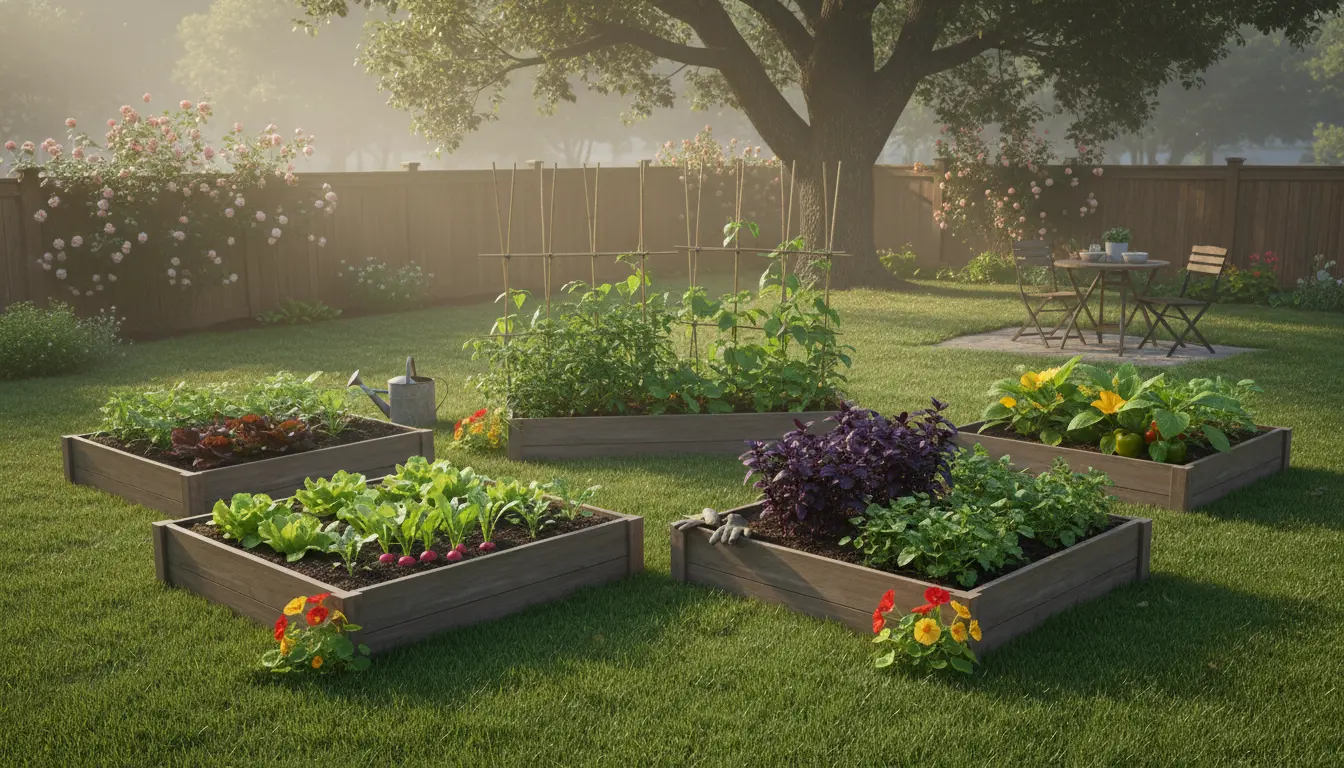
Starting a small vegetable garden is practical, rewarding, and manageable for almost any yard, balcony, or patio. This guide uses clear steps to help you plan, plant, and maintain a productive garden in limited space.
Why Start a Small Vegetable Garden
A small vegetable garden saves money, delivers fresher produce, and reduces grocery trips. It also fits busy schedules because small plots require less time for weeding and watering.
Planning Your Small Vegetable Garden
Good planning prevents wasted time and expense. Start by assessing light, space, and your goals: regular salads, herbs, or a few staple vegetables for the family.
Choose the Right Location for a Small Vegetable Garden
Pick a spot that gets at least 5–6 hours of sun per day for most vegetables. If full sun is unavailable, focus on leafy greens and herbs that tolerate partial shade.
Decide What to Grow in a Small Vegetable Garden
Prioritize high-yield, space-efficient crops. Tomatoes, peppers, lettuce, radishes, bush beans, and herbs are good choices for small areas.
Plan Size and Layout of a Small Vegetable Garden
Common small garden layouts include a single raised bed (4×8 feet) or a set of containers. Use square-foot gardening concepts to maximize yield in a compact space.
Soil and Containers for a Small Vegetable Garden
Soil quality is the most important factor in a small garden. When space is limited, improving or replacing soil pays off quickly in vigor and yield.
Raised Beds and Containers for a Small Vegetable Garden
Raised beds and containers warm earlier in spring and have better drainage. Use containers at least 12 inches deep for most vegetables and larger for tomatoes and peppers.
Soil Mix and Preparation for a Small Vegetable Garden
Mix equal parts compost, topsoil, and a lightweight amendment like coconut coir or peat-free fiber. Aim for a loose, well-draining mix rich in organic matter.
Planting, Watering, and Maintenance in a Small Vegetable Garden
With a small garden, routine care is easy to schedule. Frequent short checks are better than long, infrequent sessions.
Seed vs Seedlings for a Small Vegetable Garden
Start cool-season crops from seed (lettuce, radish, beans) and buy seedlings for warm-season crops (tomato, pepper). Seeding saves money; seedlings speed harvest.
Watering Tips for a Small Vegetable Garden
Water early in the day and focus on the root zone. Drip irrigation or soaker hoses deliver water efficiently and reduce leaf wetness that attracts disease.
- Water depth: 1 inch per week as a baseline, adjust by weather.
- Mulch: 2–3 inches of organic mulch keeps moisture steady and blocks weeds.
- Check soil: stick your finger 2 inches into soil—if dry, water.
Simple Crop List for a Small Vegetable Garden
Choose varieties bred for containers or small spaces. Here are reliable options for beginners:
- Lettuce and salad greens (cut-and-come-again)
- Radishes (fast harvest)
- Bush beans (compact and productive)
- Cherry tomatoes (determinate or patio varieties)
- Herbs: basil, parsley, chives
- Spinach and Swiss chard (tolerant of partial shade)
Pest Control and Common Problems in a Small Vegetable Garden
Small gardens benefit from regular observation. Early detection of pests or disease prevents larger problems.
- Hand-pick slugs and caterpillars in the morning.
- Use row covers for young seedlings to block insects.
- Encourage beneficial insects with a mix of flowering herbs and flowers.
- Rotate crops seasonally and avoid planting the same family in the same spot each year.
Many common vegetables mature faster in small gardens because soil in containers and raised beds warms earlier in spring, leading to quicker germination and growth.
Harvesting and Extending the Season in a Small Vegetable Garden
Harvest regularly to encourage production. Use simple season extenders like floating row covers, cold frames, or a clear plastic cloche to add weeks to your harvest.
Case Study: One Small Vegetable Garden
Anna, a city apartment dweller, used a 4×2 foot balcony box and four 12-inch pots to grow salad greens, cherry tomatoes, basil, and radishes. She started in late March with seedlings and seed mixes and used a lightweight potting mix with compost.
After eight weeks she had weekly salad harvests, and by midsummer two tomato plants produced daily cherry tomatoes. Her setup required 20 minutes of care three times a week, making gardening fit her busy schedule.
Quick Checklist to Start Your Small Vegetable Garden
- Choose a sunny location (5–6+ hours of sun).
- Decide layout: raised bed, containers, or combination.
- Get or build quality soil mix with compost.
- Select compact or container-friendly varieties.
- Set up simple irrigation: watering can, dripline, or soaker hose.
- Schedule 20–30 minutes, 3 times a week for maintenance.
Next Steps for Your Small Vegetable Garden
Start small and expand as you gain confidence. Keep a simple journal of planting dates and yields to learn what works in your microclimate. With basic planning and consistent care, a small vegetable garden can supply fresh produce and be an enjoyable, low-stress hobby.