
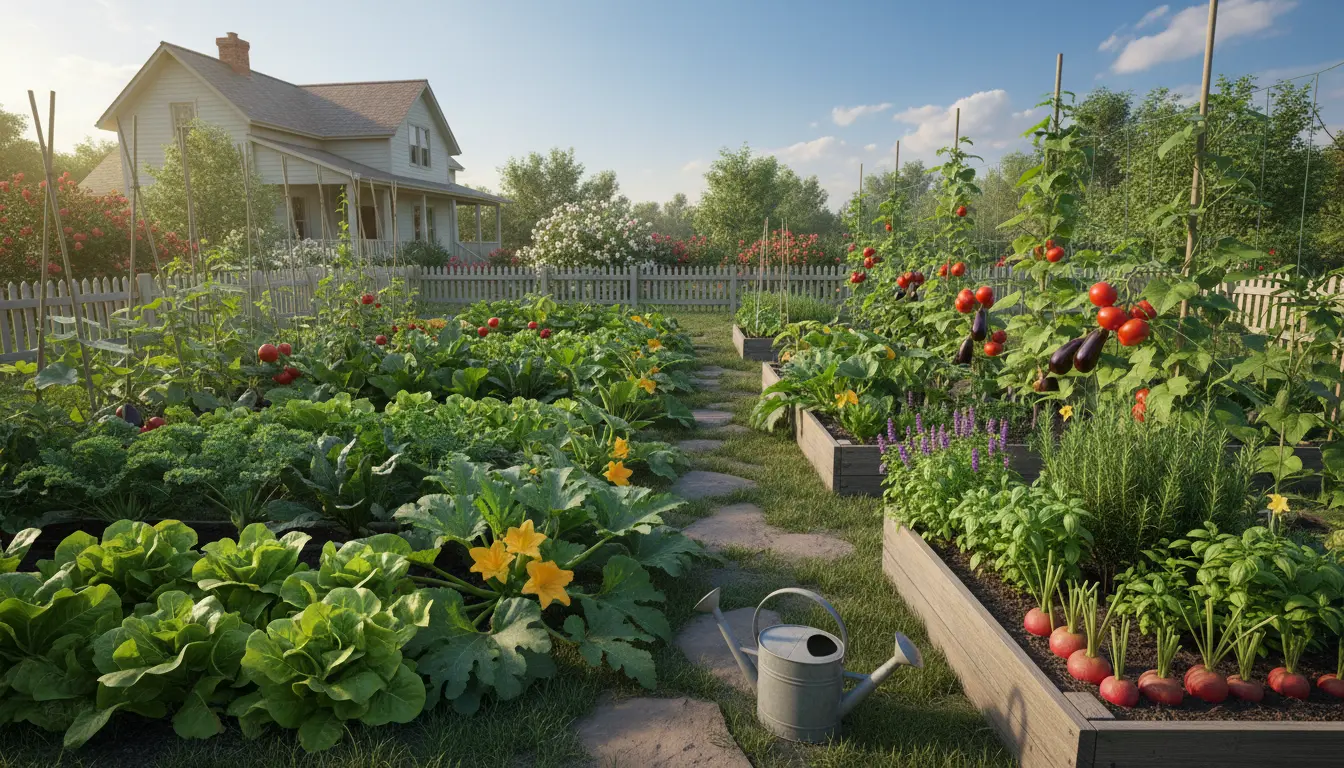
Why start a small vegetable garden
Starting a small vegetable garden is a practical way to grow fresh food, save money, and enjoy time outdoors. It fits most yards, balconies, or community plots and can be scaled to your time and space.
Plan before you start a small vegetable garden
Good planning saves time and frustration. Decide how much time you can commit and choose the right spot before you plant.
Choose the right location to start a small vegetable garden
Pick a spot with at least 6 hours of sunlight for most vegetables. If full sun isn’t available, select crops that tolerate partial shade like lettuce and spinach.
Ensure easy access to water and a flat area or a place where raised beds will sit level. Accessibility reduces maintenance time and increases the chance your garden will succeed.
Decide on garden type for your small vegetable garden
Choose between in-ground beds, raised beds, containers, or a mix of these. Raised beds warm faster, drain better, and limit soil compaction for small spaces.
Containers are ideal for patios or balconies and let you control soil quality more easily. Match the garden type to your space and budget.
Prepare soil and amendments
Healthy soil is the foundation of a productive small vegetable garden. Test soil pH and structure to know what amendments you need.
Improve soil for a small vegetable garden
- Add compost to boost organic matter and nutrients.
- Mix in aged manure or balanced organic fertilizer if tests show low fertility.
- Use loose, well-draining soil mixes in containers or raised beds to avoid waterlogging.
Work amendments into the top 6–8 inches for most vegetables so roots can access nutrients quickly. Avoid over-tilling; gentle mixing preserves soil life.
Choose vegetables for a small vegetable garden
Select crops that suit your climate, season, and cooking habits. Focus on high-yield, space-efficient plants if space is limited.
Good beginner choices include tomatoes, peppers, lettuce, radishes, bush beans, and herbs like basil and parsley. These give reliable harvests and teach essential skills.
Companion planting and space-saving tips
- Use vertical supports for vining crops like cucumbers and pole beans to save ground space.
- Interplant fast growers (radishes, baby lettuce) with slower plants (tomatoes) to maximize yield.
- Try succession planting: sow another crop as soon as one finishes to keep beds productive.
Watering and feeding in a small vegetable garden
Consistent watering is more important than frequent watering. Aim for deep, infrequent waterings that encourage strong root systems.
Install a drip system or soaker hoses to deliver water directly to roots and reduce evaporation. Mulch around plants to retain moisture and suppress weeds.
Fertilizing for steady growth
Feed plants with a balanced organic fertilizer or compost tea according to crop needs. Leafy greens need more nitrogen, while fruiting crops benefit from added phosphorus and potassium during bloom.
Common pests and simple controls for a small vegetable garden
Monitor your garden regularly to catch pest or disease issues early. Many problems can be managed with simple cultural practices.
- Handpick larger pests like slugs and caterpillars.
- Use floating row covers to protect young plants from insects.
- Encourage beneficial insects by planting flowers like marigolds and calendula.
Avoid broad-spectrum pesticides in a small garden to protect pollinators and soil life.
Harvesting and storage
Harvest vegetables at their peak for best flavor and continued production. Regular picking encourages many plants to produce more.
Store produce properly: cool leafy greens, dry root crops before storing, and refrigerate most fruits and vegetables to extend shelf life.
Many common vegetables, like lettuce and radishes, can be ready to harvest in as little as 30 days from sowing. Quick crops let you get more yields in a small garden.
Small garden tools and supplies checklist
- Hand trowel, cultivator, and pruning shears
- Watering can or drip irrigation
- Compost and organic fertilizer
- Mulch, stakes, and netting or row covers
Invest in a few quality tools rather than many cheap ones to make maintenance comfortable and effective.
Case study: Sarah’s 8×4 raised bed — a small vegetable garden success
Sarah transformed an 8×4 foot corner of her suburban yard into a raised bed garden. She chose tomatoes, bush beans, lettuce, and herbs to match her kitchen needs.
By using vertical cages for tomatoes and succession planting lettuce every three weeks, she harvested fresh greens all summer and had a steady supply of tomatoes in late summer. Her water-saving drip line and weekly compost maintained soil health with minimal effort.
Common mistakes to avoid when you start a small vegetable garden
- Planting too much at once — start small and expand each season.
- Neglecting soil health — no plant thrives in compacted, nutrient-poor soil.
- Overwatering or underwatering — learn your plants’ moisture needs.
Next steps to start your small vegetable garden
Sketch a simple plan of your space, choose 3–5 crops for your first season, and prepare a single bed or container to try the steps above. Keep notes on what works and adjust next season.
With regular care, a small vegetable garden can provide fresh produce, reduce grocery spending, and teach useful gardening skills in a compact footprint.