
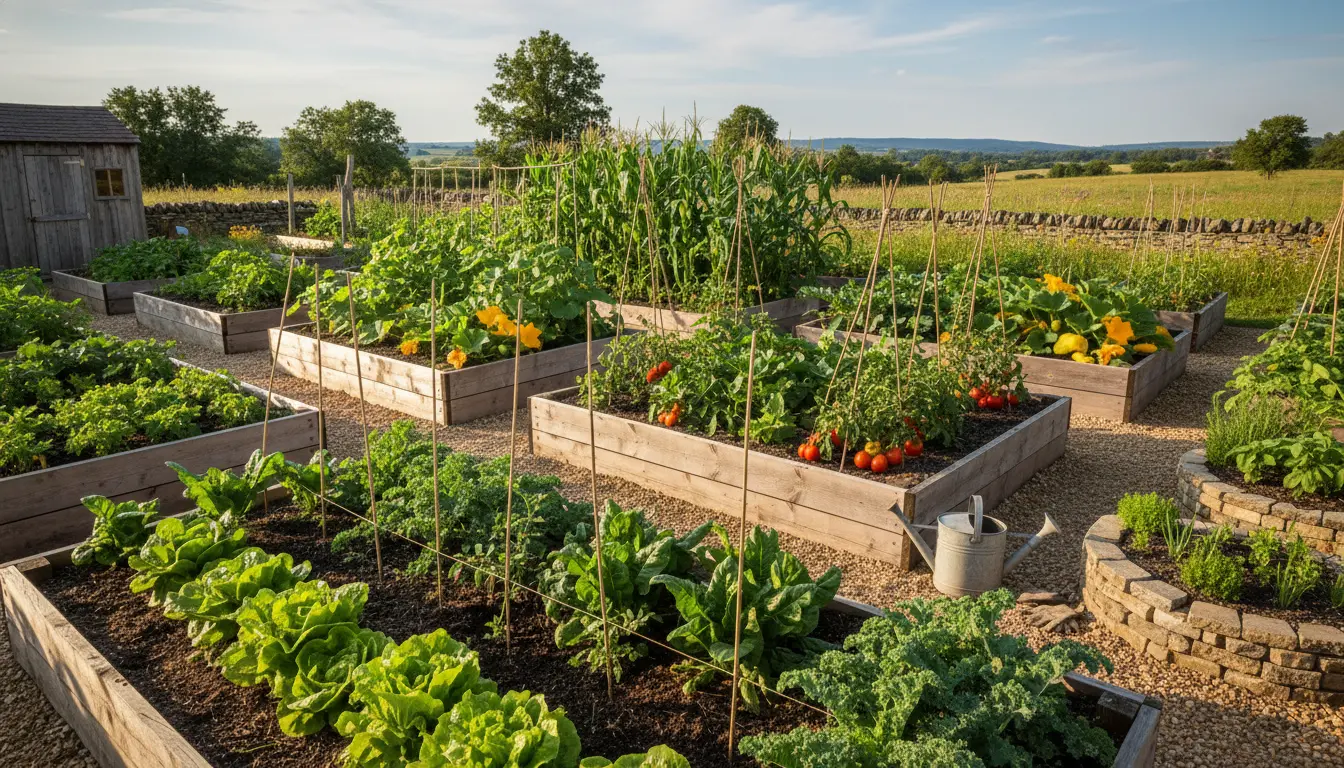
Why Start a Small Vegetable Garden
Starting a small vegetable garden is a practical way to grow fresh food, save money, and enjoy a hands-on hobby. Small gardens fit balconies, patios, and tiny backyards and are easier to manage than larger plots.
This guide explains how to start a small vegetable garden with clear steps you can follow this weekend.
How to Start a Small Vegetable Garden: Plan Your Space
Selecting the right spot is the first critical task when you start a small vegetable garden. Most vegetables need at least 6 hours of direct sunlight each day.
Consider sunlight, access to water, and proximity to your home for easier maintenance.
Sunlight and Shelter
Observe the chosen site for a few days. Mark areas with morning sun versus afternoon shade. South-facing spots are often best in temperate climates.
Containers, Raised Beds, or In-Ground
Choose one of these common setups based on space and soil quality. Containers are ideal for balconies; raised beds suit small yards, and in-ground beds work where soil is healthy.
- Containers: Good for herbs, lettuce, and cherry tomatoes.
- Raised beds: Easier soil control and drainage.
- In-ground: Best if topsoil is deep and well-drained.
Soil and Preparation When You Start a Small Vegetable Garden
Healthy soil is the foundation of a productive garden. Test soil texture and pH if possible, and add compost to improve fertility.
Use a mix of compost, topsoil, and a small amount of coarse sand for raised beds or containers.
Soil Amendments and pH
Most vegetables prefer pH 6.0–7.0. Add lime to raise pH or sulfur to lower it if tests show adjustment is needed.
Work in 2–3 inches of compost before planting to boost nutrients and structure.
Choosing Plants for a Small Vegetable Garden
Pick plants that match your climate, season, and space. Focus on high-yield, space-efficient crops for small gardens.
- Leafy greens (lettuce, spinach) — quick harvest and compact.
- Herbs (basil, parsley) — small footprint and frequent harvests.
- Compact tomatoes and peppers — choose patio or determinate varieties.
- Root crops (radishes, carrots) — require moderate depth but can be densely sown.
Succession Planting
To maximize yield, use succession planting. Sow a new batch of greens every 2–3 weeks to maintain continuous harvests.
This approach helps you get more food from a small area across the season.
Watering and Maintenance Tips
Consistent watering is crucial for young plants. Aim for deep, infrequent watering rather than daily shallow sprays.
Morning watering reduces disease risk and ensures water reaches roots before heat of day.
Mulch and Weeding
Apply 2–3 inches of organic mulch around plants to retain moisture, suppress weeds, and moderate soil temperature.
Pull weeds when they are small to avoid root competition and seed spread.
Pest and Disease Basics
Monitor plants weekly for pests and common diseases. Remove affected leaves early and use row covers for insect control when practical.
Encourage beneficial insects with companion plants like marigolds and daisies.
Tools and Supplies Checklist
Keep basic tools on hand to maintain your small vegetable garden efficiently.
- Gloves, hand trowel, and pruning shears
- Watering can or hose with a gentle nozzle
- Compost or well-rotted manure
- Mulch and organic fertilizer
- Soil test kit (optional but useful)
Many common vegetables like lettuce and radishes mature in 30 days or less, making them excellent choices for quick results in a small garden.
Simple Planting Schedule Example
Here is a basic seasonal plan for a temperate climate to help you start a small vegetable garden.
- Spring: Sow peas, lettuce, radishes, and spinach as soon as soil can be worked.
- Late spring: Transplant tomatoes, peppers, and eggplants after frost risk passes.
- Summer: Continue succession sowing of greens; harvest early root crops.
- Fall: Plant cold-hardy crops like kale and cover crops to protect soil.
Small Case Study: Sarah’s 4×8 Raised Bed
Sarah converted a 4×8 foot section of her backyard into a raised bed with 12 inches of amended soil. She planted a mix of lettuce, bush beans, two determinate tomatoes, and carrots.
In her first season she harvested continuous salad greens for three months and two rounds of carrots. Strategic spacing and succession planting helped her maximize yield from limited space.
Final Tips to Start a Small Vegetable Garden
Start small and expand as you gain confidence. Track what varieties perform best and keep notes on planting dates and harvests.
Regular, simple care and the right plant choices will make your small vegetable garden productive and satisfying.
Ready to begin? Choose your spot, gather basic supplies, and plant one or two easy crops this weekend to get started.