
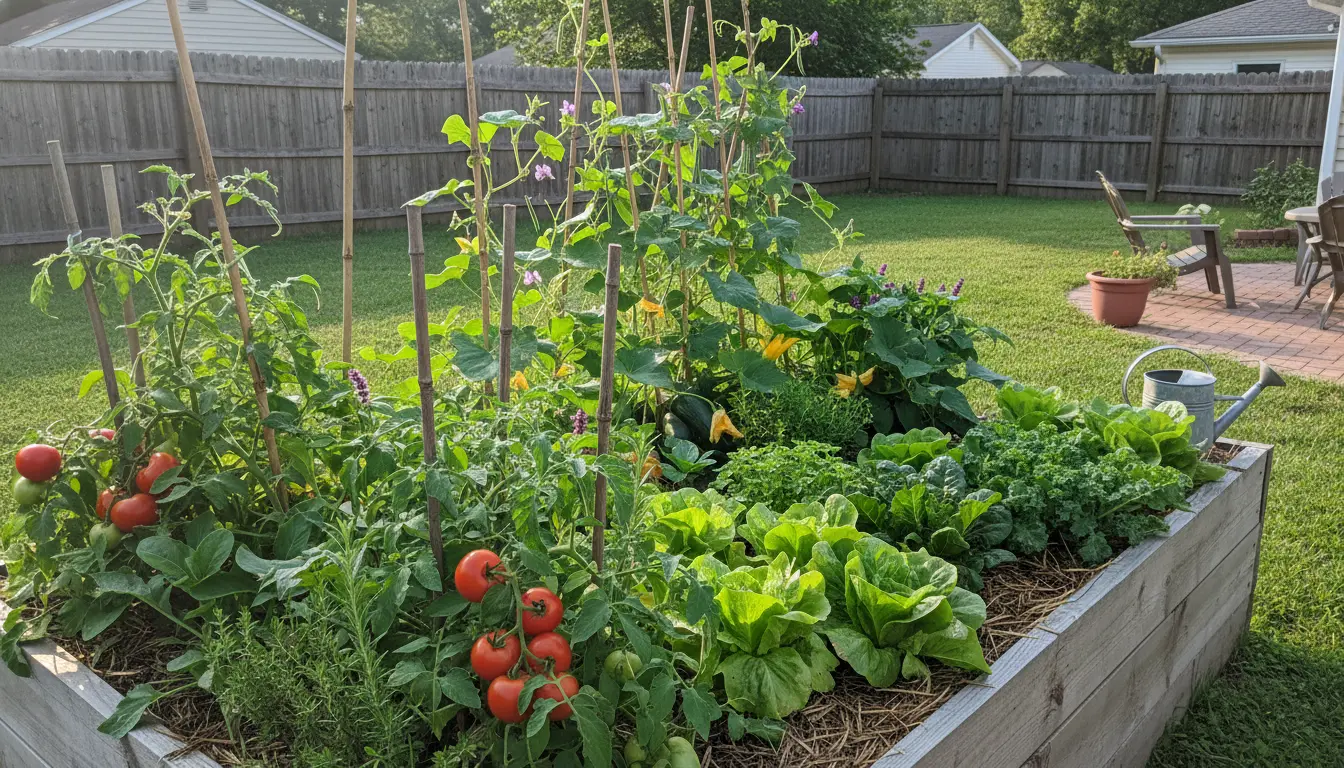
Why a Small Vegetable Garden Works
Starting a small vegetable garden is a practical way to grow fresh produce without a large yard. It fits balconies, patios, and tiny backyards and is easier to manage than a full-scale plot.
A small vegetable garden reduces waste, saves money, and gives quick feedback on what works in your microclimate. You can scale or rearrange beds as you learn.
Planning Your Small Vegetable Garden
Planning first saves effort later. Decide on goals: year-round herbs, summer tomatoes, or quick salad greens.
Measure the space and check sunlight patterns. Most vegetables need 6–8 hours of direct sun, while leafy greens handle partially shaded sites.
Choose the Right Location for Your Small Vegetable Garden
Place your garden where you pass by often to make care easier. Proximity to water and storage simplifies daily tasks.
Avoid low spots that collect cold air or areas under large trees that compete for light and nutrients.
Soil and Containers for a Small Vegetable Garden
Good soil is the backbone of productivity. If ground soil is poor, use raised beds or containers filled with quality mix.
Use a mix of loam, compost, and well-rotted organic matter. For containers, choose mixes with good drainage and slow-release fertilizer.
What to Grow in a Small Vegetable Garden
Select crops that match your space and skill level. Fast, space-efficient plants give satisfaction quickly.
- Leafy greens: lettuce, spinach, arugula — harvest multiple times.
- Herbs: basil, parsley, chives — useful and compact.
- Compact vegetables: cherry tomatoes, bush beans, radishes, peppers.
- Climbing crops: peas or pole beans on a trellis save ground space.
Succession Planting for Continuous Harvests
Planting in intervals keeps production steady. Sow small packets of seeds every 2–3 weeks for lettuce and radishes.
This method maximizes yield in a small footprint and reduces waste from one-time harvest peaks.
Planting and Maintenance for a Small Vegetable Garden
Routine care keeps a small garden productive. Regular checks are easier when the garden is compact.
Water consistently, monitor pests, and feed crops with balanced fertilizer or compost tea.
Watering Tips
Water deeply and less often rather than frequent shallow watering. This encourages strong root systems.
Use drip irrigation or a soaker hose to reduce evaporation and fungal disease on leaves.
Pest and Disease Management
Start with prevention: clean tools, crop rotation, and healthy soil. Inspect plants weekly to catch issues early.
Use physical barriers like row covers for insect control and hand-pick pests when practical. Prefer organic controls such as neem oil or insecticidal soap when needed.
Soil Health and Fertility
Healthy soil stores water and nutrients. Add compost each season to sustain fertility in a small vegetable garden.
Test soil pH once a year and adjust with lime or sulfur if necessary. Many vegetables prefer pH 6.0–7.0.
Harvesting and Seasonal Care
Harvest early in the morning for best flavor and storage life. Many greens taste better when picked young.
Prepare for seasonal shifts: add row covers for cool nights and shade cloth in extreme heat to protect crops.
Small Garden Tools and Supplies
You don’t need many tools to start. A few well-chosen items save time and strain.
- Hand trowel and cultivator
- Watering can or hose with soft spray
- Pruners and gloves
- Quality potting mix and compost
Case Study: Ana’s Balcony Vegetable Garden
Ana transformed a 6-foot balcony into a productive small vegetable garden using containers and a vertical trellis. She prioritized herbs and cherry tomatoes first.
In her first season, Ana harvested weekly basil bunches and daily cherry tomatoes. She used a single 2×6 raised trough, two 10-inch pots, and a vertical pallet for climbing peas.
Lessons learned: consistent watering was crucial, and staking early prevented plant loss. Her food costs dropped while she gained confidence to expand the next year.
Quick Checklist to Start a Small Vegetable Garden
- Measure your space and sun exposure
- Choose compact varieties and plan succession planting
- Prepare containers or raised bed with quality soil
- Set up easy watering and mulch to retain moisture
- Inspect plants weekly and harvest often
Final Tips for Success with a Small Vegetable Garden
Start small and focus on crops you will actually eat. Success breeds confidence and allows gradual expansion.
Keep a simple journal: what you planted, where, and harvest dates. This record becomes valuable in improving yields year after year.