
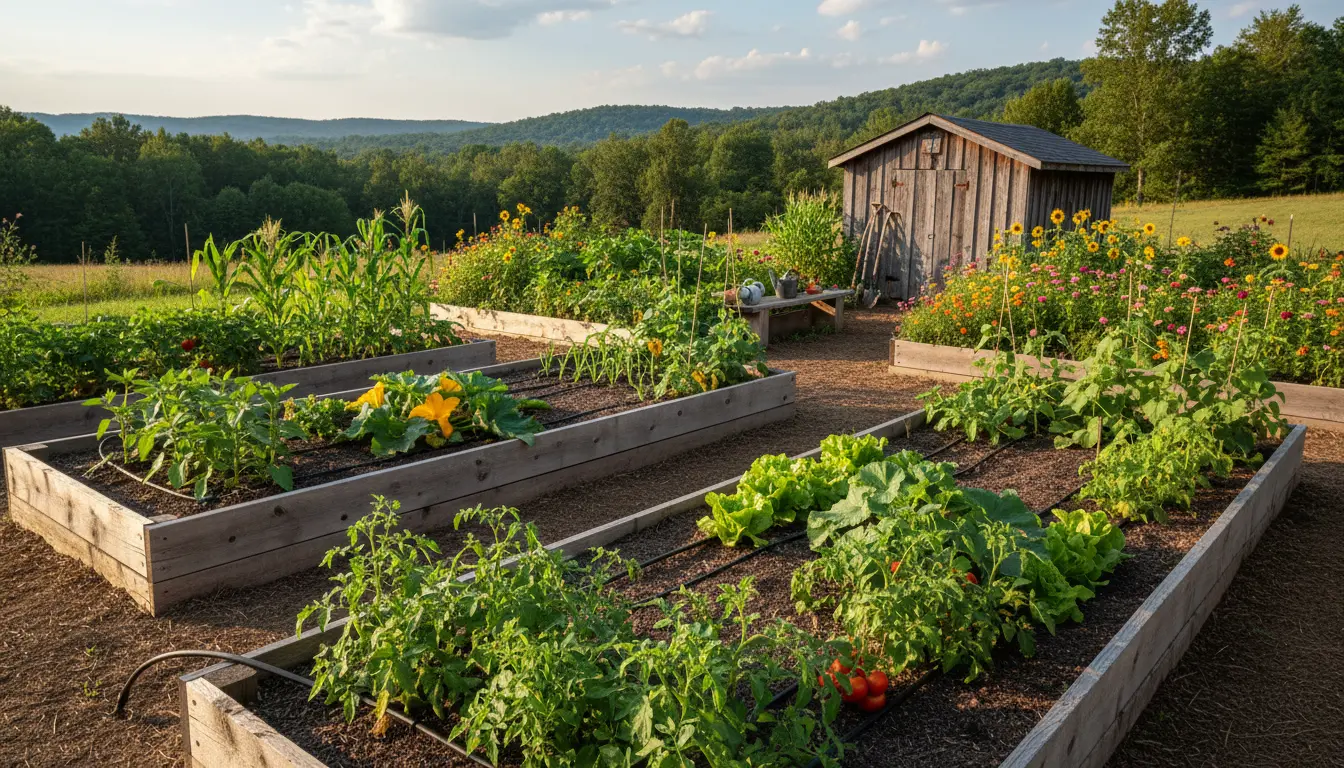
Overview: Why a Raised Bed Vegetable Garden Works
Raised bed vegetable gardens concentrate soil, improve drainage, and warm earlier in spring. They reduce back strain and let you control soil quality for higher yields.
This guide shows practical steps to plan, build, plant, and maintain a raised bed vegetable garden that fits small yards or containers.
Choose Location for Your Raised Bed Vegetable Garden
Pick a site with 6 to 8 hours of direct sun each day for most vegetables. Avoid low spots where water collects and places with heavy shade from trees.
Think about access to water and walkways. A comfortable reach to the bed edges makes planting and harvest easier.
Decide Bed Size and Materials
Common raised bed dimensions are 4 feet wide by 8 feet long and 12 to 18 inches deep. A 4-foot width allows easy access from both sides without stepping into the bed.
Materials include untreated cedar, composite boards, or galvanized steel. Avoid treated lumber that may leach chemicals into soil.
Materials Checklist
- Boards or metal panels for sides
- Corner brackets or screws
- Landscape fabric (optional) to suppress weeds
- Good-quality soil mix (see below)
Mix the Right Soil for a Raised Bed Vegetable Garden
Fill raised beds with a light, fertile mix. A common ratio is 40% topsoil, 40% compost, and 20% coarse sand or perlite for drainage.
Alternatively, use a mix of equal parts compost, peat-free compost substitute or coconut coir, and loamy soil. Avoid pure topsoil; it compacts and reduces root growth.
Soil Add-Ins and Amendments
- Compost for nutrients and microbial life
- Well-rotted manure for organic nitrogen
- Rock phosphate or bone meal for root crops
- Dolomite lime if soil pH is low
Raised beds warm faster in spring, often extending the growing season by 2 to 3 weeks compared with in-ground rows.
Plan Planting Layout and Crop Choices
Group plants by height and water needs. Put tall crops like trellised tomatoes on the north side so they don’t shade shorter crops.
Use succession planting to keep beds productive: plant quick crops like radishes between slower ones such as tomatoes.
Companion Planting Tips for Raised Bed Vegetable Garden
- Plant basil near tomatoes to potentially improve flavor and repel pests.
- Grow lettuce or spinach in the shade of taller crops to use space efficiently.
- Scatter marigolds to reduce some soil pests and attract beneficial insects.
Watering and Irrigation for Raised Bed Vegetable Garden
Raised beds dry faster than ground soil. Aim for consistent moisture rather than alternating wet and dry cycles.
Install drip irrigation or soaker hoses under mulch to keep water at the root zone and reduce evaporation.
Watering Schedule Example
- Newly planted beds: water every day for the first week, then every other day until established.
- Established vegetables: deep watering 2–3 times per week, depending on heat and rainfall.
Mulch, Fertilize, and Maintain
Apply 2–3 inches of organic mulch like straw or shredded leaves to retain moisture and suppress weeds. Replenish mulch as it breaks down.
Fertilize with balanced organic fertilizer or compost tea every 3–6 weeks during the main growing season for heavy feeders like tomatoes and squash.
Pest and Disease Management
- Inspect plants weekly for signs of pests or disease.
- Use row covers early in the season to protect seedlings from insects.
- Remove and compost diseased plant material; avoid leaving it in the bed.
Small Case Study: One Season With a 4×8 Raised Bed
Case: A homeowner converted a 4×8 area into a raised bed in spring. They used untreated cedar and filled the bed with a mix of compost, loam, and coconut coir.
They planted tomatoes, bush beans, carrots, and salad greens. With drip irrigation and mulch, they reported steady growth and an early tomato harvest six weeks sooner than previous in-ground attempts.
At season end they added a layer of compost and planted a cover crop to rebuild nutrients over winter.
Seasonal Care and Winterizing
After harvest, clean out spent plants and add a thick compost layer. Consider a winter cover crop like clover to fix nitrogen and prevent erosion.
In colder regions, insulate beds with straw or removable cold frames to extend the season into fall and early spring.
Quick Troubleshooting for Common Problems
- Wilting plants: check for dry soil near roots and adjust irrigation.
- Poor growth: test soil pH and nutrient levels; amend with compost or balanced fertilizer.
- Too many weeds: add more mulch and remove weeds before seed set.
Final Steps and Next Season Planning
Keep notes on what worked and where pests appeared. Rotate crops yearly to reduce disease pressure and maintain soil health.
With regular compost additions and rotational planting, a raised bed vegetable garden can remain productive for many years.
Start small, focus on good soil and consistent watering, and you’ll have a practical, productive raised bed vegetable garden that fits your space and goals.