
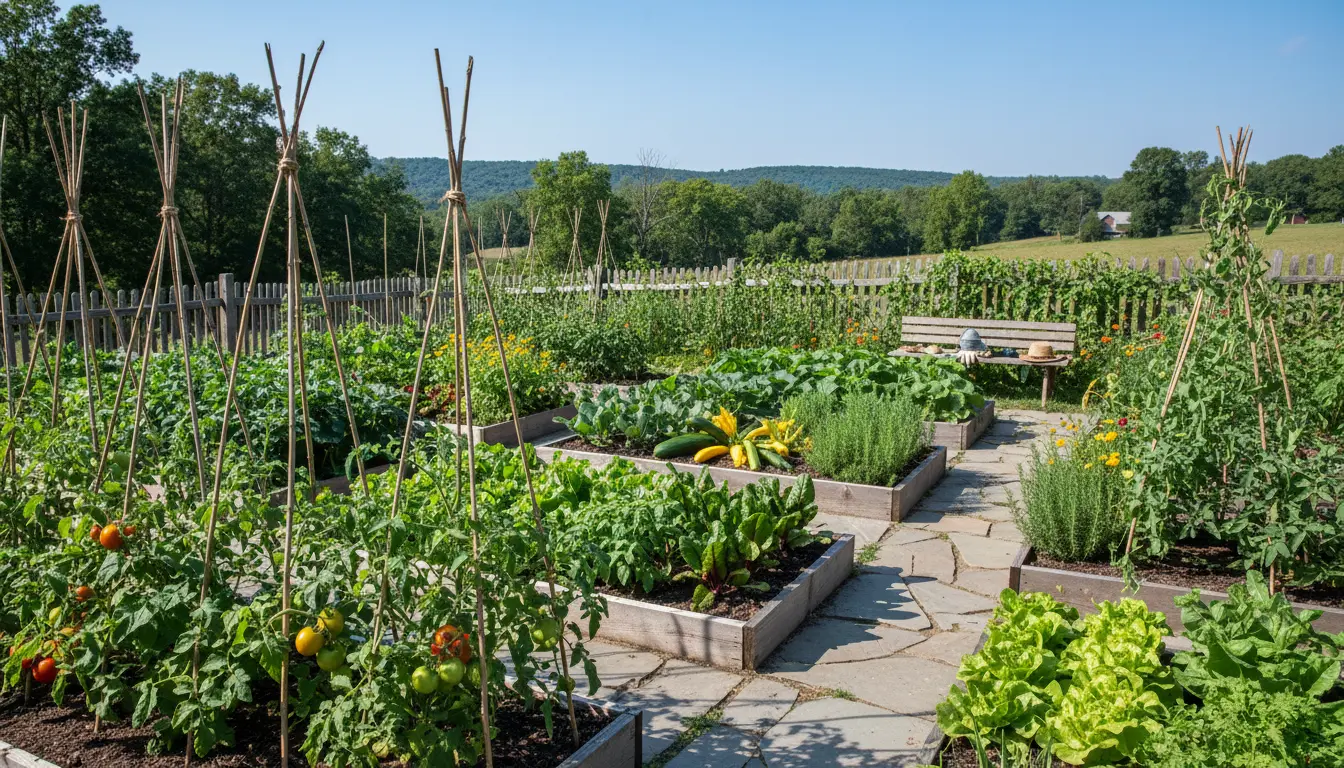
Starting an organic vegetable garden is a practical way to grow healthy food and reduce your grocery bill. This guide gives step-by-step instructions to start an organic vegetable garden at home with simple tools and low-cost techniques.
Why start an organic vegetable garden
Growing organically avoids synthetic fertilizers and pesticides, which benefits soil health and pollinators. It also gives you control over what goes into your food and can improve taste and nutrition.
Benefits of an organic vegetable garden
- Fresher vegetables with better flavor.
- Lower long-term costs through composting and seed saving.
- Improved soil structure and biodiversity.
- Reduced exposure to synthetic chemicals for your household.
Planning to start an organic vegetable garden
Good planning reduces wasted effort. Begin by assessing your space, sunlight, water access, and time commitment before you start an organic vegetable garden.
Choose the right location
Select a spot that gets at least 6 hours of direct sun for most vegetables. If full sun is not available, choose vegetables that tolerate partial shade such as leafy greens and root crops.
Decide on beds or containers
Raised beds warm faster, drain well, and make soil management easier. Containers work well for patios and small spaces. Both are valid ways to start an organic vegetable garden.
Test and prepare the soil

Test soil pH and nutrient levels with a simple kit. Most vegetables prefer slightly acidic to neutral soil (pH 6.0–7.0). Add compost, well-rotted manure, or organic amendments to improve texture and fertility.
What to plant first when you start an organic vegetable garden
Begin with easy, high-reward crops to stay motivated. Choose varieties adapted to your climate and growing season to increase success.
- Leafy greens: lettuce, spinach, kale.
- Root vegetables: carrots, radishes, beets.
- Tomatoes and peppers for warm seasons.
- Herbs: basil, parsley, chives.
Planting and maintenance tips for an organic vegetable garden
Follow spacing and depth guidelines on seed packets or plant tags. Proper spacing reduces disease and helps airflow.
Watering and mulching

Water deeply and less often to encourage strong root systems. Use drip irrigation or soaker hoses to conserve water.
Mulch with straw, shredded leaves, or wood chips to retain moisture, suppress weeds, and moderate soil temperature.
Organic feeding and compost
Use finished compost as the main soil amendment. For extra nutrients, apply organic fertilizers like fish emulsion, bone meal, or kelp according to package instructions.
Pest and disease control
Use integrated pest management (IPM) principles: monitor, identify, and then act. Start with non-chemical controls where possible.
- Handpick pests like slugs and caterpillars.
- Use row covers to protect young plants from insects and birds.
- Introduce beneficial insects: ladybugs, lacewings, and predatory nematodes.
- Apply organic sprays like insecticidal soap or neem oil only when necessary.
Crop rotation and succession planting
Rotate crop families each season to reduce disease and nutrient depletion. After harvesting one crop, plant another suitable crop to maximize production and soil cover.
Simple rotation plan
- Year 1: Leafy greens and legumes.
- Year 2: Fruiting crops like tomatoes and peppers.
- Year 3: Root crops and brassicas.
Harvesting and season extension
Harvest regularly to encourage continued production, especially with plants like lettuce and beans. Harvest in the cool part of the day for best flavor and storage life.
Extend the season
- Use cold frames, row covers, or cloches to protect crops from light frosts.
- Plant fast-maturing varieties in late summer for a fall harvest.
Adding one inch of compost to a 10×10 foot bed increases soil organic matter significantly and can improve water retention and plant growth within a single season.
Quick case study: Small raised bed success
A homeowner in Portland started an organic 4×6 raised bed in spring. They filled the bed with a mix of 50% topsoil and 50% homemade compost, then planted tomatoes, basil, lettuce, and carrots.
By the end of the season they harvested enough tomatoes and greens to feed a family of four for several weeks and estimated saving about $120 in produce costs. Problems were limited to occasional aphid outbreaks that were controlled with insecticidal soap and introducing ladybugs.
Final checklist to start an organic vegetable garden
- Assess site for sun and water access.
- Choose beds or containers and acquire quality compost.
- Select easy crops suited to your climate.
- Implement mulching, watering, and IPM practices.
- Keep notes on planting dates, yields, and pest issues for next season.
Starting an organic vegetable garden is accessible and scalable. With basic planning, good soil, and consistent care you can grow nutritious vegetables at home while supporting a healthier ecosystem.