
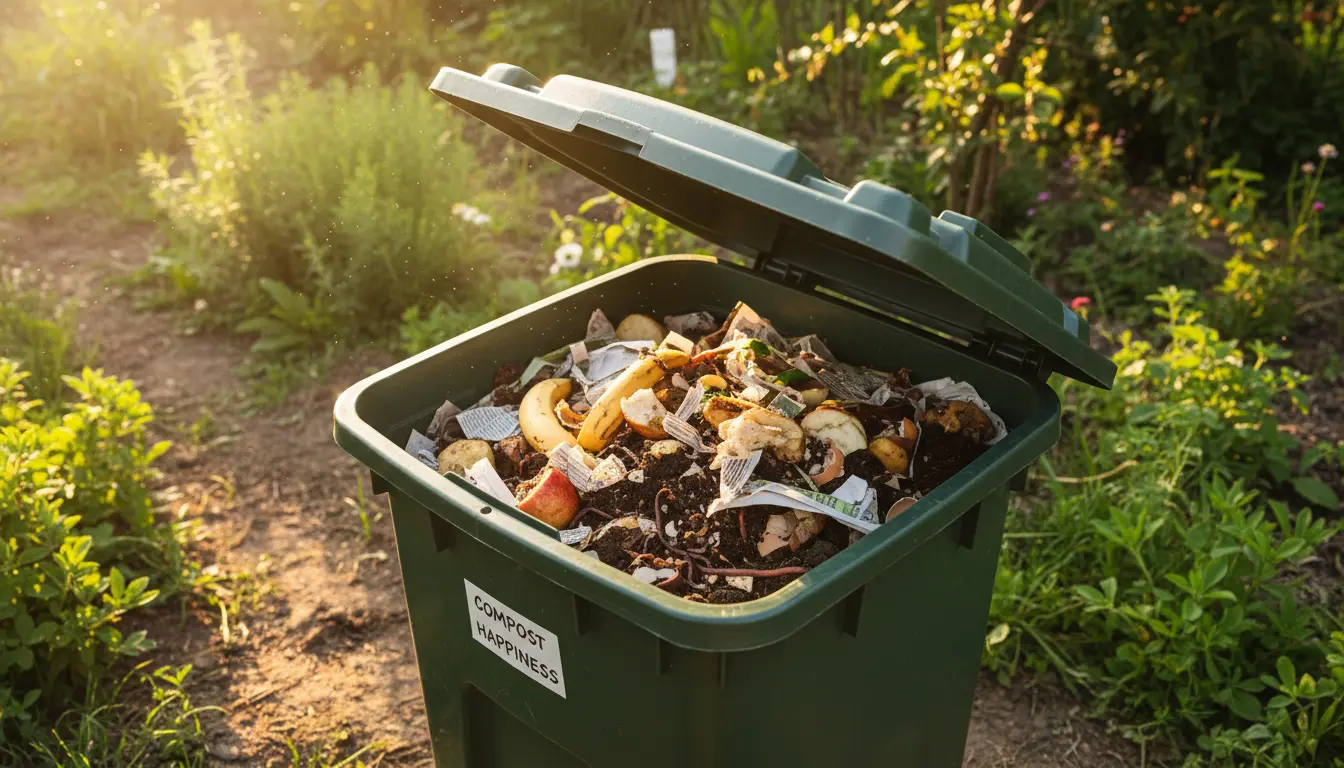
Why Home Composting Matters
Home composting turns kitchen and yard waste into a valuable soil amendment. It reduces landfill trash, lowers methane emissions, and feeds garden plants naturally.
This guide shows practical steps for beginners to set up, maintain, and use a compost system at home.
Home Composting Basics
Composting relies on microbes breaking down organic matter. You need the right mix of green and brown materials, air, moisture, and time.
Start small and adjust as you go. Even a small bin can handle daily kitchen scraps for a household of two to four people.
What to Compost
Keep a balanced mix to speed decomposition and avoid bad odors. Use these simple categories.
- Greens: fruit and vegetable scraps, coffee grounds, fresh grass clippings.
- Browns: dry leaves, shredded paper, straw, wood chips.
- Do not compost: meat, dairy, oils, diseased plants, pet waste.
How to Balance Materials
A good starting rule is roughly 2 parts browns to 1 part greens by volume. This ratio keeps moisture and airflow balanced.
If the pile is too wet or smelly, add more browns. If it is dry and slow, add greens and water.
Choosing a Compost Bin for Home Composting
Select a bin that fits your space, budget, and desired maintenance level. Options include tumbler bins, stationary bins, and simple open piles.
Tumbler bins speed up turning and are cleaner for small yards. Stationary bins are cheaper and good for larger volumes.
Placement and Setup
Place your compost bin on soil or grass to allow worms and beneficial microbes to access it. Avoid concrete bases if possible.
Keep the bin partly shaded and within easy reach of your kitchen to make adding scraps convenient.
Step-by-Step: Building Your First Compost Pile
Follow these steps to start a healthy home composting routine.
- Layer a 4–6 inch base of coarse browns like straw or wood chips for airflow.
- Add alternating layers of greens and browns, keeping the 2:1 brown to green balance.
- Moisten each layer so it feels like a damp sponge, not dripping wet.
- Turn the pile every 1–2 weeks to introduce oxygen and speed breakdown.
How to Tell When Compost Is Ready
Finished compost is dark, crumbly, and smells earthy. Most home systems produce usable compost in 3–9 months depending on conditions.
Screen out large, unfinished pieces and return them to the bin for more time.
Composting reduces household waste by up to 30 percent and can cut methane emissions from landfills. Worms and microbes do most of the work for you.
Troubleshooting Home Composting Problems
Common issues are easy to fix with small adjustments. Smells, pests, and slow decomposition are typical.
- Foul odor: Add more brown materials and turn the pile for aeration.
- Pests: Stop adding meat or oily foods and secure the bin lid. Use a closed tumbler if raccoons are a problem.
- Slow breakdown: Chop materials smaller, add greens, and ensure adequate moisture.
Using Finished Compost
Apply compost as a top dressing, mix into potting soil, or incorporate into garden beds. A thin layer improves soil structure and nutrient content.
Typical rates: 1–2 inches for beds, a handful per pot. Compost works well for vegetables, flowers, and lawns.
Small Real-World Case Study
Case: A two-person apartment household in Seattle started a 50-liter compost bin for kitchen scraps. They used a mix of vegetable peelings, coffee grounds, and shredded paper.
After six months, they had 20 liters of finished compost. Their weekly trash volume dropped by about 40 percent. They used the compost on container herbs and reduced store-bought soil purchases.
Practical Tips to Keep Composting Consistent
- Keep a small countertop caddy to collect scraps and empty daily into the bin.
- Chop larger items to speed decomposition and keep a steady supply of browns nearby.
- Rotate or turn the pile on a schedule, such as every two weeks, to maintain airflow.
Quick Starter Checklist
- Choose a bin and place it on soil.
- Collect kitchen scraps and mix with brown materials.
- Keep the pile moist and aerated; turn regularly.
- Harvest finished compost and use in the garden.
Home composting is a low-cost, practical step toward a more sustainable household. Start with modest goals and refine your system as you learn what works for your space and waste stream.