
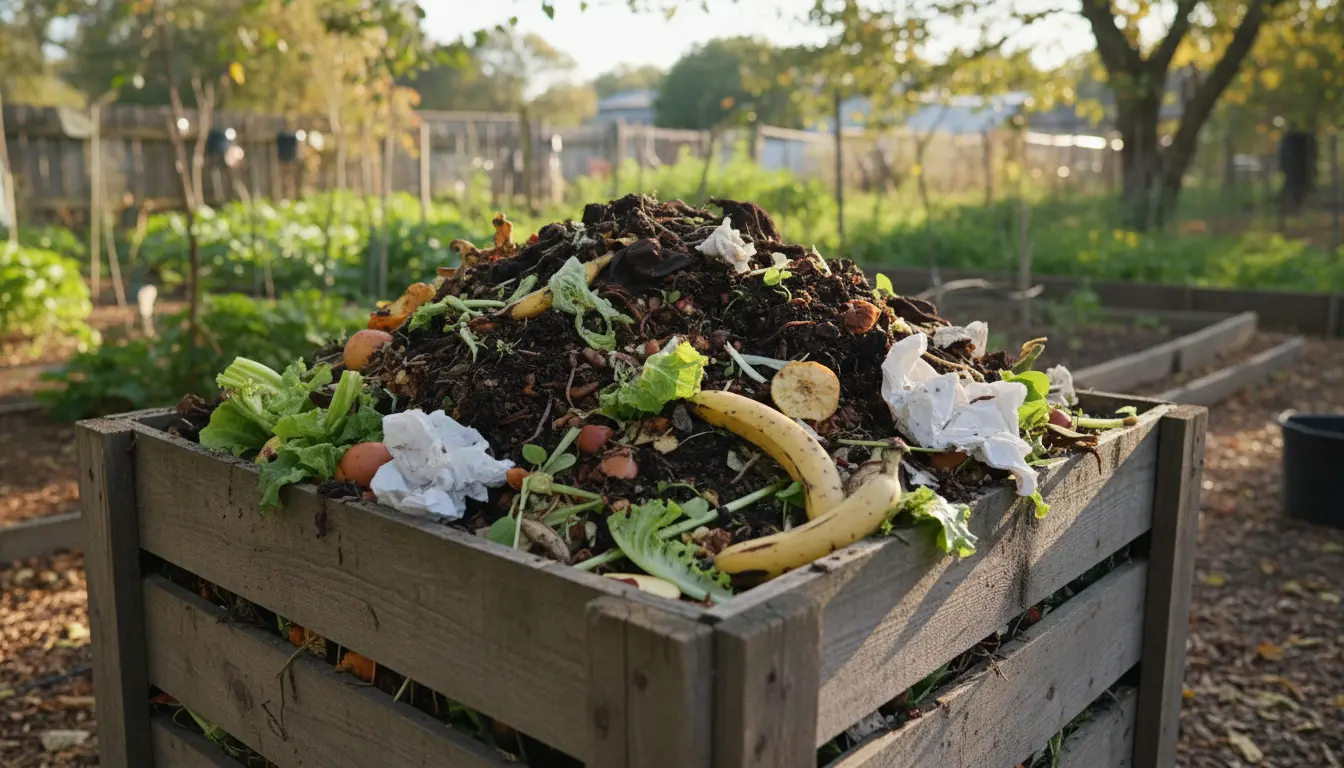
Home composting turns kitchen scraps and yard waste into a useful soil amendment. This guide gives clear steps, simple tools, and troubleshooting tips so beginners can start composting at home with confidence.
What Is Home Composting?
Home composting is the controlled decomposition of organic materials in a backyard bin or indoor container. Microbes, worms, air, and moisture break down scraps into nutrient-rich compost that improves soil and reduces waste sent to landfills.
Benefits of Home Composting
Home composting reduces household waste, lowers greenhouse gas emissions from landfills, and creates free fertilizer for gardens. It also improves soil structure, increases water retention, and supports beneficial microorganisms.
- Reduce trash volume by up to 30% in many households.
- Cut grocery costs by producing free compost for plants.
- Support healthier garden growth and soil biodiversity.
How to Start Home Composting: Step-by-Step
Starting home composting requires minimal tools and a basic understanding of what materials work best. Follow these steps to set up a beginner-friendly system.
1. Choose a Compost System for Home Composting
Select a system that fits your space and lifestyle. Options include simple backyard piles, rotary tumblers, and small countertop bokashi or worm bins for apartments.
- Backyard bin: Good for yards and larger volumes of yard waste.
- Rotary tumbler: Faster mixing and fewer smells; good for small yards.
- Worm bin (vermiculture): Great for apartments and kitchen scraps; requires a little care.
- Bokashi: Fermentation method; works indoors and handles meat and dairy if needed.
2. Balance Materials: Browns and Greens
Compost needs a balance of carbon-rich “browns” and nitrogen-rich “greens.” Browns are dry, carbon-heavy materials; greens are moist and high in nitrogen.
- Greens: Vegetable scraps, fruit peels, coffee grounds, fresh grass clippings.
- Browns: Dry leaves, shredded paper, cardboard, straw.
A common guideline is roughly 2 to 3 parts browns to 1 part greens by volume. Adjust as needed for moisture and smell.
3. Build and Maintain the Pile
Layer materials to create airflow and decomposition. Add a 4–6 inch base of coarse browns first, then alternate greens and browns. Keep the pile moist like a wrung-out sponge.
- Turn or mix the pile every 1–2 weeks to add oxygen.
- If the pile is too wet or smells, add more browns and turn it.
- If it’s too dry, add water and mix.
4. What to Compost and What Not to Compost
Knowing acceptable materials keeps pests away and speeds decomposition. Most plant-based kitchen scraps are safe, while some items should be avoided or handled differently.
- Safe: Fruit and vegetable scraps, coffee grounds, eggshells, yard trimmings.
- Avoid in open piles: Meat, fish, dairy, oily foods (use bokashi if needed).
- Skip: Diseased plants, invasive weeds with seeds, treated wood, pet waste from carnivores.
Troubleshooting Common Home Composting Problems
Beginner composters often face smells, pests, or slow decomposition. These issues usually have simple fixes related to balance, moisture, or airflow.
Smells and Odors in Home Composting
Bad smells often mean the pile is too wet or has too many greens. Add dry browns and turn the mixture to introduce oxygen.
Pests and Rodents
To avoid pests, bury food scraps under a layer of browns and use bins with secure lids. Avoid adding meat or oily foods to open outdoor piles.
Slow Breakdown
If decomposition is slow, check for adequate moisture, oxygen, and surface area. Shred larger materials so microbes can access them, and add a nitrogen source if pile is too carbon-heavy.
Compost can reach temperatures of 120 to 160°F (49 to 71°C) in a hot pile, which helps kill weed seeds and plant pathogens. Backyard piles still provide benefits even without high temperatures.
Simple Real-World Case Study
Emma, a small urban gardener, started with a 50-liter worm bin in her apartment. She saved orange peels, coffee grounds, and vegetable scraps in a countertop container and fed them to the worms weekly.
After six months she produced enough worm castings to feed three balcony planters. Her food waste dropped by nearly half and the plants showed improved growth and fewer waterings.
Practical Tips for Long-Term Success with Home Composting
- Keep a small compost bucket with a tight lid in the kitchen for daily scraps.
- Chop or shred large items to speed breakdown.
- Record what you add and how the pile responds for better results over time.
- Use finished compost to topdress potted plants, mix into garden beds, or refresh lawn soil.
Home composting is a simple, low-cost way to reduce waste and nourish garden soil. Start small, monitor the pile, and adjust materials as you learn what works in your space. With basic care, most beginners can produce useful compost within a few months.