
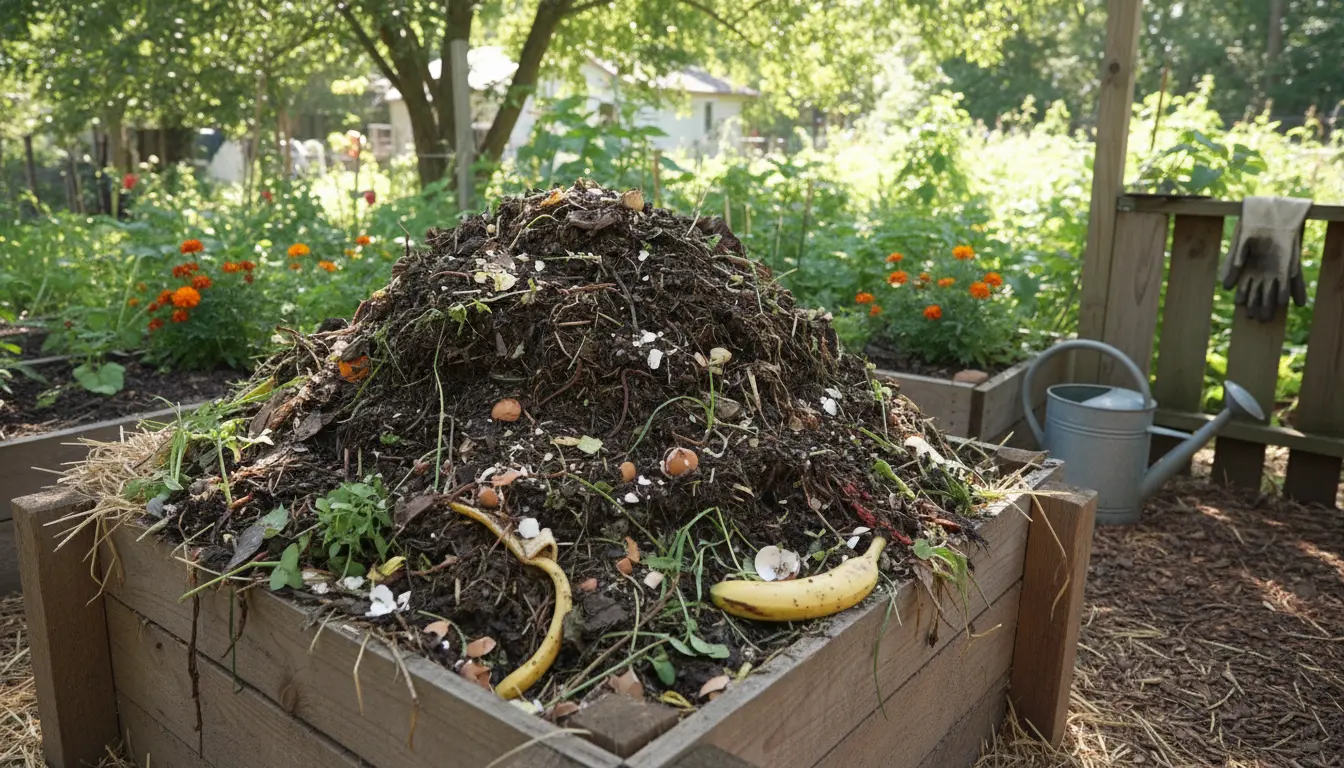
Composting turns kitchen scraps and yard trimmings into a valuable soil amendment. This guide gives clear, actionable steps to begin home composting without excess jargon or grand promises.
Why Home Composting Matters
Home composting reduces landfill waste and produces nutrient-rich compost for plants. It also lowers household greenhouse gas emissions by keeping organic matter out of anaerobic landfill conditions.
How to Start Home Composting
Starting is mainly about choosing a system and learning the balance of materials. Begin small and grow your setup as you gain confidence.
Choose a Compost System for Home Composting
Select a method that matches your space and effort level. Options include a simple backyard pile, a tumbling composter, or a worm bin (vermicompost) for indoor use.
- Backyard pile: Low cost, works well for yards with space.
- Tumbler: Faster decomposition and easier turning, good for small yards.
- Worm bin: Ideal for apartments or indoor composting of kitchen scraps.
Pick the Right Location
Place an outdoor bin on soil to allow worms and microbes to access the pile. For indoor systems, pick a cool, ventilated spot away from direct heat.
What to Compost and What to Avoid
Home composting works best when you balance ‘greens’ and ‘browns’. Greens supply nitrogen; browns supply carbon. Aim for a rough ratio by volume of 1 part greens to 2–3 parts browns.
Common Greens
- Vegetable and fruit scraps
- Fresh grass clippings
- Coffee grounds and tea bags (remove staples)
Common Browns
- Dry leaves
- Shredded paper and cardboard (non-glossy)
- Straw and small wood chips
Materials to Avoid
Avoid meat, dairy, oily foods, and diseased plants in most home systems. These items attract pests or create odors unless you use a specialized hot composting setup.
Maintaining Your Home Composting System
Maintenance is straightforward: monitor moisture, aeration, and particle size. Turn or mix the pile every 1–3 weeks for aerobic decomposition in most backyard setups.
- Moisture: The pile should feel like a wrung-out sponge.
- Aeration: Turning adds oxygen; tumblers make this easier.
- Particle size: Chop or shred large pieces to speed decomposition.
How to Speed Up Composting

Increase surface area, keep the pile warm and moist, and maintain the greens-to-browns balance. Adding finished compost or a small handful of garden soil introduces beneficial microbes.
Troubleshooting Common Problems in Home Composting
Problems usually stem from moisture imbalance, poor aeration, or wrong materials. Each issue has a simple fix that restores healthy decomposition.
- Bad odors: Add more browns and turn the pile to introduce oxygen.
- Too dry: Sprinkle water and mix to distribute moisture evenly.
- Pests: Bury food scraps deeper, use a closed bin, or avoid meat and dairy.
Using Finished Compost in Your Garden
Finished compost is dark, crumbly, and earthy-smelling. Use it to improve soil structure, add nutrients, and increase water retention in garden beds and potted plants.
- Top-dress lawns with a thin layer and rake in.
- Mix compost into planting holes or raised bed soil at a ratio of about 1:4 (compost:soil).
- Use as a seed-starting mix component after screening out large particles.
Home composting can divert up to 30% of household waste from the trash bin, saving space in local landfills and returning nutrients to your garden.
Real-World Example: Small Backyard Success
Jane, a homeowner with a 200 sq ft yard, started a 3-bin system using tumblers and a simple leaf collection for browns. Within six months she had enough compost to enrich two raised beds, and her weekly kitchen waste dropped by over half.
Her steps were simple: collect kitchen scraps in a sealed container, alternate greens and browns in the tumbler, turn weekly, and use finished compost when it smelled earthy and showed no recognizable food pieces.
Quick Start Checklist for Home Composting
- Choose a compost system that fits your space and lifestyle.
- Gather a mix of greens and browns; keep a 1:2 to 1:3 ratio by volume.
- Monitor moisture and aerate regularly for aerobic decomposition.
- Avoid meat, dairy, and diseased plant material unless using hot composting.
- Harvest finished compost when it is dark and crumbly.
Home composting is a low-cost, high-impact step toward sustainable living. Start with a simple system, follow the balance rules, and adapt as you learn what works for your home and garden.