
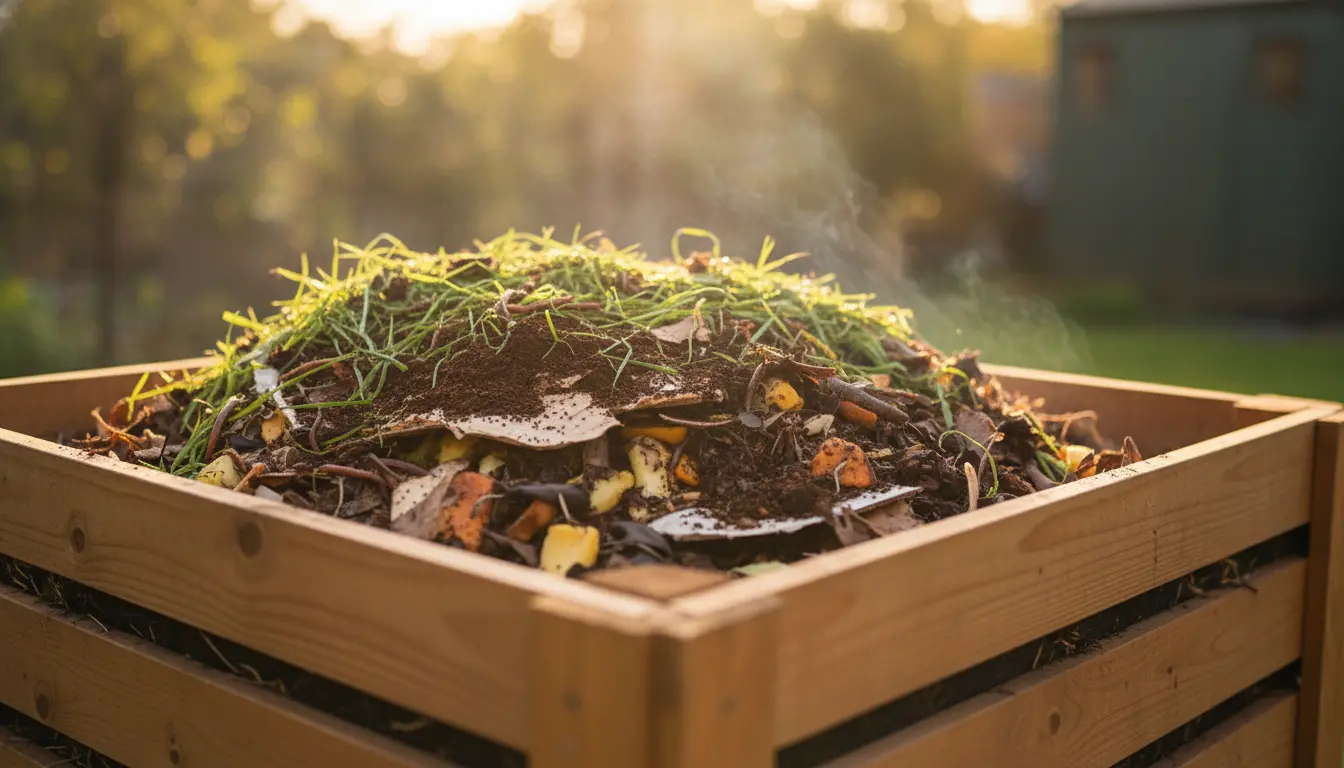
Why create a home compost bin
Composting turns kitchen scraps and yard waste into nutrient-rich soil. A home compost bin reduces waste, improves soil structure, and cuts the need for chemical fertilizers.
Starting a home compost bin is low cost and low maintenance when you follow a few simple rules. This guide walks you through the steps and common troubleshooting tips.
How to start a home compost bin
Begin by deciding the method that fits your space and lifestyle. Common options include a simple pile, a tumbling bin, or a covered stationary bin.
Each method works well if you keep the compost balanced, moist, and aerated. Below are clear steps to get started right away.
Step 1: Choose a location for your home compost bin
Select a level, well-drained spot with partial sun. A location near your kitchen or garden makes adding materials convenient.
Avoid fully shaded areas where decomposition slows, and choose somewhere with good access for turning or emptying the bin.
Step 2: Pick the right bin type
Options include DIY pallets, plastic tumblers, or commercial composters. For small yards, a tumbling bin offers faster results and less odor control work.
For larger gardens, a simple static bin or open pile provides flexibility and volume with minimal cost.
Step 3: Gather materials and maintain the right balance
Compost needs a mix of ‘greens’ (nitrogen) and ‘browns’ (carbon). Aim for roughly 1 part greens to 2–3 parts browns by volume.
- Greens: vegetable scraps, coffee grounds, fresh grass clippings, tea leaves
- Browns: dry leaves, shredded paper, straw, cardboard
- Avoid: meat, dairy, oily foods, diseased plants, pet waste
Chop or shred larger items to speed decomposition. Layer materials to help airflow and moisture distribution.
Step 4: Water and aerate regularly
Compost should feel like a wrung-out sponge—moist but not soggy. Add water during dry spells, and cover the bin if heavy rain threatens to leach nutrients.
Turn the pile every 1–2 weeks to introduce oxygen and speed up breakdown. A turning tool or rotating tumbler simplifies this task.
Common issues and troubleshooting for home compost bins
Even simple systems can have problems. Here are common issues and quick fixes to keep your home compost bin working well.
Problem: Bad odor
Cause: Too many greens or poor aeration. Fix: Add more browns and turn the pile to introduce air.
Cover food scraps with a layer of leaves or shredded paper to reduce smells and pests.
Problem: Slow decomposition
Cause: Pile too dry, too cold, or lack of nitrogen. Fixes: Moisten lightly, add fresh greens, and insulate the pile in colder months.
Problem: Pests
Cause: Exposed food scraps or meat/dairy items. Fix: Stop adding attractive materials, bury new additions in the center, and use a closed bin if necessary.
What finished compost looks like
Mature compost is dark, crumbly, and smells earthy. It should no longer resemble the original materials and will be ready in a few months to a year depending on method and care.
Use finished compost to top-dress garden beds, mix into potting soil, or amend vegetable beds before planting.
A well-maintained home compost bin can reduce household waste by up to 30 percent. Compost also returns valuable nutrients—like nitrogen and phosphorus—back to the soil instead of sending them to landfill.
Practical tips for faster composting
- Shred or chop materials to increase surface area.
- Keep a kitchen scrap pail with a lid to store greens before adding them to the bin.
- Maintain the 1:2–3 greens to browns ratio and check moisture weekly.
- Insulate the bin in winter or move it to a sunnier spot to maintain activity.
Small case study: A family home compost bin
The Rivera family in Portland started a 60-gallon tumbling bin. They added kitchen scraps and dry leaves in a 1:2 ratio and turned the tumbler twice a week.
Within four months they produced about 40 liters of finished compost. They used it to top the vegetable beds and reported healthier tomato plants and reduced grocery costs on herbs and lettuces.
Using finished compost in your garden
Mix 10–30% finished compost into garden beds to improve water retention and nutrient content. For potted plants, replace 10–20% of potting mix with compost for better growth.
Compost is a slow-release soil amendment and works well with other organic practices like mulching and crop rotation.
Conclusion: Keep it simple and consistent
Starting a home compost bin is a straightforward way to recycle organic waste and improve your soil. Focus on balance, moisture, and regular turning.
With a little routine, a home compost bin becomes a reliable source of free, healthy compost for your garden.