
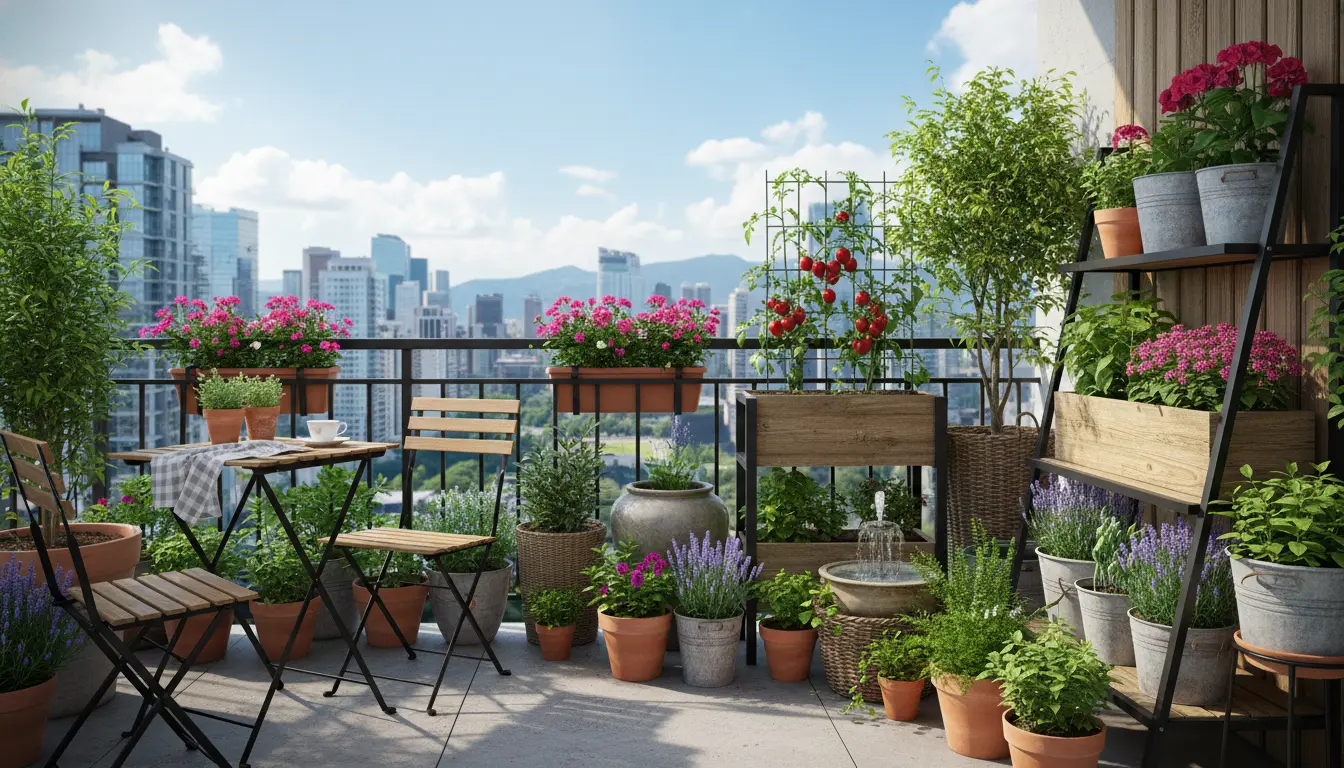
Why choose a container vegetable garden
Container vegetable gardening lets you grow food in small spaces like balconies, patios, or small yards. It reduces soil-borne disease risk and makes gardening accessible for beginners and renters.
Containers are mobile, so you can move plants for sun, shade, or protection from storms. These benefits make container gardening a practical option for many households.
How to start a container vegetable garden
Starting a container vegetable garden is a series of practical steps: choose containers, pick soil, select vegetables, and set a watering and maintenance plan. Follow the checklist below to get a strong start.
Choose the right containers for a container vegetable garden
Select containers with drainage holes to prevent root rot. Consider size: most vegetables need at least 12 inches of root depth, while larger crops like tomatoes prefer 18–24 inch pots.
- Small: herbs, lettuce, radishes — 6–8 inch pots
- Medium: peppers, dwarf tomatoes, bush beans — 12–16 inch pots
- Large: full-size tomatoes, potatoes, eggplant — 18–24 inch or grow bags
Pick soil and fertilizer for container vegetables
Use a high-quality potting mix labeled for containers; avoid garden soil, which compacts and drains poorly. Look for mixes with peat, coir, perlite, and slow-release fertilizer.
Supplement with balanced liquid fertilizer during the growing season. A 10-10-10 or 14-14-14 formulated for vegetables applied per package directions works well.
Select vegetables for a container vegetable garden
Choose crops suited to containers and your climate. Fast-growing and compact varieties tend to perform best in pots.
- Easy starters: lettuce, spinach, radishes, basil
- Container-friendly vegetables: cherry tomatoes, peppers, bush beans, dwarf cucumbers
- Root crops: carrots and beets in deep containers
Sunlight and placement for container vegetable garden success
Most vegetables need 6–8 hours of direct sunlight daily. Place containers where they receive morning sun and shelter from harsh afternoon heat if you live in a hot climate.
Use balconies, sunny steps, or mobile plant stands to maximize light. If sunlight is limited, focus on greens and herbs that tolerate partial shade.
Watering and drainage for container vegetables
Containers dry out faster than garden beds. Water consistently to keep soil moist but not waterlogged. Check soil daily in hot weather by inserting a finger 1–2 inches deep.
- Water in the morning to reduce evaporation and disease risk.
- Use self-watering pots or add a layer of mulch to retain moisture.
- Ensure excess water can drain freely to prevent root problems.
Pest control and maintenance in a container vegetable garden
Inspect plants weekly for pests like aphids, whiteflies, and slugs. Use insecticidal soap, neem oil, or hand-pick pests as first-line controls.
Rotate crops in different containers each season to reduce disease buildup. Remove old roots and refresh potting mix every year for best results.
Seasonal tips for a container vegetable garden
In spring, start with seedlings or transplants to shorten the growing timeline. In summer, shade and more frequent watering may be necessary. In fall, switch to cool-season crops like kale and spinach.
Protect containers from frost by moving them indoors or to sheltered spots when temperatures drop.
Tomato plants grown in containers can yield as much as those in the ground when given 18–24 inch pots and regular feeding. Good root space and consistent watering are key.
Small real-world example: Sarah’s balcony tomatoes
Sarah had a north-facing apartment balcony with four hours of morning sun. She chose compact cherry tomato varieties and placed them in 20-inch fabric grow bags on a south-facing railing ledge.
She used a soilless potting mix with compost and a slow-release fertilizer. Watering every other day in summer and weekly liquid feeding helped the plants produce several pounds of tomatoes from three pots over the season.
Her simple routine—proper pot size, good soil, and consistent watering—converted a small balcony into a productive vegetable patch.
Common mistakes and how to avoid them in container vegetable gardens
Avoid these errors to improve your harvest: under-sizing containers, poor drainage, overcrowding plants, and irregular watering. Address each issue early for better results.
- Under-sizing: Move plants to larger pots if roots are crowded.
- Poor drainage: Drill holes or add a drainage layer before planting.
- Overcrowding: Follow spacing guidelines on seed packets or plant tags.
- Irregular watering: Use mulch or self-watering containers to stabilize moisture.
Quick start checklist for a container vegetable garden
- Pick a sunny location with at least 6 hours of light.
- Choose containers with adequate depth and drainage.
- Buy a high-quality potting mix and appropriate fertilizer.
- Select compact or bush varieties suited to containers.
- Set a watering schedule and inspect plants weekly for pests.
- Refresh soil annually and rotate crops each season.
Container vegetable gardening is a practical way to grow fresh produce in small spaces. With the right containers, soil, and routine maintenance, you can enjoy steady harvests and the satisfaction of growing your own food.